The film Sound of Freedom, a specter of sex trafficking of under-age children, has been a box office hit this summer. It wasn’t supposed to be successful. Disney, its owner, declined to release it. The film has also been deemed controversial since its release. Sex trafficking is awful and should be exposed. What is the controversy? Perhaps the movie makes inappropriate or untrue claims? Perhaps it inaccurately portrays this problem? Perhaps it makes a political statement? Perhaps it unfairly places blame or excuses the truly guilty? Ultimately, I want to know: does this film effectively highlight this problem or not?

First, the film is not a documentary; it doesn’t focus on statistics or provide a broad perspective of the problem. It is centered around an American Homeland Security agent, Tim Ballard, and two kids he rescues. It is a story of victimization and eventually redemption. There are plenty of villains, but no masterminds: no government, organization, or well-known people implicated. The sleazy characters mainly represent themselves and appear to be motivated only by money or sexual desire. We already know exploitation of children is awful; the film doesn’t explicitly shock us to make this point. It just tells a simple story and appeals to our sense of justice. It is a good movie and a good story. Good defeats evil, a common movie theme. Again, where is the controversy?
The movie says it is based on a true story. Most of us do not know the details, but we know sex trafficking is a real problem. We live in a Bohemian society which countenances all manner of sexual deviancy. We have already heard of Jeffrey Epstein and we understand this is human nature at its worst. The movie certainly seems plausible even if it takes a few artistic liberties (the producer admits to this). The raid portrayed in the movie did happen (actual footage is shown during the movie), although not exactly as depicted:
Sound-of-Freedom-Real-Story-What-is-True-in-the-movie
The movie shows a single raid on an island. In real life, “this was one of three coordinated takedowns that happened that day in Colombia, conducted by O.U.R. in conjunction with Homeland Security Investigations (HSI). In total, 123 survivors were rescued, 55 of which were minors,” the website says, adding that it was called “Operation Triple Take.”
And, in real life, it was a boy, not a girl, Ballard was seeking at the end. So what? Despite a few changes from the real life story, the gist of the movie appears factual. I found the movie thought provoking. Most of us do not want to bury our heads in the sand and ignore this problem. I want to know more, and the movie encourages me to learn more for myself.
The movie producers (via actor Jim Caviezel) do make an overt plea to the audience after the movie: we all need to be aware of this problem, and we should support action to combat this awful problem. This is an entirely appropriate message; we should be more aware of this problem which may be happening close by. Why has the media attempted to gin up controversy and take focus off this very real problem? Do they propose we look at this from some other perspective: the perpetrators’ or the clients’ perspective, perhaps? I remain puzzled by the opposition.
save-the-children-child-trafficking-myths-and-facts
FACT: Human trafficking can include forced labor, domestic servitude, organ trafficking, debt bondage, recruitment of children as child soldiers, and/or sex trafficking and forced prostitution.
FACT: Trafficking occurs all over the world, though the most common forms of trafficking can differ by country. The United States is one of the most active sex trafficking countries in the world, where exploitation of trafficking victims occurs in cities, suburban and rural areas. Labor trafficking occurs in the U.S., but at lower rates than most developing countries.
What Exactly is the Controversy?
Although I couldn’t spot the controversy with the movie myself, I found plenty of criticism.
Rolling Stone titled an article: “‘Sound Of Freedom’ Is a Superhero Movie for Dads With Brainworms . . . . The QAnon-tinged thriller about child-trafficking is designed to appeal to the conscience of a conspiracy-addled boomer.”
The Rolling Stone put it best when it referred to the film as a “QAnon tinged thriller,” that’s pretty much the perfect summary. Suffice to say the story tries to appeal to a more right wing audience in many aspects. The whole QAnon conspiracy theory essentially suggests that there is a “cabal” of Satan-worshiping Democrats and celebrities who are also child traffickers. It’s a notorious right wing theory, but completely baseless and somewhat harmful.
Wow. This review is chocked full of accusations. Many do not want to be drug into politics, certainly not at the theatre. Those on the Left nod their heads: “yet again Right wingers are going awry with their Loony Tune attacks. I always knew they were bad,” However, there is a problem with this criticism: it has no validity whatsoever. The political and controversial statements originate with the movie’s critics, not the movie itself.
This movie is not entertainment, so “appeals” is probably not the right term to describe it. . Why would such a film appeal only to “right wingers” in any case? More importantly, the movie is also completely devoid of politics. Sex trafficking is an issue neither the Right nor the Left support. There are no votes to capture among folks or organizations behind sex trafficking. Furthermore, the movie does not portray sex trafficking as a political problem; there is no attempt to blame either the Right or the Left, nor any politically related organization or individual. This movie highlights the failings of human nature. Our basest desires for power, sex, money are revealed. When these desires are not controlled or limited by ourselves or by those around us, such problems inevitably arise.
The loaded sentence: “The whole QAnon conspiracy theory essentially suggests that there is a “cabal” of Satan-worshiping Democrats and celebrities who are also child traffickers.” is not supported in any way. The movie is set primarily in Central and South America and the bad guys are all sleazy characters, most of them foreigners along with a couple unaffiliated Americans among the child traffickers. The child traffickers have no political connections. No political figures or parties are referenced nor accused. There are also no celebrities or Hollywood elites mentioned; Satan is not mentioned and not worshipped. Q’Anon is not mentioned. This is not a Left bashing film, nor a promotion of the Right. This is story of human nature run amok. Rolling Stone’s loaded claim may be quite eloquent and appeal to your political sensibilities, but it is nonsense. Why are they saying this?
Rolling Stone is joined by a chorus of others. The Guardian also featured a headline: “‘Sound of Freedom’: the QAnon-adjacent thriller seducing America.” Jezebel, another Leftist publication, titled their review: “‘Sound of Freedom’ Is an Anti-Child Trafficking Fantasy Fit for QAnon.”
Is it a fantasy or is it an actual problem?
https://www.theblaze.com/news/sound-of-freedom-movie-reviews-qanon-trafficking

The U.S. State Department states that 27.6 million people could be victims of human trafficking “at any given time.”
The International Labor Organization (ILO) and the Walk Free Foundation, in partnership with the International Organization for Migration (IOM), released Global Estimates of Modern Slavery in September 2022. This report estimates that, at any given time in 2021, approximately 27.6 million people were in forced labor. Of these, “17.3 million are exploited in the private sector, 6.3 million in forced commercial sexual exploitation, and 3.9 million in forced labor imposed by state.” The definition of forced labor used in this report is based on ILO Forced Labor Convention, 1930 (No. 29), which states in Article 2.1 that forced labor is “all work or service which is exacted from any person under the menace of any penalty and for which the said person has not offered himself voluntarily.” This report also estimates that 49.6 million people were in “modern slavery” at any given time in 2021, but this figure includes both the estimate for forced labor and an estimate for forced marriage. Consistent with current implementation of U.S. law, it is recommended to use only the 27.6 million estimate when referring to human trafficking. While some instances of forced marriage may meet the international or U.S. legal definition of human trafficking, not all cases do. Note further that the term “modern slavery” is not defined in international or U.S. law.
Neither the American government nor any representative is criticized or implicated in the film. In fact, Ballard utilizes American government resources for a massive sting. His boss is skeptical but supports him initially. We understand Ballard’s desire for justice and want him to keep pressing, but the cost becomes prohibitive as he attempts to save more kids. It seems reasonable when the boss withdraws support for the quest. Ballard eventually quits his job and free-lances after being called home. Still, the movie does not condemn anyone for turning a blind eye. No individuals, government agencies, or political parties are considered sympathizers or collaborators. None. The Columbian police are also portrayed favorably. Ballard and his Columbian counterparts collaborate to nab the bad guys and save 54 kids in an elaborate sting (corroborated by contemporary reports) .
The good guys win in a shutout. The bad guys are all punished. Justice prevails. The audience cheers. A few details are changed slightly or left out, still I keep asking: why would anyone try to convince us this movie is political or controversial?
Is Religion or God the Problem?
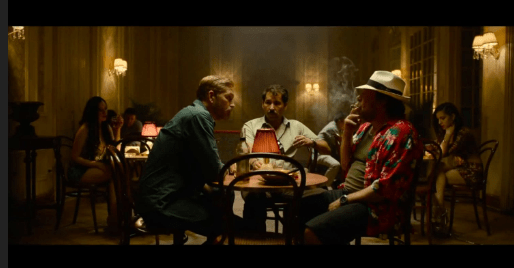
Perhaps, the critics dislike references to God. Ballard makes the statement: “God’s children are not for sale”. During the same scene, his Columbian counterpart essentially proclaims he is on a “mission from God” (ala the Blues Brothers).
Perhaps, God should have been excluded from the film? Why should God get the credit for bringing justice? Maybe Joe Biden should be the hero instead?
Perhaps, the critics do not like Jim Caviezel, the actor who plays Ballard. He also played Christ in the Passion of the Christ. Religious folks are also behind the film’s release (Angel Studios).

From Wikipedia: Prior to filming, [Director Mel] Gibson reportedly warned Caviezel that playing Jesus in his controversial film would hurt his acting career. In 2011, he stated that good roles had been hard to come by since but that this movie, in particular, the role of Jesus Christ was a once-in-a-lifetime experience.
Still, it seems a stretch for Leftist media to say God has no place in this film or God’s presence is a nod to the Right and slap to the Left. I do not accuse them of making that claim. I posit it only to possibly explain the bizarre criticisms. Otherwise, the criticism makes no sense whatsoever. They didn’t see the same movie I saw.
Not an Accurate Depiction?
Rolling Stone moves beyond their “Q’Anon, Satan worshipping Democrats, conspiracy- addled Republicans” screed to offer more substantive criticism. Maybe there can be an actual debate?
They say the movie and others are “fomenting moral panic for years over this grossly exaggerated ‘epidemic’ of child sex trafficking”. Let’s not also forget, the U.S. State Department said 27.6 million are in “forced labor”. That’s a big number. Let’s hear Rolling Stone‘s explanation though.
While Sound of Freedom almost exclusively focuses on very young children, the majority of child trafficking victims are adolescents or teenagers, says Huizar. (A report from the Counter-Trafficking Data Collaborative states that 67 percent of children trafficked are between the ages of 15 and 17). While there are, of course, cases where child trafficking victims are much younger than that, they overwhelmingly — and heartbreakingly — tend to involve parents with substance abuse issues selling their children for drugs, Huizar says.
The movie does indeed focus on younger children. The siblings in the movie were 8 and 11. Still, the statistic Rolling Stone quotes acknowledges one-third of victims are 14 and under, still a significant percentage. Rolling Stone would have us conclude the movie is not legitimate unless it depicts the most common type of trafficking? It is Ballard’s story, the one he experienced.
Rolling Stone also quotes an “expert” from the National Children’s Alliance:
“In a lot of these cases, the trafficker starts out calling themselves their boyfriend or girlfriend.” Indeed, a large body of research shows that many child trafficking victims are LGBTQ or gender nonconforming youth who have been kicked out of their homes and forced into the sex trade by someone close to them.
Certainly, LGBTQ kids are among victims, but I doubt traffickers focus on kids’ sexual orientation. They are inhumane people; they find kids who are easily exploited. Kids are compelled to engage in whatever sexual activity their pimps want, whether it is consistent with their orientation or not. This statement reveals the supposed expert’s own political motivation. She wants us to believe this movie ignores the real plight of LGBTQ kids. Rolling Stone has completely missed the point of the movie.
The “expert” adds:
“We want to believe that people trafficking children are unknown, nefarious strangers,” she says. “[It] makes people uncomfortable to think some of these things happen in their own communities, in their own schools, with people they might run into at the grocery store.”
Yet, the movie depicts this very thing. The young girl is recruited by a woman she met in her neighborhood, someone recognizable, who praises her singing talent. That vanity is then used to lure her into the “Talent Agency”. It is a simple trick and her gullible father is fooled.
Rolling Stone talks of other problems, such as years of recovery from trauma. The movie doesn’t address this problem nor does it dismiss it either. It covers much in a limited timeframe, focusing on one storyline. We all realize children are permanently scarred by the experience, but the movie must end somewhere. Rolling Stone wants to address all aspects, so make a sequel about the aftermath, another very real problem.
Q’Anon is the Problem?
Criticism from the Left comes tinged with Q’Anon references. I question motivations when Q’Anon is inserted. Liberals reference Q’Anon whenever my point of view is intolerable: There I go again, following those Q’Anon nuts.
Q’Anon is like John Galt in Atlas Shrugged: everyone mentions his name, but nobody knows him. Q’Anon is a non-influencer among the Right. It is never mentioned by conservative media because it means nothing to the Right. Yet, it is the straw man continually tossed in by the Left. Rolling Stone injected politics where none was before.
Rolling Stone tries to explain the Q’Anon references, but not effectively. Q’Anon talks of a process known as “adrenochrome”: collection of blood from children to use as a fountain of youth. Q’Anon links this practice to Hollywood elites who they say run a sex trafficking operation to collect this blood. The movie says nothing of this practice, yet Leftist publications link the movie with this bizarre theory. Rolling Stone also links Ballard to this Q’Anon theory, but the link is non-existent. Tim Ballard mentions adrenochrome in an interview with Dr. Jordan Peterson (one minute clip below). Ballard does not link the practice to Satan worshippers, Hollywood elites, or Democrats; he does not endorse Q’Anon and has not been directly linked with Q’Anon. He simply says he witnessed the practice in parts of Africa. For this statement, he has become a Q’Anon practitioner and the movie a Q’Anon promoter. What tortured logic.

Is Ballard fabricating this story? I have no idea. It is possible he witnessed this practice given his associations. That doesn’t make him a conspiracist (can they prove he is lying?) and it is certainly not a reason to forgo Sound of Freedom which doesn’t address adrenochrome theories. For reasons not explained in their articles, the Left doesn’t want you to watch this movie. It has nothing to do with Q’Anon or adrenochrome.

Movie Shelved:
“Sound of Freedom” was to be released in 2018 by 21st Century Fox. Disney acquired Fox and shelved the film. Disney eventually released the movie rights and it was bought by Angel Studios who finally released the film.
https://www.newsweek.com/sound-freedom-box-office-cinema-controversy-1813435
The controversial film Sound of Freedom has become the surprise hit of the summer, already grossing more than $85 million at the domestic box office.
On July 16, Sound of Freedom raked in around $9.83 million, making it the second-most profitable film behind the Tom Cruise-led Mission: Impossible – Dead Reckoning Part One.
Sitting in third place for the day was Harrison Ford‘s last hurrah as the fictional archaeologist in Indiana Jones and the Dial of Destiny, which earned $3.8 million at the box office on Sunday.
From a financial perspective, it was clearly a mistake to shelve the film. Maybe Disney did not realize its potential as a money earner. The cost was already incurred, so why hesitate?
“Initially made with [21st Century] Fox. After it was completed, Fox was acquired by Disney, who said, ‘We can’t release this film.’ Eduardo spent over a year before [Disney] released the rights to the film. At that time, he tried to take it to theaters, but just as they were, COVID hit, and another three years passed.”
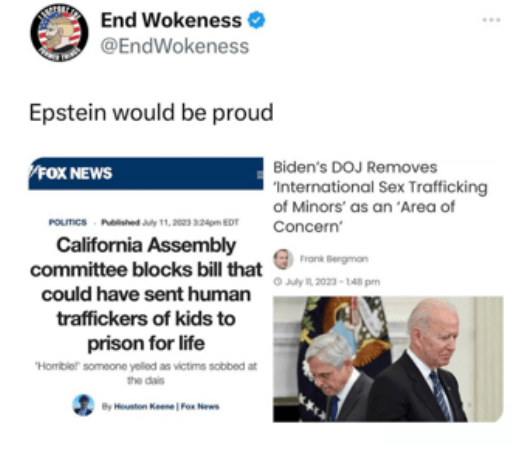
Many films are deemed “important”; we are told they must be released even if unprofitable. Were a movie about the plight of LGBTQ folks shelved, the outrage would be non-stop. Certainly child sex trafficking is an important topic as well? Was Disney leery of stirring up controversy? Was Disney worried about tarnishing their image, their ESG (Environmental, Social, and Governance) and DEI (Diversity, Equity, and Inclusion) credentials?

The movie does not seem controversial, but the opposition to it certainly is.
On a political note, there appears to be much overlap between those who oppose this movie and those who oppose the border wall. Kamala, we need a Venn diagram!
Finally, please watch the movie yourself and learn more of this problem.
Dave about-me
 Seek the Truth
3 thoughts on “Sound of Freedom: What Controversy?”