If you see something so unlikely given the circumstances, something that speaks of divine intervention, will you believe it is a miracle or will you call it something else? Unless you already have some faith or a mind seeking truth, I think you won’t believe. Still, try this miracle on for size, in any case.
A church, and the rectory beside it, survived the worst American fire in the last one hundred years. Even the vegetation around the church remained completely untouched. The destruction came within few feet of the church grounds, yet the church and its surroundings remain an untouched oasis.

The devastating Maui fires appear to have spared Maria Lanakila Catholic Church in Lahaina, providing a symbol of hope amid catastrophic destruction.
At least 93 deaths had been reported as of Sunday, Aug. 13, making the disaster the deadliest wildfire event in the U.S. since 1918. Authorities expect the death toll to rise.
Multiple fast-moving fires, fanned by strong winds and fueled by dry vegetation, swept across the Hawaiian island. The western town of Lahaina, with fewer than 13,000 residents, was particularly devastated.
Is This Really a Miracle?
If God were to intervene during this fire, might this be one place He would spare? Might this grace give hope to those who survived the blaze? Might this be the glory of God on display for believers and non-believers alike? Many, however, look for a reason to doubt.



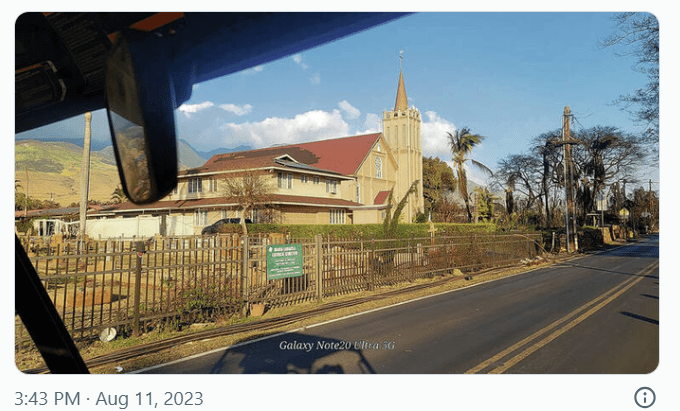
Yes, the Church was made of stone and therefore was less likely to burn than less sturdy homes and structures of more flammable material; however, the fire made its way to the brink of the church grounds, but never crept any closer. I see no burn marks anywhere. Were the telephone pole, the rickety fence, the tall shrubs, the grass, and trees along the church perimeter not susceptible to fire? Hawaii’s governor, Josh Green, called the blaze a “fire hurricane”, ostensibly because high winds from a passing offshore hurricane aided the spread. Can science tell us why 60 mph winds failed to send the fire the short distance across the road? Didn’t it want to get to the other side? Can science tell us how likely it was for no single spark to travel the final few feet to the shrubbery wall outside the cemetery or the tall trees overhanging the road on the church side? What are the odds? Can science tell us why this fire, the worst in America during the last century, after wreaking incredible devastation, exhausted itself along this target rich stretch of road?
“Basically what we know is the fact that all of Lahaina Town has been consumed by fire. It’s all gone,” Msgr. Terrence Watanabe, pastor of the nearby parish of St. Anthony’s
Are we to believe only flesh and wooden structures burn in such events? The church’s roof and windows are not made of stone, yet they are undamaged. The fire’s heat could surely melt glass. The church survived because it wasn’t even exposed to the fire, not because it resisted the fire. Perhaps the church grounds were well prepared for this event, but nature has a knack for destroying the best laid plans of mice and men.
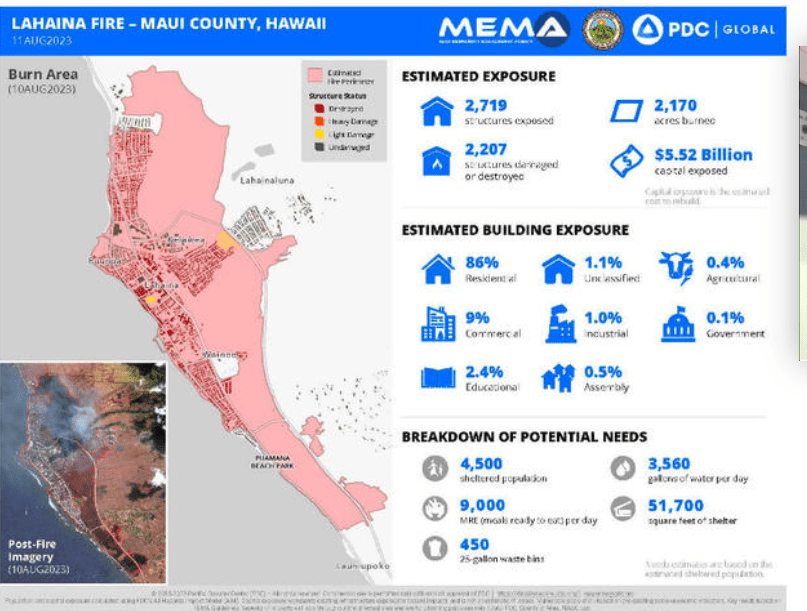
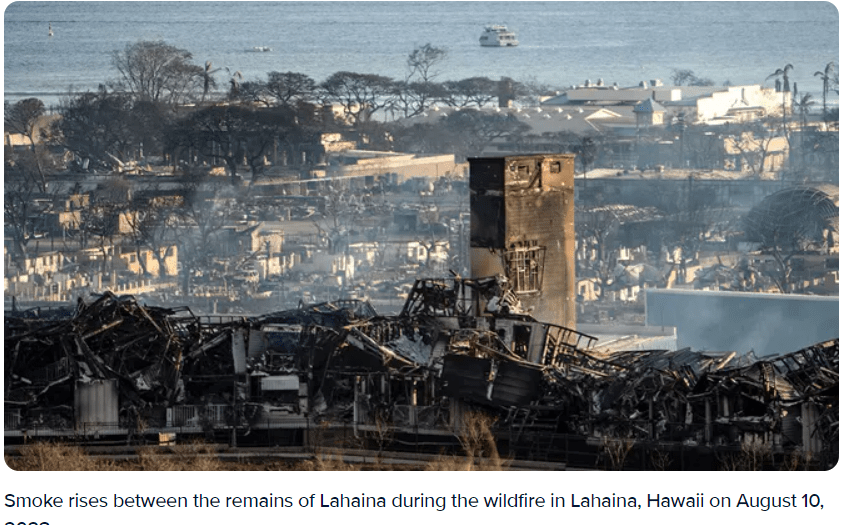
Along the fire’s path cars, museums, businesses, homes, even other churches burned. Why did this structure and all its surroundings avoid any damage? 82% of the structures in the area were impacted, including all the structures and all the trees immediately adjacent to church property; yet, the church, along with its vulnerable surroundings, were spared. Was it only because the church was made of stone and its grounds were well-kept? The skeptical explanation for the church’s survival is not quite enough. It’s “just basic science” is too simple an explanation for someone like me who believes in both science and miracles. Upon closer examination, the facts and the science indicate the church should have been damaged as well, but it wasn’t. Science does not explain why it wasn’t damaged.
This seems to me a message from God. Yet, so many folks are skeptics; more than half gave a thumbs up to glib comments dismissing this miraculous event. Were you in the midst of the blaze yourself, might you have looked upon it differently? Many saved themselves only by bobbing in the ocean for hours; there was nowhere else to hide. It is so easy to be a skeptic. It is so easy to look from afar and choose not to believe. It is so easy to throw out a simple appeal to science, your go to counter to religion or anything supernatural. However, faith is not an abandonment of reason or science by any means (on-church-and-science-yet-another-phony-narrative). I also appeal to science along with probability, logic, and common sense, and collectively they show it is highly improbable the church and its grounds be spared so completely.
The Case for God

The other common argument for skeptics and non-believers is: God may have spared the church in this instance, but He abandoned everyone else. Because He didn’t intervene so many needlessly died. What a callous and uncaring God you follow.
Does God act so capriciously? Does He actually dismiss the suffering of so many? Skeptics believe that because that is what they want to believe. There is certainly suffering and death all around us, but how can you definitively say God is not with us in these times? You know the mind of God, do you? You argue against God because He permits these things, yet suffering and death in the world should not inevitably lead us to deny there is caring God.
The logical argument for a caring God is subtle, so open your mind just a little. Most of us are in one of three camps: you accept a loving God permits suffering and death in this world (as I do), or you demand He ends our misery sooner rather than later (you want to believe, but find it difficult given our circumstances), or you say the abundance of suffering and death proves there is no loving God at all (you would rather not believe nor seek an explanation). Yet, we also know (and experience) much good during our time in the world. Furthermore, pain and difficulty is often accompanied by great good (child bearing, winning a race, graduating from school, etc.). I often say nothing worth accomplishing comes easily. If it comes easily, it is not worth much. God gives us much to be grateful for; He does not subject us to unending pain, but skeptics tend to focus only on suffering when defining (or blaming) God.
I ask you skeptics: what kind of world would we have without suffering and death? I doubt it would be a world that truly satisfied or fulfilled you. Practically speaking, there would hardly be room for any of us any longer if we lived forever. What would the Malthusians and Climate Change alarmists say then? I am not simply being sarcastic, however. Ponder the implications of a perfect world, one without pain and suffering, for just a moment. The harsh truth is we would have no control ourselves. God would have total control because He is the only one who could end our pain before it started. Before any accident befell us or before we caused any harm, God would swoop in and put a stop to it. We would be allowed only to do those things which had God’s seal of approval. How else could it be? We would have no free will. Our judgments would be irrelevant. Can we accept a world of chaos and entropy in order to live our lives as we choose?
It seems logical and obvious to demand that a loving omnipotent God end all our suffering, but that would mean a world in which we could not freely choose to love Him or love others. We couldn’t choose to do good because we would be compelled to do good. We would love everyone because there could be no other way, but then would we even understand what love is because we never knew the alternative?
God give us the choice to do good or ill because He wants us to live life fully. If I choose to do a good deed for you doesn’t that mean so much more than if I am simply obligated to do good? You appreciate acts of kindness from others because you know they have a choice. If I am kind because I have no other choice, is there any real feeling behind my actions or any real concern for your well being? Free will is essential to our humanity. Taking it away makes this a more tranquil world, but eliminates so much else. God gives us free will, so we can freely choose to love Him and others. Otherwise, we would be simply be directed by God; we could not even appreciate there was no suffering in the world.
During his lifetime, Jesus intervened and raised Lazarus from the dead, yet Lazarus died again a few years later. Why not let Lazarus live forever as a permanent testament to God’s power? Also, why didn’t Jesus raise more from the dead? Why didn’t He end everyone’s pain and suffering once He finally dwelled among us? Why let humanity suffer for thousands more years? However, look at it another way: God gave life to billions more since (including you and me), billions more who could experience not only the pain, but also the joy of life and the love of God and others. Jesus demonstrated it was not his goal to take control of our lives or all the events of the world. Lazarus’s revival also demonstrated to those who would believe that Jesus was indeed God and God’s glory is profound. Yet, many who witnessed this miracle, still condemned Jesus to die. What more does it take for someone to believe in God and His miracles? A miracle in Hawaii still will not convince many.

We still make demands of God. We demand He do what we would have Him do to make this world a better place. I don’t want a version of the world in which you play God and impose your vision of a just world. I don’t trust you with such power. I trust God to be God. I would rather not follow your or even my own imperfect vision of the world. I don’t put myself above God by thinking I would be a better God than He would. I follow the God who gives us freedom to live our lives as we choose, a life which includes suffering and death, but also a reward (for choosing Him) at its end. Ultimately, there is a perfect world after all; we must choose it ourselves and then wait patiently for it. None of us could create such a place as heaven. It is our inheritance; we should not demand it now.
Why do folks demand God end suffering when one hundred die in a Hawaiian fire? We have all seen death and suffering, yet we continue on. Each and everyone of us will die. It’s one of the two certain things of life. Would you have everyone die quietly in their sleep instead? More importantly, would you choose a world which we all have free will or a world in which God writes the entire script and we are spared any struggle?
God also put us here to do His will. He expects more from us and He gives us countless opportunities to succeed. He expects we attempt to mitigate suffering ourselves. We should do what He expects of us instead of demanding He do what we expect of Him.
What if this is not the First Time?
You can say I did not construct a deductive mathematical proof that proves divine intervention saved the Hawaiian church. You can still call my case circumstantial; however, what if this same thing had happened before, and in circumstances even more remarkable?
The two churches that survived the atomic bombs in Hiroshima and Nagasaki
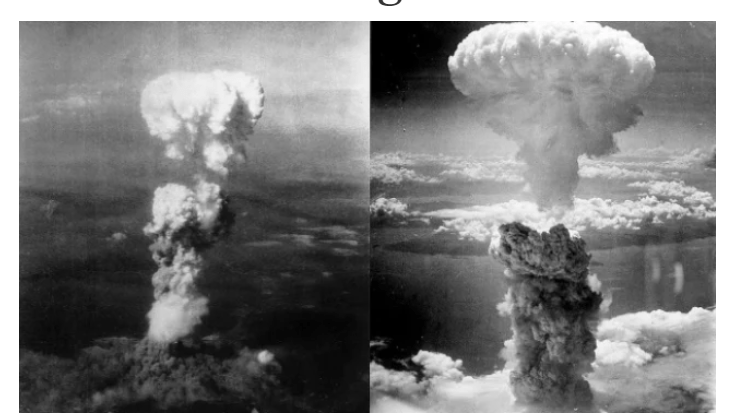
Roughly 4.5 km from the epicenter of the blast, the Nagatsuka Jesuit novitiate remained standing. These Jesuits went down in history as the Hiroshima Eight. They survived the explosion that had instantly killed 86% of the people in an eight block radius.

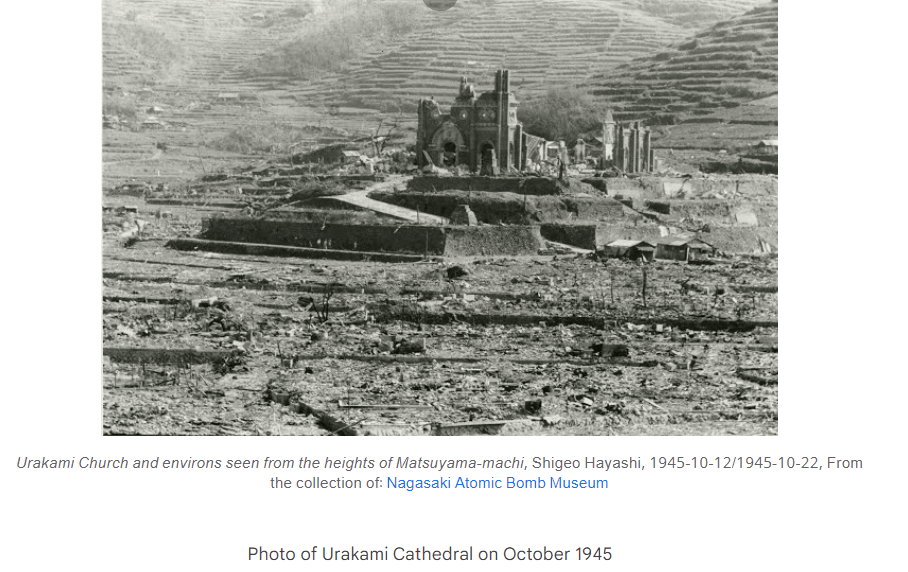
On August 9, 1945, another atomic bomb was dropped—this time on Nagasaki, the city known as the Japanese capital of Catholicism since nearly two-thirds of Japan’s Catholics lived there. Nagasaki was devastated. The Franciscan Convent built by St. Maximilian Kolbe, however, remained standing.
The remarkable picture below, from the Nagasaki Atomic Bomb Museum commemorated this occurrence in 1945.
https://artsandculture.google.com/story/uwXRRfqvSwUA8A?hl=en
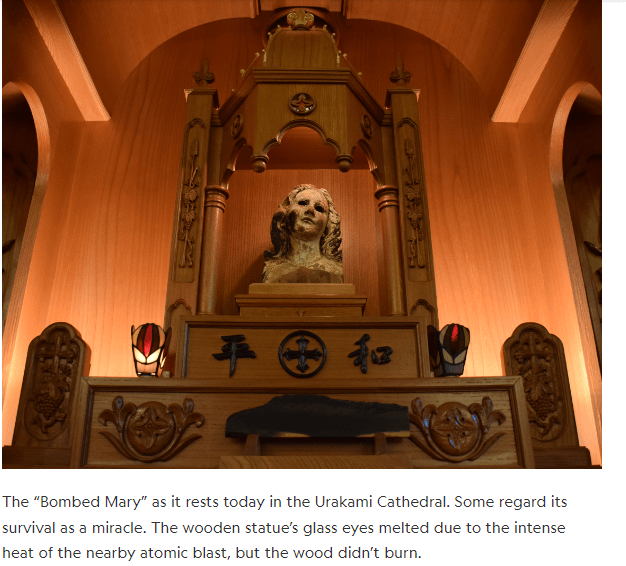
The statue of Mary in the Urakami Cathedral was miraculously spared as well.
Throughout History
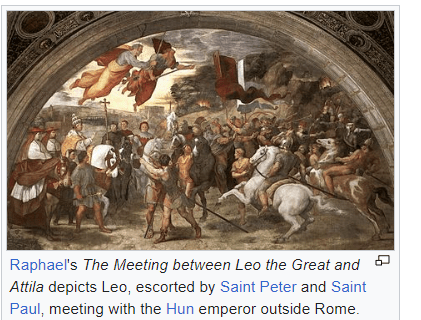
In 452, Pope Leo I went to the battlefield to plead clemency from Attila the Hun. The Huns had destroyed and ravaged Italy and were poised to destroy Rome, the center of Christianity, as well. Attila, not known for his grace and mercy and not a Christian himself, relented and spared Rome. It was a most unexpected and unlikely outcome. How did that happen?
A few years earlier, in 410, the Visigoths actually sacked Rome, but the Visigoths themselves were Christians, so St. Peter’s Basilica and the other Christian churches were spared. Rome and Vatican City were also bombed by the Allies during World War II, but the damage to Christian churches and relics was limited. Rome today remains a center of Christianity and its great churches still stand after thousands of years. Was God intervening to save Rome’s Christian heritage or were all these events just coincidental?
Of course, not every church has been spared throughout history, but again it is not God’s intention to spare us from suffering in this very moment. He raised only Lazarus and a few others from the dead, but He didn’t save his friend John the Baptist, nor did He save his apostles from martyrdom, nor did He save Himself from an awful death. God intervenes at times, often in small ways in our lives, and occasionally in a truly miraculous fashion.
Why Don’t We Believe?
There are many other well-documented examples of God’s miracles the last few thousand years. For instance, in 1917, approximately seventy thousand in Fatima, Portugal witnessed the Miracle of the Sun, an event well documented in the local newspapers (https://en.wikipedia.org/wiki/Miracle_of_the_Sun). Have you ever heard of it? Most people are not aware of this or the other miracles I described. We don’t hear of these events in history class (I laugh when I hear liberal media say people of my political persuasion would rather not teach all of history).
Too many today allow media to shape their opinions. One-channel media gives their biased interpretations, choosing what to tell us and what not to tell us. For example, I searched the internet for stories on the Hawaiian church and I found primarily conservative outlets covering it. Liberal media largely ignored the story. NBC news had a story about a different church, one that was lost during the fire https://www.nbcnews.com/news/asian-america/hawaii-fires-scorch-historic-church-school-lahaina-mourns-loss-culture-rcna99198
Our opinions are formed based upon the limited knowledge we are exposed too. There is a great big world out there and many are missing it. I miss much myself, but I seek more than the distorted worldview one-channel media provides.
I have heard non-believers say: “show me a miracle and I will believe”. Well, I’ve shared a few miracles. Do you believe yet? Jesus told the following parable of human nature; we are often unwilling to change in spite of overwhelming evidence.
19 “There was a rich man who was dressed in purple and fine linen and lived in luxury every day. 20 At his gate was laid a beggar named Lazarus, covered with sores 21 and longing to eat what fell from the rich man’s table. Even the dogs came and licked his sores.
22 “The time came when the beggar died and the angels carried him to Abraham’s side. The rich man also died and was buried. 23 In Hades, where he was in torment, he looked up and saw Abraham far away, with Lazarus by his side. 24 So he called to him, ‘Father Abraham, have pity on me and send Lazarus to dip the tip of his finger in water and cool my tongue, because I am in agony in this fire.’
25 “But Abraham replied, ‘Son, remember that in your lifetime you received your good things, while Lazarus received bad things, but now he is comforted here and you are in agony. 26 And besides all this, between us and you a great chasm has been set in place, so that those who want to go from here to you cannot, nor can anyone cross over from there to us.’
27 “He answered, ‘Then I beg you, father, send Lazarus to my family, 28 for I have five brothers. Let him warn them, so that they will not also come to this place of torment.’
29 “Abraham replied, ‘They have Moses and the Prophets; let them listen to them.’
30 “‘No, father Abraham,’ he said, ‘but if someone from the dead goes to them, they will repent.’
31 “He said to him, ‘If they do not listen to Moses and the Prophets, they will not be convinced even if someone rises from the dead.’” Luke16:19-31
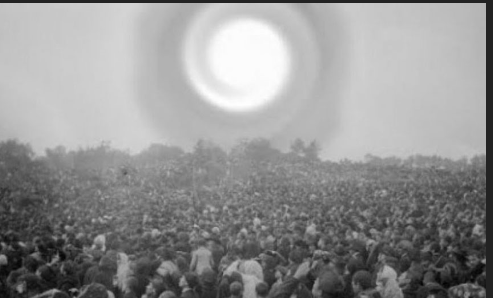
In 1917, seventy thousand saw the Miracle of the Sun in Fatima. How many now believe because of it? On the other hand, how many never heard of it? How many today know of the story of the Lanakila Church in 2023 or the Urakami Cathedral in 1945? Many would be interested in these stories, but are never told. Perhaps, you will be intrigued to learn more on your own. How many could be swayed from their atheistic or anti-religious stances because of these stories? Hopefully a few more still.
Community-resilience-in-the-face-of-disaster
To donate: https://secure.anedot.com/we-must-protect/donate
 Seek the Truth
Soooo … let me get this straight … your ‘God’ spares a building, but allows people and other forms of life to die? And you think that’s a ‘miracle’? Do you, then, place the value of that building ahead of life? This is rather like viewing the remnants of a commercial airliner crash where over 100 people died, and being thankful that one of the plane’s engines is still intact.
LikeLike
Nice to hear from you my friend. We have not conversed in a while.
First, no the value of a building is not greater than the value of life. However, the fact that the church survives in tact gives hope to people of the island who survived. The church is a central part of the life of many people; a plane engine is not something which has intrinsic value to our lives or gives meaning or hope to others. The church’s continued presence is a comfort to those who have already lost so much. If you are not a person of faith this concept will seem totally foreign to you.
Second, the argument I make is subtle but still simple and logical. As I said: We know (and experience) much good during our time in the world. Furthermore, pain and difficulty is often accompanied by great good (child bearing, winning a race, graduating from school, etc.). Nothing worth accomplishing comes easily. If it comes easily, it is not worth much. God gives us much to be grateful for; He does not subject us to unending pain, but skeptics tend to focus only on suffering when defining (or blaming) God.
Finally, think of a world in which pain and death were removed. Who would be in control? We couldn’t be trusted any longer. God would have to intervene to prevent us from doing harm to others or to ourselves. He would intervene whenever any harm was on the brink of entering our pain-free world. Instead, he gives us free will. We accept pain and death in this world in exchange for free will. Do wish to surrender your free will to live in that pain free world?
God intervenes (to save the Hawaii church, for instance) to prevent harm, but He does so very selectively. When God does not intervene (to save all those who died in the Hawaii fire, for instance), that does not mean He does not care for those lives. He does not want to control our lives totally. He respects our free will. He gives us a chance to choose good. Choosing good, choosing love, choosing God, are the keys to life.
Think about it carefully. A world where all pain and death is removed is a world where you cannot to distinguish yourself in any way. It is a world in which we are directed to do the good God chooses, and we have no will to deny Him. In the world we actually live in (the one with pain and death) we can choose to love God and others or chose not to. We can choose to harm others and we often do. In our world, the choice to love or help another now has real meaning and value, far more than it would have if we had no free will to choose to do otherwise.
LikeLike
Isn’t it also remarkable that the church survived this fire? How could it have made it through given the circumstances? If God doesn’t do everything you think He should, then we discount this remarkable occurrence?
LikeLike
Comments from other critics via email:
Critic 1: So a benevolent, all powerful God sat by and did nothing while hundreds (possibly a 1000) people burned or choked to death on smoke, and many more lost there homes and everything they had, but he decided to intervene to save a church?
Your God’s divine intervention leaves something to be desired. Only a God who didn’t care about human suffering would consider this as benevolence. And I have a hard time seeing how any human that cared about human suffering could see this as a miracle. Maybe you should explain to the families of all those who died how God couldn’t getting around to saving their loved ones because he was too busy saving a Church. I’m sure that would give them great comfort.
Critic 2: From the linked story about the miracle church
At the same time, the church’s wooden roof appears to have suffered some damage. It is difficult to determine how much the building was damaged. It’s possible unseen structural damage could be extensive.
“We won’t know until we get in there and make an assessment,” said Watanabe, who is also pastor of St. Anthony of Padua Catholic Church in Wailuku.
This “miracle” seems to have only saved the non-wooden shell of the building. Inspirational, but probably not a miracle.
Are we to believe only flesh and wooden structures burn in such events? The church’s roof and windows are not made of stone, yet they are undamaged. The fire’s heat could surely melt glass. The church survived because it wasn’t even exposed to the fire, not because it resisted the fire. Perhaps the church was somewhat prepared for this event, but nature has a knack for destroying the best laid plans of mice and men.
Glass does not melt at wildfire temperatures. Typical wildfire temperature ranges from 300 degrees Celsius to about 1500 C and glass used for windows typically melts at no less than 1650 C. That is sustained heat and not what was seen in Hawaii.
You can look at pretty much anything and see signs of miracles if you want to and you don’t have to look to which buildings were spared to find miracles because life itself is a miracle. You seem to slant your “miracles” towards religious artifacts rather miracles that affect everyone, which you will find many examples and it seems like a recruitment technique you are employing.
LikeLike
Do you gentlemen actually read my posts or do you respond to what you think I might have said? My post already addressed the comments of many skeptics. Eric provides us with the exact same argument that I already dispelled in my original post.
God doesn’t care about us because several hundred die in Hawaii? Why stop there? You will die. I will die. Every person currently living will die. Billions and billions have died before us. None are spared from death. All these deaths are far better evidence for your point than a few hundred dead in Hawaii, right? The never-ending string of deaths during thousands of years should prove your case even more conclusively. Essentially your argument is: if God cared about us, nobody would die. These deaths in Hawaii do not matter more than all the deaths that came before or since, right? Everyone’s death is equally significant; we are all God’s children. However, where is your proof that my death, your death, or the deaths in Hawaii demonstrates God’s lack of caring? You can make the statement, but you provide no proof of it. I don’t accept that death itself proves God’s lack of caring. As I stated in my post, life is also full of much good. Life is not a string of unending suffering. Furthermore, the suffering we endure in child birth, graduating from school, winning a race, etc. brings great joy along with it. In other words, pain often is accompanied by much good. You blame God for the suffering and death. Can you also give Him credit for the good? Can you also see that suffering often has a significant purpose and value as well?
Furthermore, Our God died Himself to save us from death. We don’t believe we live for a hundred years or fewer (what a miserable, uninspiring, depressing notion), but we believe our life on earth is just a short prelude for our unending existence (this is our hope; this hope further enables us to endure suffering now). So, essentially your argument that death proves God lack of caring isn’t even true. We die only for a moment because death has been overcome by God. God’s conquering of death shows that He does indeed love us. What’s your argument now? It’s dust.
Mike points out the roof suffered “same damage” that “it is difficult to determine how much” and the “unseen structural damage could be extensive”, but then you jump to the building “is just a shell”. The evidence you provide does not lead to that conclusion just yet. You need more evidence before arriving at that conclusion. My guess is the damage, the cost to the insurance company, is only a fraction of what it would have been had the entire church and its grounds been destroyed.
I didn’t know about the temps of wildfires and glass melting. Thanks for that clarification. It is not remarkable then that the glass didn’t melt, but that’s a minor consideration in this matter. My argument still stands even with this correction.
Mike also said: You seem to slant your “miracles” towards religious artifacts rather miracles that affect everyone, which you will find many examples and it seems like a recruitment technique you are employing.
Is it not remarkable that the church survived the wind storm and the fire? You do not have to call it a miracle, but it is certainly something rather remarkable. Would you not have marveled (or at least been slightly surprised) had you been walking the city and discovered this yourself? I also highlighted the remarkable survival of the Nagasaki Church which was very close to the atomic bomb blast (< 2 miles). Attila the Hun, noted philanthropist, unsurprisingly decided to spare Rome after speaking with Pope Leo I. Ok. Maybe you’re right. There is nothing to see here.
God surely saved more than just this building. I am sure many lives were saved through His intervention. We just have no visible evidence of that, so I cannot point it out or write about it. Had I tried, I can imagine the pushback from you. Furthermore, as I said to another critic: the value of a building is not greater than the value of life. However, the fact that the church survives in tact gives hope to people of the island who survived. The church is a central part of the life of many people; it’s survival gives meaning or hope to many, those in desperate need of hope. The church’s continued presence is a comfort to those who have already lost so much. If you are not a person of faith this concept will seem totally foreign to you. You are trying to paint me as uncompassionate and non-empathetic, but I ask you: Why do you dismiss this comfort as unimportant in their time of crisis?
LikeLike