Politics often intrudes into the moral sphere. For instance, abortion has been a political issue the last fifty years, but the Catholic Church has consistently opposed abortion as immoral. The world’s standard is in direct opposition to God’s standard; it violates the sixth commandment. Abortion advocates say it is inappropriate to preach on this political issue and shouldn’t the Church’s tax exempt status be removed. However, the Church is not only justified for wandering into politics in such instances, but is also obligated to criticize the world’s immoral and unjust standards, standards which lead the faithful into sin.
Still, the church can wander too far into politics. I am bothered when Pope Francis advocates for political views not clearly tied to moral issues. He is a moral and spiritual leader, not a political leader. For instance, the pope often voices support for political solutions proposed by climate change advocates.
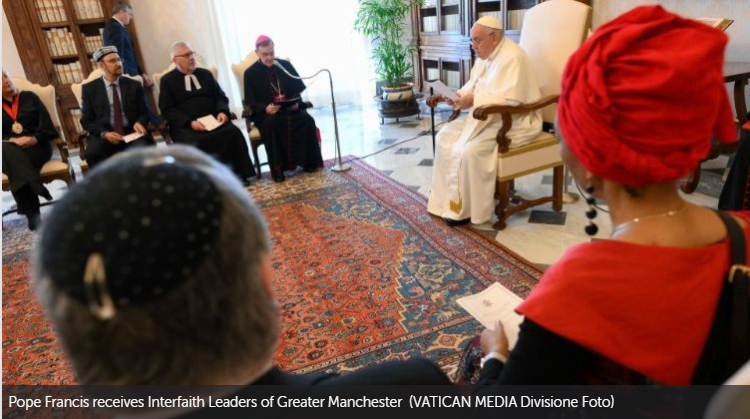
To be clear, care for the environment is both a moral and political issue. The deliberate destruction of the environment or tolerance of a passive degradation are certainly legitimate for the pope to weigh in on. Christians recognize the need to be good stewards of the earth, something God specifically entrusted to mankind.
And God made the beasts of the earth according to their kinds and the livestock according to their kinds, and everything that creeps on the ground according to its kind. And God saw that it was good. Then God said, “Let us make man in our image, after our likeness. And let them have dominion over the fish of the sea and over the birds of the heavens and over the livestock and over all the earth and over every creeping thing that creeps on the earth. . . And God said to them, “Be fruitful and multiply and fill the earth and subdue it, and have dominion over the fish of the sea and over the birds of the heavens and over every living thing that moves on the earth.” Genesis 1 25:26,28
As denizens of the planet, we all want clean air, clear water, healthy food, a clean neighborhood. We appreciate the beauty of nature, God’s creation. We wish to preserve these good things for future generations. There is little controversy in this regard. However, the current climate change debate is not about these things, so it confounds me when the pope weighs in the side purporting to be for the environment, but actually supporting another agenda.

The pope appropriately advocates for protecting and preserving God’s creation, providing the religious point of view for preserving the environment. These sentiments are uncontroversial:
“common witness to the intrinsically moral and religious dimension of our duty to protect the environment as a God-given gift calling for our responsible stewardship . . . you play an important role in contributing to a much-needed “ecological conversion” grounded in the values of respect for nature, sobriety, human solidarity, and concern for the future of our societies.” Pope Francis to interfaith leaders at Greater Manchester
However, the political argument must be separated from the moral argument. Climate change political activists have strayed far beyond the bounds of protecting nature and its resources we rely on. The basic climate change agenda has been deeply dishonest, has greatly overstated the threat of climate change, has misunderstood the actual problems, has overstated humanity’s ability to impact the climate, and uses climate to advance totally unrelated political issues. It is a hot-button political issue which divides the faithful for good reason. The pope alienates Catholics by taking a political stand and aligning with people using questionable tactics to advance a political agenda. of-climate-change-trump-and-the-nature-of-debate; climate-change-failures

Further, the climate change scientific theory is greatly in need of repair. Like every other scientific theory ever proposed, this one should make adjustments for failed predictions instead of repeating on loop talking points provided by Al Gore in the 1980’s. Further, suspect proposed solutions have far more negative impact than the problems they attempt to solve; solutions are excessively punitive, especially in the developing world, and forecast limited (a few degrees of change over 100 years), if any, benefit to future generations. I find many of the political solutions immoral and potentially catastrophic, and I am confounded when the pope embeds himself in this political milieu. I do not question the pope’s sincerity; he is certainly a holy man, but I am troubled when he aligns with folks who seem not to act strictly in accordance with God’s will.
As in any war, climate change advocates should define its scope and goals, and present an exit strategy. The debate (if it can even be termed that) extends indefinitely because bad actors always need a crisis. Actual solutions (like nuclear power) are discounted because they tread on other progressive sacred cows. Humanity’s ability to adapt to small temperature changes (if these are even manifested) are also discounted.
In addition, prominent advocates consistently violate the climate change standards they would impose on the rest of us–and then they openly tell us it is okay for them to enjoy the blessings of fossil fuels because they are so damned important (and the rest of us are not). These same hypocrites criticize First World countries which have already done a great deal to protect the environment, and make excuses for (or ignore) the biggest violators in the developing world. The Inter-governmental Panel on Climate Change (IPCC), the foremost authority of climate change, is a political organization, one not fully committed to real science.

At every turn, climate change is increasingly portrayed as a political, not a moral or spiritual, issue. The pope has already clearly defined the basic morality: God’s expectations and man’s role in caring for the environment, so why proceed any further into this messy debate? I understand the pope chastising the faithful for failing to recognize the moral issue, but there is broad agreement on the morality of saving the planet while there are deep divisions on the messy and often suspect political solutions.
Yet, the pope drifts ever further into the political agenda, aligning with political forces not at all friendly to Catholicism or religion in general. Jesus told us to be in the world but not of the world. In which direction does the pope head with comments like this?
“We need, in a word, to acknowledge that the environmental and social crises of our time are not two separate crises but one.”

Our social crises–the devolution from God’s teaching and into moral relativism, the abandonment of Western and Judeo-Christian values of truth, freedom, justice, and mercy, the promotion of abortion, the celebration of sexual deviancy, the complete moral breakdown of the West especially–has absolutely nothing to do with an environmental crisis. What is he talking about?
I look for the pope to address the moral failings piling up rapidly in this broken world. He should lead us from the slippery slopes that appear to have no bottom, yet we hear about environmental policies instead. How will reducing CO2 admissions (a questionable goal to begin with) prevent the moral collapse we are careening towards? We consistently received moral clarity from the two other stalwart popes of my lifetime, but in the last ten years, Francis has often turned his focus elsewhere. There seems to be a magnet pulling him in the direction of a perverse progressive political agenda.

Playing with Marxist Fire
The pope criticizes Marxism as a political force, yet people still question his political leanings. He says he is surprised when media attempts to define him as a Marxist; however, his continual attacks on capitalism and his support of policies furthered by Marxists, make us question his judgment once again.
Prior popes spoke forcefully of the excesses of capitalism; there are clearly inherent moral hazards in this economic system. However, Pope Francis too often advocates for political solutions to moral problems:
In his 2013 apostolic exhortation, Evangelii Gaudium, Pope Francis criticizes the notion that reducing the disproportionately-high income tax burden on high-income earners can stimulate investment and economic growth as a “crude and naïve trust in the goodness of those wielding economic power and in the sacralized workings of the prevailing economic system.”
Yes, capitalism has many moral hazards, but why comment on tax policy? Again, he is a moral and spiritual leader, not a political leader.
I respond to Pope Francis with a political question of my own: how many people do you know that have a received a job from low-income earners? Reducing the tax burden on high income earners may, in fact, spur job creation, which will promote good, not evil. This is a moral argument in favor of lower tax rates, something the pope apparently opposes. Of course, it is not guaranteed this additional capital will be used to create jobs, increase pay for workers, or support good works, but it is certainly possible.

Furthermore, tax revenue is given to government, not directly to those in need. Has government been a responsible steward? Can it do better than an ethically run business? The government has not used its wealth as philanthropically as Andrew Carnegie. Again, this a moral argument in favor of people using their own money rather than giving it to a wasteful government. Is it even moral for the government to confiscate so much of the people’s wealth? The pope should address such questions.

Why does the pope spend his vast moral and spiritual capital on political issues? Why focus on the capitalist system itself rather than the unethical behavior of individuals or corporations within the system? Capitalism can indeed be abused or can, in turn, be used for good–and often has. ”Love of money is a root of all kinds of evil” (1 Timothy 6:10), but money (capital) itself is not evil.
The pope could also promote the good capitalism can (and often has) produced. Capitalism has lifted billions out of poverty in the last century. The world population has exploded because of the benefits and efficiencies of capitalism. Without this economic system, the world could not support eight billion souls. It is far from perfect, but there is no rival. Encourage those with means to use their capital morally and also criticize government’s poor use of wealth to promote abortion, transgenderism, and the rest. Instead, he blames capitalism for poverty and wealth inequity, ignoring the fact that capitalism has created a vibrant middle class and brought prosperity around the world, a massive change from the feudal systems preceding it.
Going further still, Evangelii Gaudium calls for structural transformation that would “restore to the poor what belongs to them.”
Hoarding of wealth is a problem Jesus expressly criticizes. Jesus encourages self-denial (Matthew 16:24), to care for widows and orphans (James 1:27), to give the shirts off our backs (Matthew 5:40), to love each other as He loved us (John 5:12). Jesus encouraged one rich young man to sell all he has to follow Jesus. He said it is difficult, but not impossible, for a rich man to enter heaven (Matthew 19:24).
Still, neither Jesus nor the Church today encourages us to surrender all our wealth. Commerce was present in Jesus’s day. He didn’t focus on changing Israel’s economic or political systems. Instead, he told us if we have means and we have talents, we are to share with others.
Jesus reminded us the poor will always be with us (Matthew 26:11), so why tie poverty to a “structural transformation” to capitalism? We have poverty and wealth inequity in America still, but the basics are available to all. Sure, Bill Gates has a lot of money, but there is still plenty for the rest of us to meet our needs. We are all better off (not just Bill Gates) because of the success of our economic system.
Many wealthy American philanthropic capitalists have given to the poor and supported worthy causes. Less wealthy Americans still give generously when there are disasters like the Hawaii fire or a Florida hurricane. I am amazed at how quickly worthy “go-fund-me” causes are fulfilled. America is indeed a wealthy nation, but there are still many Americans ready to help their fellow citizens when the opportunity arises. God has blessed America with wealth and America has used that wealth for God’s purposes time and again.
I use my own money to care for my family, to support my Church, to help others in need, etc. This is moral and good. Would it be better for me to give away all my wealth, perhaps to some individual or the government who may not use it as wisely? Would I be neglecting my responsibilities as a father and a spouse if I did? I think I am not being called to surrender all my wealth as the rich young man in the gospel of Mark was.
Pope Francis demanded rights to land, labor and lodging . . . criticized corporations, banks, free trade agreements and austerity measures as part of an “anonymous influence of mammon”; and rushed to the defense of “Mother Earth” (others might use the phrase “Gaia”), which he saw as “being pillaged, laid waste and harmed with impunity.” Phrased as it is, the Pope’s call for a “truly communitarian economy” tempts socialist revolution.
The worst excesses of capitalism were addressed long ago, so why criticize it to such a degree? What does he offer to replace capitalism? Capitalism certainly still has many faults, but it is far better than Marxism which has a storied history of failures since 1917.
I do not question the pope’s moral authority, but I ask why has he veered so far from his area of expertise? He is indirectly supporting Marxism by stridently attacking the fundamentals of capitalism. He does not realize the fire he is toying with. Marxism promotes its own nefarious moral standard, one that is in direct opposition to Christianity.
My object in life is to dethrone God and destroy capitalism – Karl Marx
The pope should define the moral path in the environment we live in today. Money, capitalism, the internet, and so many other worldly things can be wielded for good or for evil. He should warn of the excesses and evil which can result from unfettered capitalism along with the moral hazards of certain political policies, but otherwise he should not use his moral authority to support political policies which are not necessarily good or bad (or are misused by proponents). His opinions regarding the preservation of God’s creation and the dangers of misusing capitalism and wealth, matter, but when he strays, he de-legitimizes his authority and moral teaching.
https://babylonbee.com/news/pope-francis-fires-bishop-for-being-too-catholic/

Now Where is He Going?
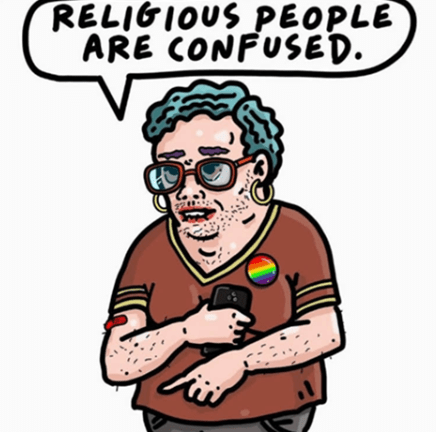
In ten years, the pope has not strayed from the Church’s conservative positions on today’s hot button cultural issues. He has upheld traditional church doctrine and consistently opposed abortion, same sex marriage, women in the priesthood, transgenderism, sexualization of kids, cultural issues the liberal media persistently advances. Liberal media incorrectly claims Christian conservatives are hateful, bigoted, and want to impose theocracy. The pope has remained steadfast throughout–at least until now. This week, the pope delved into an area that seems fraught with peril.
On Monday, the Vatican released “Fiducia Supplicans,” a document that gives priests permission to bless same-sex couples, albeit with several stipulations attached. The blessings must be spontaneous, rather than deriving from a prepared rite, and cannot be attached to a civil wedding ceremony. Further, they must not give the impression that they are akin to a wedding blessing, which the church still reserves for a relationship between one man and one woman.
As I have repeated countless times, Christians do not hate LGBTQ folks, despite all the media rhetoric to the contrary. God loves everyone and we are directed to love all our neighbors as well, but a church cannot tolerate sin, and these various sexual lifestyles are sinful. That’s the argument in a nutshell. Loving our neighbor can include a criticism of their sinful activity, whatever it is.
I admit to being confused by the pope’s latest proclamation. Gay marriage is not allowed and is still sinful, but gay couples may be blessed. What? The sinful relationship can be blessed without presenting the Church’s opposition to it? Gay marriage is tacitly being acknowledged with a wink?
Again, the LGBTQ are welcome in church. We are all sinners; none of us is better because our sins are different or lesser than anyone else’s. Blessings of individuals, LGBTQ or otherwise, are fine as well. At the end of each Sunday mass, our entire parish is blessed by our priest. The Church knows we are all sinners, yet still bestows this blessing. However, our priest would not bless us while we participate in a sinful activity like a KKK rally, so why offer blessings associated with sinful sexual activities and relationships?
I am sure these people below are sincere, but sincerity is not what is needed.

Celebrating the Vatican’s new permission to bless same-sex couples, Martin called requests for such blessings “a holy desire for God’s help,” ignoring the grave sinfulness of the homosexual relationship that makes such persons a “couple.” Martin said of the new document, “Rather than saying God doesn’t bless sin, it’s saying, God blesses all of us in our desire for God’s presence in our lives.”
“This is an early Christmas present for the Catholic Church and for so many people who have felt that God really isn’t accompanying them — and that the church, more specifically, is not accompanying them — and now they will feel more accompanied and able to do these things in public.”
Another Catholic priest in New York offers the alternative point of view.
https://www.newsmax.com/newsmax-tv/gerald-murray-pope-francis-same-sex/2023/12/18/id/1146407/
The Rev. Gerald Murray of the Archdiocese of New York told Newsmax on Monday that Pope Francis’ new document that allows for church blessings of same-sex couples is “absurd” and “horrific.”
“It’s the groundwork for redefining the nature of sin because basically the church has always said that sex outside of marriage is sinful, so all homosexual activity is sinful,” Murray told “The Chris Salcedo Show.” “The document also talks about people who are in invalid second marriages, the church says, according to the words of Christ, that is adultery. So now the church is saying that your behavior is gravely sinful, offensive to God, but the church should bless you. And what does a blessing mean? It means that we ask God to favor you in that relationship. This is absurd. This is a horrific document. It is revolutionary.

Again, our pope aligns with a political movement which defends LGBTQ individuals (a point of agreement) while also demanding we accept their sin (a point of disagreement). It is the same MO he has shown in the past. He wants to show love and tolerance for all, but he aligns with strange political bedfellows. This misstep seems more dangerous. As Father Murray indicates, he is laying the groundwork for redefining sin. It is a small step, but the first step down the slippery slope usually is. Who knows what will happen next? I pray there is more clarification which explains why this is not advocacy of sin and a compromise with worldly values, but I fear the pope may instead take us even further down this path.
Praise to Jesus Christ, now and forever.
Dave https://seek-the-truth.com/about/
https://seek-the-truth.com/
 Seek the Truth