During my youth race steadily became less of an issue in America. Furthermore, remarkable gains were made in the years prior to my youth. The contrast between my experience after first moving to the South in 1970 and my father’s experience when the Army sent him to Fort Benning, Georgia just seventeen years earlier is quite stark.

My father was raised in rural Massachusetts, in a time before every home had a TV, and he knew relatively little of how the rest of the country lived. He had never lived in a racially diverse community and knew nothing of the racial tensions impacting other parts of the country.

“It was the first time your mother and I were ever in the South . . . Well, actually I’d been to a few places while I was a cadet–I remember we went to El Paso once and to Fort Bragg once–but never for more than a few days, and they weren’t really representative of the South anyway . . . Irene, on the other hand, had never been further south than New York City . . .”
“The North and the South were totally different worlds back then, not at all like today . . .
He had barely encountered any blacks during his first twenty or so years, but was suddenly immersed in the Jim Crow South. It was his second post of duty after three years in post-war Germany (during a time in which the Army itself was integrating). Georgia was as different and as shocking as Germany.

I remember seeing the sheriff walking along the sidewalk and all the blacks would step into the street to let him pass . . . I remember also driving through a small town in Georgia, and the Klansmen were dressed up and walking along the main street, having a rally . . . and it was no big deal, at least not in Georgia. It’s not something you’re likely to see these days, but that kind of thing wasn’t all that unusual back then.
“Everything was different back then . . . the North and the South were two different worlds,” he reiterates. “Your mother and I knew very little about the South. Going to Georgia was as big an adjustment for us as Germany; in fact, it was almost as if we were traveling to another foreign country instead of returning home.
His account also shocked me because the South I lived in was so vastly different. I am sure he wanted me to know, so the memory could live on. I still remember his disbelief and disgust for what he saw.
Virginia in 1970, when I was in the fourth grade, was my first experience with race. Like my father, I had had few encounters with blacks and race was a complete non-factor before then. There were still racial tensions and disparities between the races and I saw some bigotry towards blacks in those years, but the America I grew up in became ever more tolerant of racial (and many other) differences. America was clearly amending for sins of the past; America wanted to put the matter behind us.
However, in recent years, we have reversed course. Race has become far more of an issue than it ever was in my youth. If we had remained on that initial trajectory, it seems race would be a non-issue today. How did we get so off track?
Rodney King and O.J. Simpson
I just want to say – you know – can we, can we all get along? Can we, can we get along? Can we stop making it horrible for the older people and the kids? Rodney King, May 1, 1992
Racial progress may have started its reversal in the 1990s. In 1991, the beating of Rodney King became a nationwide story about race. Video evidence clearly showed six police officers surrounding and excessively beating King in an attempt to subdue and arrest him. It was a shocking video which led to riots in Los Angeles and outrage nationwide. The police officers’ actions clearly seemed wrong. The problem, however, was the narrative: it said King was beaten because he was black and they were white. Race became the primary factor in the media narrative. King’s beating became an outlet for frustrations with police officers and white America, both which were supposedly still oppressing blacks. I rejected those broader claims the media repeatedly plied.

I certainly didn’t see why this incident represented race relations in America. I believed race relations were as good as they had ever been. Problems like racism will always exist to some degree (hopefully quite limited) because we can never fix human nature; however, the LA police officers were not a proxy for me or any other white Americans. They were accountable for their own actions, just as we all are for our own. I should not be grouped with these individuals simply because both they and I are white.
The media had a different agenda. They sought to manipulate public opinion and put racial grievances front and center again. This should not have been a story about race, but the media wanted that seed planted.
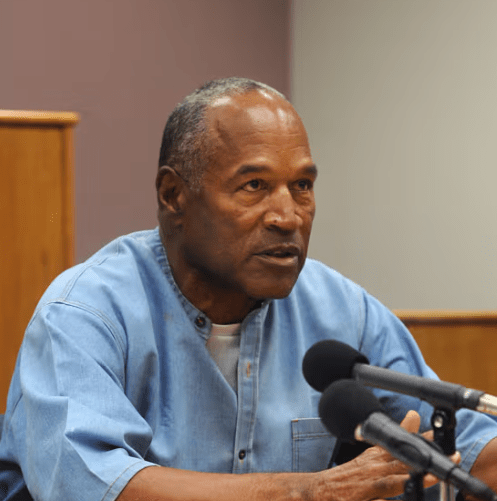
OJ Simpson’s murder trial came a few years later. It seemed obvious to me O.J. was guilty, yet so many blacks I spoke to or heard in the media insisted he was not guilty. The racial divide over O.J.’s guilt was massive. I could not make sense of it. Why were the vast majority of blacks convinced he was not guilty? He had fled after the murder, acting like he was guilty; there was tons of incriminating evidence, and he had a history of threatening his ex-wife.
The entire trial was on TV; it was discussed ad nauseum for months. His guilt seemed more obvious after this exposure. Only years later could I see that many desperately hoped this well-respected and well-accomplished black man would not be tarnished in this manner. It must have seemed a setback to the steady progression blacks had been making in American society.
Thirty years later, we read stories like this:
oj-simpson-juror-admits-simpson-guilty-payback-for-king
One of O.J. Simpson’s jurors revealed that 90% of them believed the murder suspect was guilty, but they let him off as “payback” for Rodney King’s case.
Why was it so important to exonerate O.J.? If they suspected he was guilty, why acquit him? He clearly needed to be held accountable for his actions. Why did his race matter? Why couldn’t O.J. be judged simply by his actions and the content of his character?
“I have a dream that my four little children will one day live in a nation where they will not be judged by the color of their skin but by the content of their character,” Martin Luther King.

I blame the media and opportunistic politicians for elevating these stories and unnecessarily making them about race. They wanted to launch their own civil rights battle. They wanted a story in which they were the heroes rescuing us from the throes of racist America in the same manner their parents and grandparents had overthrown an obviously unjust system. Their own status would be elevated and their legacy made complete. The problem was there were not enough incidents to adequately make the claim, so whenever an approximate incident came along it needed to be spun and the narrative carefully crafted. Facts be damned. The King and Simpson cases planted the seed, so the narrative could be resurrected again when the next approximate incident came along. There was sure to be another incident, and if that incident didn’t fit the template, it could be molded to fit the media narrative.
They would have to wait a few more years for the next incident, but they were ready when it arrived.

Duke Lacrosse Case
In 2006, three players on the Duke University lacrosse team were accused of rape by Crystal Magnum, a woman making her living as a stripper. She said she had performed at a team party, and then was raped by three players. It too became a story about race and privilege in America. The race narrative completely derailed following this story and we have never gotten it on track since. Yet, it was all a hoax.
The Duke lacrosse story fit the desired narrative exceedingly well: three young white men from wealthy families attending a prestigious school had taken advantage of a young black lady desperately making her way in the world. It was the perfect contrast for the media to embellish and run wild with. The headlines wrote themselves: innocent, hard-working single black mom victimized by rich, privileged white men! These men had all the advantages she did not have, yet they seemed oblivious to their privileged status. The media attacked them mercilessly: they were no better than the sharecroppers of ages past. They said this story demonstrated America’s inherent bias was much more subtle and was carefully disguised, but now with this incident it was out in the open again. We must be outraged by it! Thank God, the media enlightened us!
The seed planted and patiently watered in the decade before was now a full grown tree. It was time to harvest the fruit and remind America how awful our past was and how awful white Americans still were. It was an emotionally charged argument directed at a public rarely guided by reason. How could you not be angry at such injustice and unfairness? Whether Ms. Magnum was actually raped or not mattered less than the vitally important narrative. This story would now define race relations in America in 2006.
Unfortunately, the facts never fit the narrative. The facts were rarely examined. The story was implausible to begin with. There should have been witnesses at an event with the whole team attending, yet nobody corroborated Magnum’s story. Instead, the story devolved into one about the race of individuals, about the injustices of the past, and the on-going (yet subtly hidden) injustice of racism.
Magnum was deemed not credible by the police from the outset. This was the first clue something was wrong, but still this assessment was deemed problematic by the academic committee investigating the incident for Duke University:
Compounding such communications gaps, it was “a major mistake” by Duke police, Wasiolek, Moneta and others to take “at face value the reported comments of Durham police officers (and perhaps others)” on the morning of March 14 that the alleged victim “was not credible.”
How could these police officers carelessly divert us from the narrative? Their brutally honest opinions were not needed while the media toyed with public opinion. The narrative must be maintained even while the case fell apart.
Our justice system says we are innocent until proven guilty; we are also allowed to face our accusers face-to-face. The court of public opinion, however, cares little for these protections; therefore, the entire team was punished by the university’s president three weeks after the allegations:
duke-u-lacrosse-coach-resigns-and-president-responds-as-scandal-over-teams-conduct-escalates
Amid new revelations about a criminal investigation into an alleged gang rape by men’s lacrosse players at Duke University, the team’s head coach resigned on Wednesday, and the institution’s president canceled the team’s season.
Later, the president, Richard H. Brodhead, announced a five-step plan to respond to “angers, fears, resentments, and suspicions” that the alleged rape of a black woman by white men has provoked, both on the campus and in the surrounding city of Durham, N.C.
Ms. Magnum was indeed not credible which is why the case was dropped and never came to trial after a full year of investigation. Still, the academic report painted the actual victims, the three Duke players, along with the entire lacrosse team, as systemically racist. The narrative requires bigoted white racists hidden in plain sight among us:
Echoing findings from the previous two committees, the new report found “long-standing problems of campus discipline” and said “the lacrosse team was seen by at least some part of the Duke/Durham community as a manifestation of a white, elitist, arrogant sub-culture that was both indulged and self-indulgent.”
The report also recommended Duke University promote diversity. This was a hidden goal: the golden opportunity to push DEI, whether the story was true or not. From this perspective, the incident was a great success to the DEI hustlers.
However, it also said “the core group advising the President consisted largely of white men” and “the senior leadership of Duke was handicapped by its own limited diversity.” Noting that the senior leadership was largely “inherited from a prior administration that was headed by an extremely able and outgoing white woman,” the committee encouraged Brodhead “to find ways to bring a wider range of talented individuals to his council table.”
The story continued to devolve. The conduct of the Durham County attorney investigating the case was continually questioned by a few intrepid folks and he was eventually disbarred in 2007:
Michael Byron Nifong (born September 14, 1950) is a disbarred American prosecutor who formerly served as the Durham County District Attorney. He was removed from this position, disbarred, and jailed following court findings concerning his conduct in the Duke lacrosse case, primarily his conspiring with the DNA lab director to withhold exculpatory DNA evidence that could have acquitted the defendants
Mr. Nifong was not ulimately rewarded for his excessive zeal in combatting racism, but he paved the way. This case may have launched a thousand DEI departments. DEI departments were non-existent in 2006, but today are legion throughout government, education, and corporate America. Is America better with hyper-sensitivity to race and DEI departments finding a racist behind every tree? I think not. dei-censorhip-and-indoctrination
The DEI political agenda is not committed to promoting the best, seeking the truth, or helping those they purport to help. DEI promotes its own ideas and elevates those who agree with the politics of DEI–and nothing else.
The case was transferred from Durham County to the state Attorney General, and finally, thirteen months after allegations were made, was dismissed without trial: https://www.wral.com/story/1876463/
On April 11, 2007, Declaring the indicted former players innocent victims, North Carolina Attorney General Roy Cooper dropped the case after special prosecutors found no evidence to proceed.
Duke University’s president apologized to the players in 2007, acknowledging his own rush to judgment. Finally, eighteen years later, in 2024, Ms. Magnum admitted to the hoax.
former-stipper-crystal-magnum-confesses-to-lying
Former stripper and convicted murderer Crystal Mangum admitted Thursday that she lied and “made up a story” that three Duke University lacrosse players raped her at a team party in 2006.
“They trusted me that I wouldn’t betray their trust, and I testified falsely against them by saying that they raped me when they didn’t, and that was wrong,” Magnum told the independent media outlet Let’s Talk With Kat at the North Carolina Correctional Institution for Women.
Mangum, 46, said she made up the allegation because she “wanted validation from people and not from God.”
Long Live the Narrative!
Still, the race narrative continues even though this case forwarding it was totally bogus.
Ironically, the three players whose lives were turned upside down for more than a year, eventually graduated (one from Duke and two from other universities) and have successful careers, while Crystal Magnum, their accuser, the supposed victim, is in jail for a crime she committed years later. O.J. Simpson too spent nine years in prison for another crime. These were the folks elevated as victims of systemic racism.
Rodney King was clearly a victim, but not because of his race. He was on drugs and endangered others with his actions before his arrest in 1991. He also resisted arrest after he was stopped, and so bears some responsibility for placing himself into this ugly situation. He later struggled with addiction and was arrested several more times. He was not a hardened criminal, but certainly not a model citizen.
These ironies are lost on one-channel media. They seem to care little for folks like Simpson, King, and Magnum. They care only how their cases can advance the narrative. If it were my narrative, I would look for incidents which actually fit the narrative, not ones in which the supposed victims were often not actually victims.
There have been many other notable cases in years since. Michael Brown’s case led to the creation of BLM. Media again lied about the particulars and attempted to make Brown a sympathetic figure. Per several eyewitnesses, Brown’s violent assault of a police officer led to his death, but excuses were still made for him. Brown’s case was investigated multiple times, the last time by the Obama administration, and the officer was cleared in every instance. Brown was not a victim.
Travon Martin, George Floyd, and many other names have also been elevated. Each of these we were told were about race, but that connection was never proven.
So many of these stories are suspect.
Why did Crystal Magnum accuse the Duke players of rape? Media always assumes when the victim is black, race is the motivating factor, but did they assume her intent was racially motivated? Upending the lives of three men and punishing their coach and teammates for something that never happened is a travesty. There should be consequences. Advancing the race narrative in pursuit of justice should not leave so many victims.

Twenty people died during riots following George Floyd’s death. Who is to speak for those victims, one of whom was a police officer, and several who were also black? Why do we not remember these victims?
Where is the balance?
Why are some stories elevated and others–those not fitting the narrative–brushed aside? In 1991, Reginald Denny, a white truck driver, was attacked by black men in an apparent attempt to balance the scales for Rodney King’s beating. Should there have been riots to protest his treatment? Should there have been more media coverage and outrage regarding Denny?
Ultimately, I think the problem is how we define “identity”. Race, gender, and sexual orientation have become defining factors for identity, but our identity is much more than these factors. In fact, our identity is often found outside ourselves: in God and in others we have relationships with. Furthermore, I don’t associate or identify with another person simply because of their race, gender, or sexual identity. This reduction of our identity is ridiculous, and a major reason we cannot shed our obsession with race.
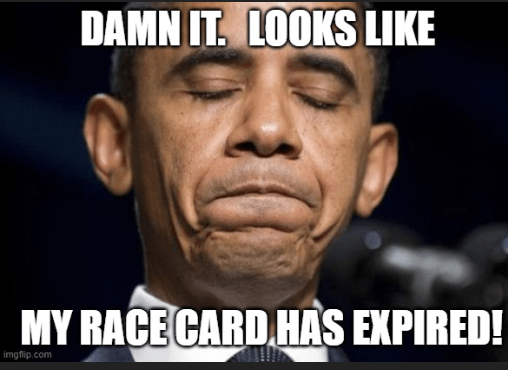
The outrageous narratives elevate crazy people like Representative Jasmine Crockett; she sees race in every issue of our day:
I want to make sure that we — we really get to the nitty-gritty on Texas . . . Texas added two seats in 2020 according to the census . . . we know that specifically Texas added 4 million people. Of those 4 million people do you want to take a guess at how many were Anglos? Just a guess. 180,000, that’s it, of 4 million, 95 percent of the people that were added . . . So get this, we added 4 million people they were people of color, Texas got two new seats. So they took those black and brown and Asian bodies and guess what? Do you think that we got a new black, brown or Asian seat?

What nonsense. I voted for a black man for NC governor because he would have represented me better than the white man opposing him. The race of the person representing me does not matter. What matters is how that person represents his constituents. Folks like Representative Crockett must stop reducing every issue to a matter of race, so we can finally move forward again.
Dave https://seek-the-truth.com/about/
https://seek-the-truth.com/category/systemic/
https://seek-the-truth.com/
 Seek the Truth