
Determining what is actually happening in Ukraine, or more importantly, what will happen next, has been a puzzlement the last three years.
The war began in February 2022. Initially, we feared Russia would overwhelm the smaller Ukraine, but Russia has not proven to be the military power many claimed they were. Ukraine heroically pushed back, but it still seemed likely they would be worn down over time. NATO weaponry provided Ukraine enough staying power to hold off the Russians for three full years. American and NATO resolve has also held; the American public has not wearied, especially since no troops have been committed and the war has not escalated, but for how much longer will this commitment last?
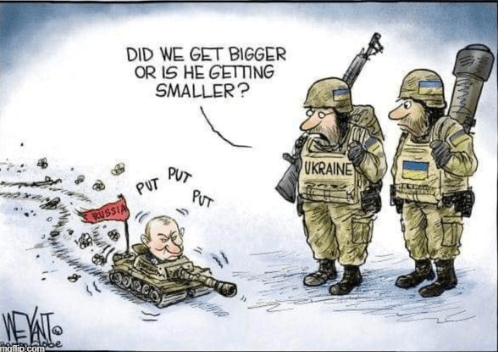
The war was at a stalemate one year in. At the time, I wrote the following:
So, we are stuck with the status quo. Russia can’t defeat a conventional Ukrainian army armed with vastly superior NATO weaponry, but the Ukrainians, without more direct NATO involvement, also do not have the capacity to eject Russia, and all the while Ukraine is suffering immensely.
I didn’t imagine then it could drag on another two years with effectively no change.
Perhaps this remains the status quo for another year or more, but why prolong this war in which neither side currently has the resources to defeat the other? Is an endless war something we seek? The war will certainly further drain Russia’s military resources, but it will eventually strain ours as well while imposing horrific costs upon Ukraine.
The Ukrainians have launched offensives of their own, but they have managed little more than preventing more territory losses after three years. There has been relatively little reporting on the war itself from the American media, and seemingly little interest from the American public. The Biden Administration calculated there was no significant political consequences to continuing the war (indeed, it was not a significant campaign issue), so they simply maintained the status quo.
The war has cost American and European governments ($430 billion in all; about 30% from the US). It has reportedly also drained American military supplies. How much longer did the Biden Administration expect this war to continue and for what purpose? The Biden Administration was content with bottling up Russia and degrading its military capability further, but that seemed like a strategy for endless war and throwing good money after bad.
The new administration and the new Congress, however, is more concerned with the mounting costs. President Trump promised he would end the war quickly, perhaps even before taking office. His special envoy to Ukraine, General Clark Kellogg said back in December:
“Let’s set it at 100 days and move all the way back and figure a way we can do this in the near term to make sure that the solution is solid, it’s sustainable, and that this war ends so that we stop the carnage.”
The monetary cost is not the only concern. Ending this war is the only humane option. The destruction, the displacement of millions, and loss of life has been devastating, especially for our ally Ukraine. Why it has taken so long to begin seeking such a diplomatic solution is yet another puzzlement.
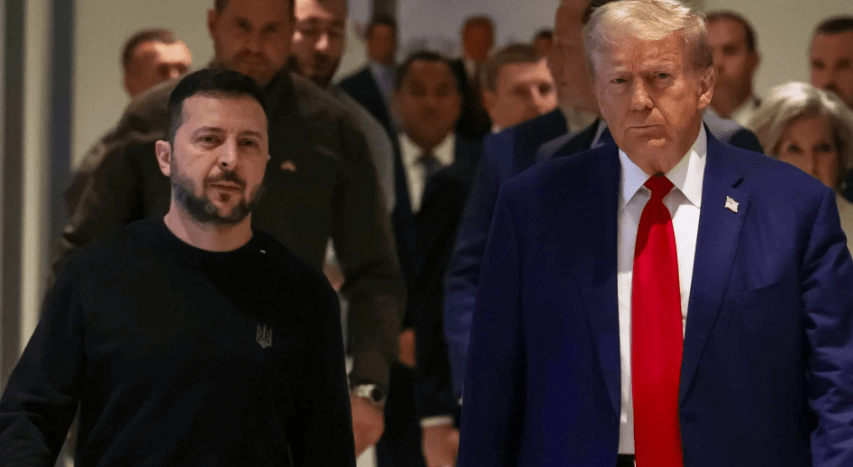
After three years, it is clear Russia will not subdue and re-incorporate Ukraine into its empire. NATO and the US are not willing to escalate the war further and to commit to expelling the Russians, and Ukraine cannot defeat the Russians on their own. Neither side can win, so there seems a basis for an peace deal here.
Two years ago, the diplomatic solution was the obvious best option. We have had only more destruction and loss of life since then. Back then, I assessed the situation as follows:
We can end this war now. Why don’t we?
Either we drive Russia from Ukraine totally by untying the hand NATO currently has behind its back or we bring both sides to peace talks. The Biden Administration is taking the middle ground instead. Why let the war drag on needlessly? Is it somehow better if the war is won gradually, an end that takes longer to unfold, devastates our Ukrainian ally, and keeps alive the risk of some unforeseen change in circumstances?
The calculus has not substantially changed in the interim. Neither side has gained an advantage they didn’t have two years ago.
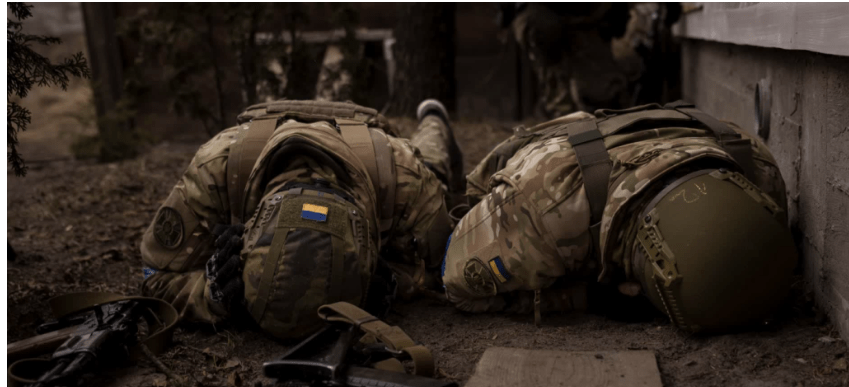
Trump Seeks Diplomatic Solution
In 1917, after three years of trench warfare in Europe, the USA intervened to end the war which was eventually labeled the “war to end all wars”. The Trump Administration similarly seeks to end this war after three years of stalemate. There appear to be two distinct choices: escalate the war to win back portions of Ukraine or sue for peace and accept some redrawing of Ukraine’s boundaries. The ultimate aspirations of Presidents Zelenskyy and Putin are both futile; neither side can achieve victory.
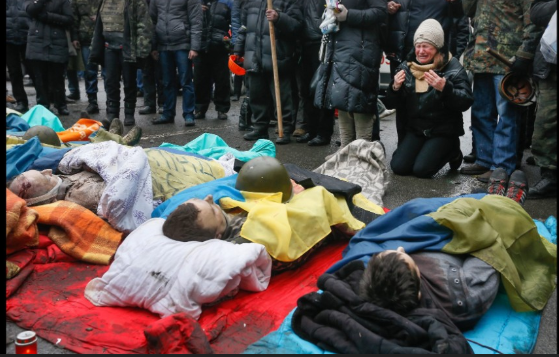
President Zelenskyy said “we hope that we can finish this war this year” on the third anniversary of Russia’s full-scale invasion. That’s a hopeful sign.
However, he also wants security promises, assurances his country will not be invaded again once hostilities end.
But he warned that Ukraine needs security guarantees to prevent Moscow returning, suggesting EU and Nato membership will help. Russia has consistently opposed the idea of Ukraine joining Nato.
The Trump administration has indicated NATO membership is off the table. They believe it destroys a potential peace deal as the Russians are very much opposed.
This disagreement between allies is currently slowing progress on a peace plan. Ukraine is understandably leery as they have been burned before. In 1994, they entered into a security agreement which they surrendered their nuclear weapons in exchange for security assurances. That deal (disastrous from the Ukrainian perspective) laid the groundwork for their troubles today, and may account for their hesitation to accept anything less than NATO membership.
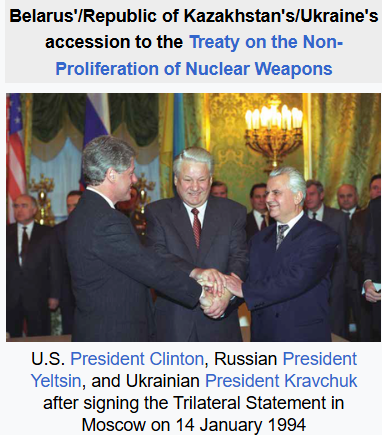
The memoranda, signed in Patria Hall at the Budapest Convention Center with U.S. Ambassador Donald M. Blinken amongst others in attendance,[3] prohibited Russia, the United States, the United Kingdom and France from threatening or using military force or economic coercion against Ukraine, Belarus, and Kazakhstan, “except in self-defence or otherwise in accordance with the Charter of the United Nations.” As a result of other agreements and the memorandum, between 1993 and 1996, Belarus, Kazakhstan and Ukraine gave up their nuclear weapons.
The Trump Administration has instead crafted a different, albeit unconventional, offer which offers security in terms of shared economic interests:
Ukraine and the U.S. have reached an agreement on a framework for a broad economic deal that would include access to Ukraine’s rare earth minerals, three senior Ukrainian officials said Tuesday.
. . . Kyiv hopes that signing the agreement will ensure the continued flow of U.S. military support that Ukraine urgently needs.
The agreement could be signed as early as Friday and plans are being drawn up for Ukrainian President Volodymyr Zelenskyy to travel to Washington to meet President Donald Trump, according to one of the Ukrainian officials.
According to one Ukrainian official, some technical details are still to be determined. However, the draft does not include a contentious Trump administration proposal to give the U.S. $500 billion worth of profits from Ukraine’s rare earth minerals as compensation for its wartime assistance to Kyiv.
Instead, the U.S. and Ukraine would have joint ownership of a fund, and Ukraine would in the future contribute 50% of future proceeds from state-owned resources, including minerals, oil, and gas. One official said the deal had better terms of investments and another one said that Kyiv secured favorable amendments and viewed the outcome as “positive.”
The Ukrainians have been hesitant to strike a deal which requires them to surrender a portion of future profits to the US. However, President Trump and his team stress it is an opportunity to recoup monetary losses from the last three years. In addition, it creates an economic relationship between the two countries, one that the US would be more likely to protect should there be future Russian aggression:
waltz-we-gave-ukraine-an-opportunity
MIKE WALTZ, WHITE HOUSE NATIONAL SECURITY ADVISOR: . . . we presented the Ukrainians really an incredible and historic opportunity to have the United States of America co-invest with Ukraine, invest in its economy, invest in its natural resources, and really become a partner in Ukraine’s future in a way that’s sustainable, but also would be, I think, the best security guarantee they could ever hope for, much more than another pallet of ammunition. And so to have the United States co-invested to grow their pie, to allow their economy to flourish over time, and, oh, by the way, to have the American taxpayer recoup the hundreds of billions of dollars, as the Europeans do, all makes sense. Why we’re getting this pushback and certainly this kind of, as the Vice President said, bad-mouthing in the press for all the administration has done in its first term as well and all the United States has done for Ukraine is just unacceptable.
Even some Ukrainian media has looked favorably upon this offer:
Why a U.S.-Ukraine Resources Deal Would Make Sense for Ukraine
It is easy to portray US President Donald Trump’s demand for a minerals deal as a cynical effort to take advantage of the victim of aggression when he has no other choice. The reality, however, is far more complex, and a deal between the US and Ukraine could offer significant benefits for Ukraine.
At the moment, Ukraine is sitting on vast reserves of untapped natural resources wealth. A good portion is in territory occupied by Russia and thus inaccessible to Ukraine; the rest, while in unoccupied territory, is not likely to be developed successfully until there is an end to Russia’s attacks against Ukraine. So, while the potential valuation of such reserves is extraordinary, it has little present value because of the war and would have no value if Ukraine were to be defeated
After three years of no change in the status quo, the offer is worthy of consideration. The situation can only improve. President Biden managed to avert the disastrous outcome of Russia overtaking Ukraine, but he never had a strategy to win or diplomatically end the war. The stalemate cannot continue indefinitely, and, in fact, patience may be running thin. Many Republicans have been hesitant to continue U.S. funding of this war the last two years. The new Republican-led Congress is even less likely to allocate significantly more funding. President Trump himself wants to end the steady flow of dollars to an unending, and seemingly non-winnable war. An alternative strategy, is needed now, and this seems a plausible third alternative.
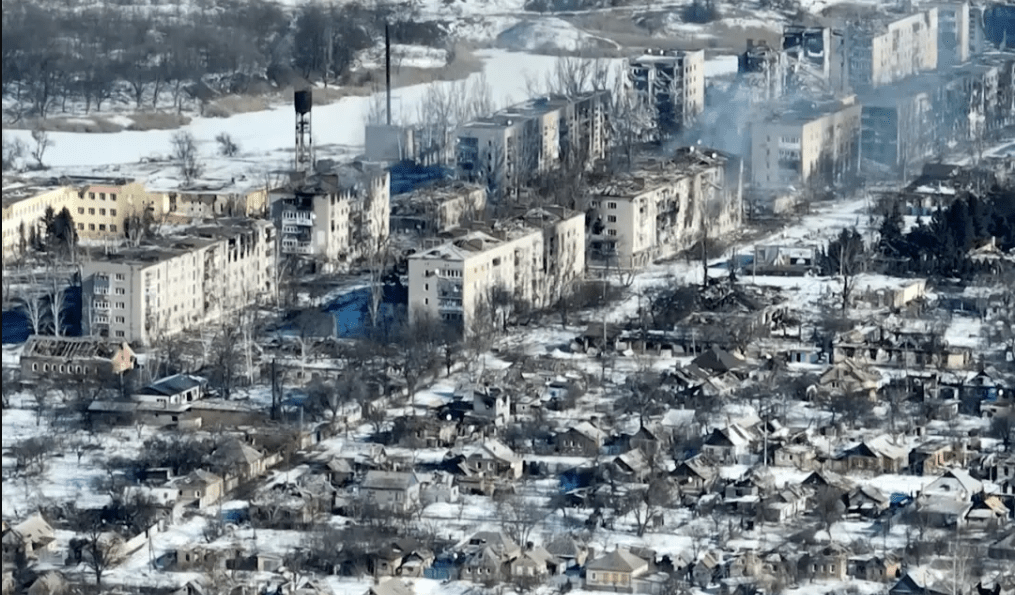
Gee, What Just Happened?
President Zelenskyy arrived at the White House Friday, February 28, ostensibly to sign the proposed minerals deal and then begin negotiations on an actual peace deal. Secretary of State Rubio had already opened peace negotiations with the Russian ministers a few days earlier. Ukraine and Russia officials had not spoken directly.
Instead of signing the minerals deal (apparently already negotiated before this visit), President Zelenskyy used this opportunity to press his case for continuing the war. That encounter ended badly as he, President Trump, and Vice President Vance bickered openly in front of media. The situation rapidly unraveled when Zelenskyy objected to Vance’s characterization of the current situation as “diplomacy”.
trump-zelenskyy-vance-transcript
President Zelenskyy: . . . in 2019, I signed with him the deal. I signed with him, (French President Emmanuel) Macron and (former German Chancellor Angela) Merkel. We signed ceasefire. Ceasefire. All of them told me that he will never go … But after that, he broke the ceasefire, he killed our people, and he didn’t exchange prisoners. We signed the exchange of prisoners. But he didn’t do it. What kind of diplomacy, JD, you are speaking about? What do you mean?”
The Ukrainian president continued to air his grievances against President Putin and suggested President Trump come to Ukraine to see for himself. President Zelenskyy has valid grievances regarding the war and the lack of commitment to the last set of security guarantees (in 1994), but this was not the right forum to air his concerns. It was actually very bad form. Trump and Vance were expecting the deal to be signed, not re-negotiated publicly.
Zelenskyy wants ironclad promises his country would not be invaded again in the near future. This is certainly understandable, but again this was not the right forum to air this demand. The minerals deal proposed by President Trump would seemingly strengthen the relationship between the two countries, aligning them in opposition to Russia. This should have been enough for Ukraine. The deal should have been finalized, but instead the visit abruptly ended with no agreements signed.

As someone who has steadfastly supported Ukraine against Russia during the entire three years of this war, this turn of events is quite disappointing. The US must continue to support Ukraine in the war in the short-term, but it cannot continue the current arrangement indefinitely. A diplomatic solution is the only viable option and unless a better offer is coming from European allies, President Zelenskyy should re-consider President Trump’s offer.
For now, the end to the war remains elusive, still a puzzlement. Democrats immediately jumped to the conclusion that Trump has failed. They are proposing articles of impeachment over his handling of this (Oh no! Not this nonsense again!). The effort for peace has not yet failed. There is still ample time to get it back on track.
President Zelenskyy most notably seeks entrance into NATO or the European Union, but he should be willing to negotiate the form of security assurances. Zelenskyy recently said that he would be willing to stand down as president if Ukraine was made a member of NATO in return. It is a magnanimous offer, but is extremely unlikely; Putin has indicated, he would not accept NATO membership as part of any peace deal. President Zelenskyy must also must abandon the notion of returning Ukraine to its pre-2014 borders which has not been accomplished after three years of fighting. He has to accept something less (something not so popular in his own country) to achieve peace in this moment.
Perhaps Zelenskyy is likely feeling personally maligned as well. Much of the American Right has been critical of him and not always supportive of the war itself. I am often unsure why he has been criticized as much or more than President Putin; there should be no doubt the US and NATO stands with Ukraine against the Russian aggressor–both during the war and in the peace which hopefully follows soon. Zelenskyy has also repeatedly been accused of being a crook and Ukraine is supposedly fraught with corruption; still the Russian government is even more corrupt and is at fault for starting this war. We must oppose and push back against Russian aggression first.
President Trump, even before President Zelenskyy’s visit last week, accused him of being a dictator (perhaps because elections were delayed last year), but he is an elected leader and still has the majority support of his people. Holding an election when millions have left the country, hundreds of thousands are engaged in fighting the enemy, and country is in shambles may not have been such a good idea in any case.
zelenskyy-popularity-in-Ukraine
According to the results, at the end of 2024, 52% of Ukrainians polled said they ‘trusted’ Volodymyr Zelensky, a sharp drop from the end of 2023 (77%).
Many assume the worst given the very ugly scene in the White House last Friday. Many accusations have been leveled from all sides. Still, it seems the Ukrainians must eventually compromise. They cannot afford to lose US support. They can seek a better deal with the Europeans, but it seems unlikely Europe can offer as much as the US.

The US can invest hundreds of billions in Ukraine, can help them finally realize the potential of their natural resources which are in great demand worldwide and which they have been unable to access to this point, can bring the Russians to the negotiating table, can form a strong economic alliance with Ukraine, and most importantly can bring stability and peace to a nation devastated by three years of war. No other nation (or group of nations) can offer this much. President Zelenskyy has to come this eventual realization. Take the lifeline offered, please.
Furthermore, President Trump clearly cannot abandon the Ukrainians, and he certainly will not do so on the basis of one botched diplomatic incident. The claims he is now surrendering to Putin are ridiculous. Trump will not risk another Afghanistan-like disaster with the Russians marching into Kiev. Democrats are simply seizing upon this ugly public disagreement and projecting that is the start of the Trump Ukraine failure that they desperately hope for.
This tempest will blow over, and I think the most likely outcome will be a deal that looks much like the one Trump has already offered. It is the only solution that makes sense at this point. Let’s be patient while negotiations continue.
Dave https://seek-the-truth.com/about/
https://seek-the-truth.com/category/world/
https://seek-the-truth.com
 Seek the Truth