The selection of a new pope matters to those of all faiths, not just Catholics. Many non-Catholic friends and acquaintances have commented on this latest selection. They want to know what we Catholics think of this new pope. Few religious leaders today are recognized or heard by Americans, but the pope remains in a different category. The pope is, after all, a world leader, with about a billion-and-a-half Catholics under his care. He is often viewed as a political leader as well, commenting on contemporary issues not conforming with God’s message.
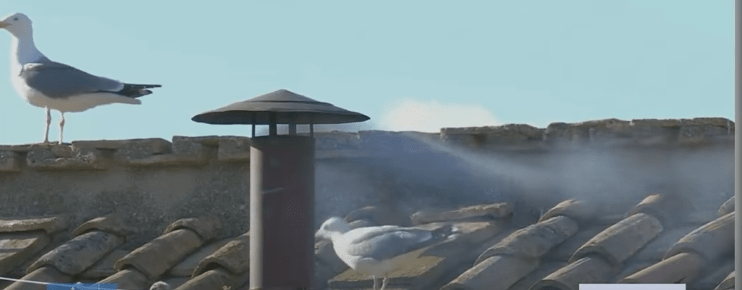
So, will Pope Leo XIV show us the way, provide hope and inspiration in these troubling times? The world today is an awful mess, in need of a religious and spiritual revival. We need more than a holy man of good integrity as pope; we need a visionary leader bold enough to pushback against, not just stand firm, against today’s evils.
Will Leo clarify God’s message? Can he lead Western culture out of its moral morass, and return us to a strong moral foundation, the once great foundation that provided the moral certainty to save the world from the evil empires of the 20th century, that elevated freedom and reason throughout the last millennia, that stood as a model and beacon for the world, that spread its prosperity, wisdom, ideas, science, and art?
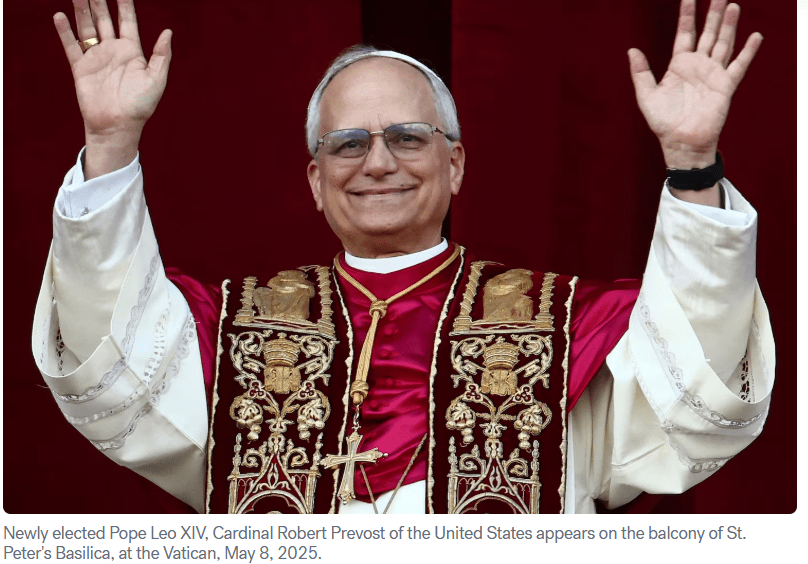
Another Woke Pope?
American media was enthralled with Pope Francis and often quoted him. They correctly saw him on the political left, but they were also disappointed he fell short of expectations on abortion, gay marriage, women in the priesthood, transgenderism, and other progressive social issues. American liberals are still searching for another “enlightened” pope, a radical reformer who will finally move the Church beyond the conservative values it has long stood for. I doubt they will be satisfied anytime soon.
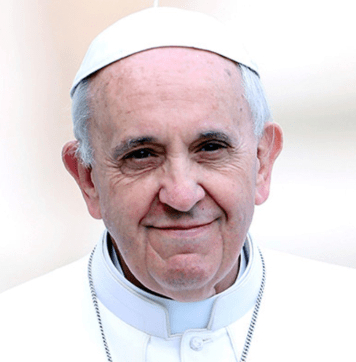
Pope Francis by all accounts was a holy man, but we do not need another “woke” pope. The pope should be a moral and spiritual leader, but avoid venturing into secular political matters as Francis often did.
I cringed when Pope Francis spoke on issues like C02 levels in the atmosphere. Yes, care for the environment matters; indeed, it is both a moral and political issue, but he didn’t have a good grasp of the issue. We all want clean air, water, healthy food, a clean neighborhood, etc.. We appreciate the beauty of nature, God’s creation. We wish to preserve these good things. There is little controversy in this regard. However, the current climate change debate is not about these things. The side the pope advocated for was actually supporting another agenda; his political allies were very much opposed to the conservative values of the Church. Francis was over his head when straying into the secular debate; he was played by progressives.
Pope Francis demanded rights to land, labor and lodging . . . criticized corporations, banks, free trade agreements and austerity measures as part of an “anonymous influence of mammon”; and rushed to the defense of “Mother Earth” (others might use the phrase “Gaia”), which he saw as “being pillaged, laid waste and harmed with impunity.” Phrased as it is, the Pope’s call for a “truly communitarian economy” tempts socialist revolution.
Furthermore, Pope Francis’s message was not always clear. He allowed priests to bless same sex couples, while maintaining such relationships were sinful. The Church doctrine never changed, but his message was confusing and sowed doubt.
On Monday, the Vatican released “Fiducia Supplicans,” a document that gives priests permission to bless same-sex couples, albeit with several stipulations attached. The blessings must be spontaneous, rather than deriving from a prepared rite, and cannot be attached to a civil wedding ceremony. Further, they must not give the impression that they are akin to a wedding blessing, which the church still reserves for a relationship between one man and one woman.
Pope Francis also criticized the excesses of capitalism. There are moral hazards in this economic system, so it was appropriate to warn us. Yet, his continual attacks on capitalism and his support of policies furthered by Marxists made us question his judgment once again. To be fair, Pope Francis also criticized Marxism as a political force; yet media still attempted to tie him to Marxist policies:
In his 2013 apostolic exhortation, Evangelii Gaudium, Pope Francis criticizes the notion that reducing the disproportionately-high income tax burden on high-income earners can stimulate investment and economic growth as a “crude and naïve trust in the goodness of those wielding economic power and in the sacralized workings of the prevailing economic system.”
Yes, capitalism has issues, but why comment on tax policy? Why stray so far from moral and spiritual matters?
Americans are already guessing at Pope Leo’s political leanings, both those who loved Francis’s political instincts, and those who cringed when he spoke on matters we would rather he avoided.

Some American conservatives have already criticized him for critiquing Vice President J.D. Vance’s commentary on immigration. Then Cardinal Prevost did not appear to be offering a political commentary in this post, and so what if he criticizes an American conservative in one particular instance? VP Vance was making a moral argument, and was critiqued on that aspect alone. It wasn’t a critique of American immigration policy per se.
Others are combing Leo’s X account trying to discern positions on gun control, immigration, and more. So far, there is little data to pin down his political leanings. For what it is worth, he is a registered Republican and a Chicago White Sox fan. No matter which political side he sympathizes with, it would be best if he stay out of such discussions altogether as pope. Let’s hope this pope restrains himself more than the last.
Other Models to Follow
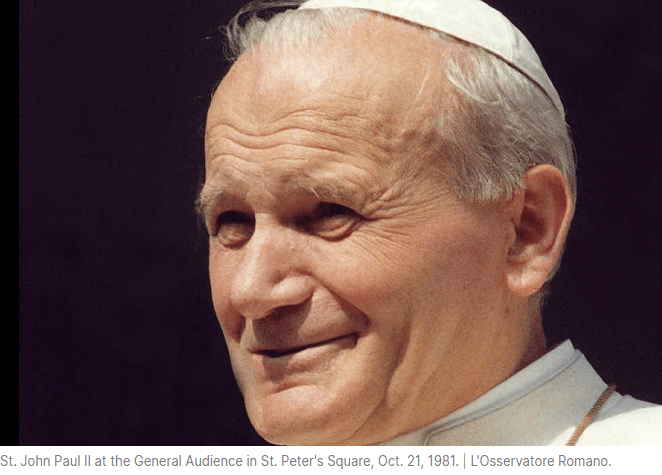
John Paul became pope when I was still a young man. I remember his tenure distinctly; I still compare every new pope to this great leader, and now canonized saint. American Cardinal Timothy Dolan said John Paul “reinvigorated the soul of the world” that was weary from “lies” and “atrocities.” He traveled the world many times over (seven times to the US, 130 countries in all), inspiring the faithful.
John Paul showed immense courage standing in the breach and daring the Soviets to respond. His example rallied millions in his native Poland in 1979. After ten additional years of steadfast and outspoken moral leadership and criticism of the communist regime, the Soviet Union collapsed and its empire was dismantled. John Paul was the right man at a time of crisis.
“The Communist party was always saying, ‘Yes we are here for you! We are for the workers! For the poor people!’ However, these people were now saying no.” “It was a kind of revolution that was absolutely peaceful, absolutely peaceful. The people were praying the rosaries and on the gate of the Gdansk shipyard there was a great portrait of John Paul II.” “I know it was also of course the weakness of the Soviet economy, Ronald Reagan’s very good and strong policies. However, who started it? Who did it? St. John Paul II, Karol Wojtyła and the millions of Poles who were not afraid.” Janusz Kotanski, Polish Ambassador to the Holy See
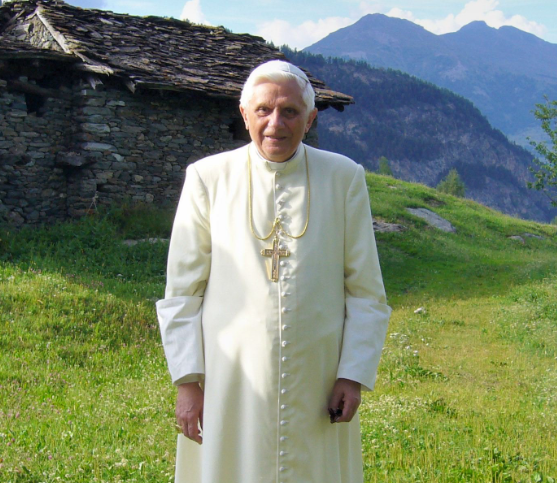
Pope Benedict who followed John Paul II was more scholarly. Cardinal Dolan said Benedict united “the mind, faith, and reason.” Bishop Robert Barron said “he was one of the great defenders of reason on the world stage.” Pope Benedict stood in opposition to moral relativism, one of the great dangers of our time. Benedict was different than his mentor, John Paul, but nonetheless provided consistent moral clarity to a world intent on challenging the tried and true Judeo-Christian values and seeking an alternative to God.
Pope John Paul was definitely the right choice. Pope Benedict too seemed a fitting choice. Cardinal Dolan praised Francis as well, saying: pope-francis-was-a-man-of-the-heart. “Pope Francis, I thought, spoke very much about the heart,” but was Francis the best choice for these troubled times? I am not so sure he was.

https://babylonbee.com/news/pope-francis-fires-bishop-for-being-too-catholic/
The cardinals haven’t always made the right choices. The Borgia and de’Medici popes did not appear to be Holy Spirit inspired. A handful of other popes were of highly questionable integrity. The papacy moved to Avignon, France for most of the 14th century; there was even a period of multiple claimants to the papacy.
None of this controversy was particularly good for the institution; it demonstrates Church leaders can be influenced by contemporary politics and deterred from the inspiration the Holy Spirit. Nevertheless, despite some awful choices throughout the years, the Church prevailed throughout and still today remains a beacon to the world. The Church is far greater than the man leading it. However, with the right leadership, the Church in Rome can still make a massive difference in the world today. Let’s pray Pope Leo is that right leader for these times.
And so I say to you, you are Peter, and upon this rock I will build my church,* and the gates of the netherworld shall not prevail against it. Matthew 16:18
What do We Need?

The pope should address some pressing contemporary matters, inspire the faithful, and apply God’s moral teaching to today’s complex world. The West is in a moral crisis. People claim to be “spiritual”, but practice their faith less than ever. Judeo-Christian values, along with reason and plain common sense, have been systematically dismantled by a progressive and increasingly Marxist leaning culture.
140 years ago, Neiztsche said God was dead and we, unfortunately, killed him.
“God is dead! God remains dead! And we have killed him! How can we console ourselves, the murderers of all murderers! The holiest and the mightiest thing the world has ever possessed has bled to death under our knives: who will wipe this blood from us? Friedrich Nietzsche, 1882, Gay Science.
The Soviets later expunged God from culture completely. Alexander Solzhenitsyn spoke of the utter defeat of a once Christian Russia. God was not only dead, but outlawed and then abandoned.
I have read hundreds of books, collected hundreds of personal testimonies, and have already contributed eight volumes of my own toward the effort of clearing away the rubble left by that upheaval. But if I were asked today to formulate as concisely as possible the main cause of the ruinous Revolution that swallowed up some sixty million of our people, I could not put it more accurately than to repeat: Men have forgotten God; that’s why all this has happened.
Even while the Soviets expunged God, Europe’s “Lost Generation”, the generation which came of age during World War I was voluntarily surrendering. WWI was the war to end all wars; an estimated 40 million died. In the aftermath, Europeans became disillusioned with themselves and Western values. Unfortunately, it was not the war to end all wars; Europe was engulfed in a second world war twenty years later, one even worse than the first, involving more nations and killing eighty million. WWII brought incalculable evil, including the horror of the Jewish Holocaust. Europeans concluded Western, Judeo-Christian values had utterly failed and have since abandoned those former bedrock values. Europe today is a shadow of the formidable civilization it once was, not so much because of the awful wars it suffered, but because of its unwillingness to defend the good it once believed in.

Today’s American youth as well struggle with the notion of God, defining values, and the exercise of faith. President Reagan said: “Freedom is never more than one generation away from extinction. We didn’t pass it to our children in the bloodstream.” Freedom and values, like every other good thing, come from God. The boomer generation, failed to passed the torch of freedom, belief in God and Judeo-Christian values.
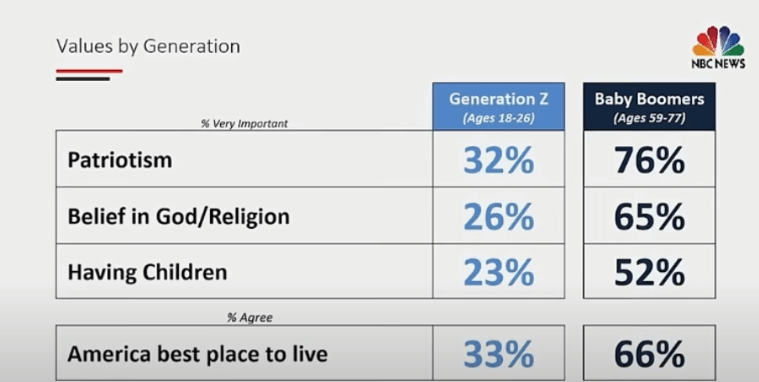
Today’s youth cannot find meaning in the most free and prosperous country that ever was. Perhaps they are looking in the wrong place?
Without God, we fail miserably. Without God, we lack hope and purpose, and our culture dies, something humanity has demonstrated repeatedly. Our youth apparently, do not believe in passing any torch, do not believe in passing their values, whatever they may be, to the next generation. What exactly do they live for these days?
Pope Leo XIV addressed this concern during his first mass as pope:
https://catholicreview.org/full-text-of-first-public-homily-of-pope-leo-xiv/
Peter, however, makes his profession of faith in reply to a specific question: “Who do people say that the Son of Man is?” (Mt 16:13). The question is not insignificant. It concerns an essential aspect of our ministry, namely, the world in which we live, with its limitations and its potential, its questions and its convictions.
There is the world’s way in which we decide what is best for ourselves because God has become “irksome”, an annoyance:
First, there is the world’s response. Matthew tells us that this conversation between Jesus and his disciples takes place in the beautiful town of Caesarea Philippi, filled with luxurious palaces, set in a magnificent natural landscape at the foot of Mount Hermon, but also a place of cruel power plays and the scene of betrayals and infidelity. This setting speaks to us of a world that considers Jesus a completely insignificant person, at best someone with an unusual and striking way of speaking and acting. And so, once his presence becomes irksome because of his demands for honesty and his stern moral requirements, this “world” will not hesitate to reject and eliminate him.
Prior cultures killed God and expunged God; today, we ignore God. Today’s ever-so-enlightened culture has progressed beyond God. We say we do not need God. We may still believe in some notion of God, but we are free to re-define God however we choose. We can literally become God ourselves and re-define his precepts.
Gen Z is so focused on finding their own identity, they cannot find their identity in anyone else, let alone God.
They cannot find identity family either. How does our country (and the West in general) survive if we stop having children or if we abandon our few remaining children to the state? https://www.bbc.com/news/world-us-canada-57003722
The report also analyzed the total US fertility rate, which estimates how many babies a hypothetical group of 1,000 women would have over their lifetime based on actual birth rates. For a generation to exactly replace itself, this number must be at or above 2.1.
According to the CDC, this rate has generally been “below replacement” since 1971 and has consistently been below replacement since 2007. Today, the US total fertility rate sits at 1.6 – another record low.
Specifically, we surveyed a representative sample of just over 1,000 U.S. adults about their future family planning. Of those without children, about half (52%) do not want to have a child in the future, while 20% remain unsure.
Only one Western nation, Israel, has a birth rate above replacement. Does no other care to pass the torch?
Perhaps today’s unsatisfied youth will once again wonder what is missing from their lives. God, country, and family kept us grounded in truth in the past. Gen Z’s new values have little basis in truth.
Pope Leo also warns the faithful not to practice a luke-warm brand of Christianity:
Then there is the other possible response to Jesus’ question: that of ordinary people. For them, the Nazarene is not a charlatan, but an upright man, one who has courage, who speaks well and says the right things, like other great prophets in the history of Israel. That is why they follow him, at least for as long as they can do so without too much risk or inconvenience. Yet to them he is only a man, and therefore, in times of danger, during his passion, they too abandon him and depart disappointed.
Either abandoning God or simply checking the “I am religious” box result in a “loss in the meaning of life”.
What is striking about these two attitudes is their relevance today. They embody notions that we could easily find on the lips of many men and women in our own time, even if, while essentially identical, they are expressed in different language. Even today, there are many settings in which the Christian faith is considered absurd, meant for the weak and unintelligent. Settings where other securities are preferred, like technology, money, success, power, or pleasure.
These are contexts where it is not easy to preach the Gospel and bear witness to its truth, where believers are mocked, opposed, despised or at best tolerated and pitied. Yet, precisely for this reason, they are the places where our missionary outreach is desperately needed. A lack of faith is often tragically accompanied by the loss of meaning in life, the neglect of mercy, appalling violations of human dignity, the crisis of the family and so many other wounds that afflict our society.
Let’s Find Hope Again
Pope John Paul II, along with President Reagan and Prime Minister Thatcher, defeated the god-less Soviet empire. After that incredible victory 35 years ago, the West was pre-eminent in the world. It was an opportunity to use our standing to revive God, religion, values, morality, and the rest.
A few years earlier, Pope John Paul came to America to inspire us. “Do not be afraid”, he proclaimed.
“Dear young people: do not be afraid of honest effort and honest work; do not be afraid of the truth. With Christ’s help, and through prayer, you can answer his call, resisting temptations and fads, and every form of mass manipulation. Open your hearts to the Christ of the Gospels-to his love and his truth and his joy. Do not go away sad!” Pope John Paul II, Boston Mass.
Can Pope Leo XIV re-ignite that spark we once had, the spark John Paul kindled? We desperately need reminders of past successes, to repent and learn from our current mistakes, but most importantly to find meaning and hope in life. We can find that only through God.
Dave
https://seek-the-truth.com/
https://seek-the-truth.com/category/faith/
 Seek the Truth