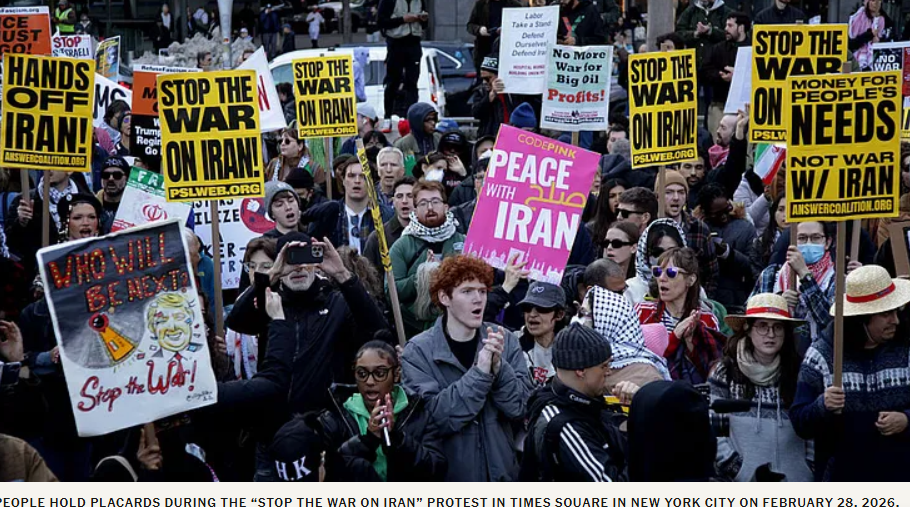
The US and Israel began a war on Iran February 28, three plus weeks ago. Immediately upon its commencement, the propaganda war, perhaps the more important war, began.
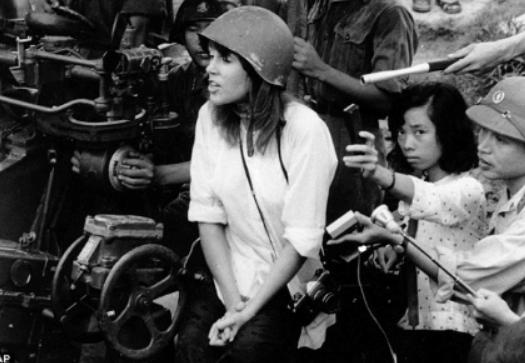
In comparison, the Vietnam war began in earnest with a troop buildup in 1966, but for several years following, the American public remained supportive or disinterested. The propaganda war came later.
America’s tolerance has diminished since that era. Still, patience for the Iran war, which has been described as America’s least popular war at its outset, certainly should withstand three weeks.
I understand concern over yet another foreign war in 2026. War should always be the last option, and I have to believe it was in this instance (none of us has enough insight to know the complete calculus). There were certainly foreseeable risks; however, most concerns raised by one-channel media and American politicians today are not genuine in the least. Their intent is often not success for America’s war effort nor defeat of an implacable and menacing foe of the last fifty years. They are fighting their own propaganda war, often misaligned with the country’s interests.
Vietnam anti-war protests followed the North Vietnam offensive in January 1968. That fateful event was not a North Vietnamese military success, but it was viewed as a US setback. My father who served two tours in Vietnam and worked for the Army Chief of Staff in between Vietnam tours described it this way:
“The Tet offensive turned the tide politically even though it was in fact, a major military setback for the North. The North had impressive gains in the first few days of the offensive (they even laid siege to the U.S. embassy in Saigon), but, from a military standpoint, it was a desperate gamble, an all-out offensive that could not be sustained. Within a week, they had given up almost all of the gains that they had made in their initial surprise attack. But this is not how it was portrayed by the media.”
Vietnam and it allies learned to fight the propaganda war, and our enemies have perfected the art since then. Media can, at times, provide a proper perspective of the war, but one-channel media today is myopic and sometimes aligned with our enemies. Today, everything is seen from a political perspective. Which party or president benefits from the war to this point? This calculation impacts reporting. If benefitting the “wrong” political side, an alternative view must be spun to realign the public’s perspective.
The 1968 Tet offensive, although a military failure was a political success; it became the catalyst that turned the American public against the war. The public had been led to believe that progress had been slow but steady; however, during the offensive, TV images showed not an enemy in retreat, but a determined and solid foe. Many Americans felt they had been duped, that the war was not going as well as the government had proclaimed. The anti-war movement gained steam, the media looked more critically at Vietnam, aligning with protestors, and support declined precipitously. Troops returning from Vietnam were not welcomed as they had been after WWII or would be again after Desert Storm in 1991. Our enemies had discovered our weakness and they exploited it.
The Vietnamese could not defeat the US militarily, but they influenced American politics via their bold gamble, ultimately leading to our defeat. Lack of political will rather than lack of firepower became the determining factor in Vietnam. American politicians were unwilling to engage in all-out war, even before 1968: unwilling to call up the National Guard, instead relying on untrained and often unwilling draftees, unwilling to chase the enemy from safe havens in neighboring countries, unwilling to expand the war into North Vietnam, unwilling to provide logistical support for the South Vietnamese Army after the American Army left.
Has America learned from Vietnam and subsequent wars? This new war begins with an entrenched anti-war coalition. Iran can win this war only if American resolve, pressured by protests, diminishes. Iran’s despotic regime does not need any significant victories; they can actually win merely by surviving.
However, now that the war has begun, the calculus has changed. Everyone should support this war now, even if you were hesitant at first. Not following through at this point would lead to disastrous consequences.
Political meddling is another lesson from Vietnam. Throughout that war, politicians meddled in tactical decisions, decisions which should have been the military’s.
Regulations like the ones on building and tearing down bridges kept him from pursuing the enemy, or even worse yet, from protecting his own guys.
“I’ll give you the prime example,” he starts, animated again. “When I took over the battalion, all my guys were afraid to shoot. They had all these rules about when to shoot and when not to shoot, kind of like the police are burdened with these days. You can get too cute . . . making guys stop and think in a situation when they need to react quickly. I wasn’t going to get my guys killed for a bunch of silly rules. I didn’t want them to ask: ‘Are you a bad guy?’ every time they heard a noise. I told them if it moved after curfew, then it was probably a bad guy. Don’t ask questions, just shoot. If they weren’t sure, if they hesitated, they might wind up getting killed themselves . . .” They were his charges, and he had to make sure they could protect themselves. It is another of his fundamentals of war: keep your guys alive by killing more of them than they killed of you.
“And I told them if anyone asked questions later, I would take responsibility. I gave them the order, so I should take the responsibility. It boosted the morale of the troops about a hundred percent.”
My father left the South Vietnam jungle in September 1967. When he returned five years later, the Saigon operation, the headquarters away from the fighting, had grown exponentially. There were departments inside departments, plan after plan submitted to win in some new and novel way. Militaries win wars, not politicians.
“When I went there in ’67 we were a lean, mean fighting machine. About a year after I left, we started cutting troops. We’d been cutting troops for four years when I went back there. In that same time MACV had grown incredibly; it was out of control. When I got to Saigon in ’72, I remember thinking where the hell have we been cutting? Have we moved everyone from the field to Saigon? . . . I said this is nuts! Had to be the most inefficient operation I’d ever seen–bar none.”
My father insisted the war could have been won, but it was ultimately a political war, dooming it to failure. The US military had all the advantages in Vietnam, but was not allowed to flex its muscle.
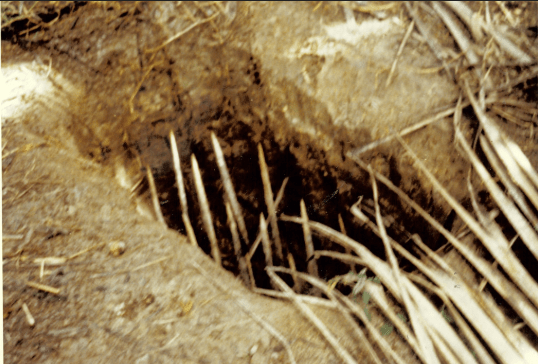
The VC were heavily supported by the North Viet government: food, weapons, the like. Supplies came down the Ho chi Minh trail. But still they sometimes they had to make do with whatever they had on hand. The VC might even use a bow and arrow, and occasionally, you came across a punji stick, a bamboo stick sharpened and concealed in the ground. It wouldn’t kill you, but it could hurt like hell if you stepped on one. . .
“We had better night vision, more firepower,” he continues. “We controlled the air . . . We had lots of advantages.” I thought he would go on to tell more, make clear how it all went wrong. But it’s a difficult topic to broach–the failure of the army he is so proud of.
The US has had nothing but overwhelming military successes since Vietnam–only to lose them politically in the following years, culminating in the ignominious exit from Afghanistan in 2021.
If we enter a war, there should be clear and achievable military objectives. The politics are for before or after the war, not during.
Unparalleled Force
The American military when allowed to act without political restrictions is an unparalleled force. This was demonstrated masterfully during the first Gulf War (1990-91), Desert Storm. The US led and assembled a multi-nation coalition which first bombed Iraq for six weeks, and then summarily dismissed the Iraqi army in four days with fewer casualties than might have been lost in a training exercise of this size. It was a impressive display of military (primarily US) might that put the entire world on notice. America successfully achieved the political goal of liberating Kuwait and did not expand the mission.
My father, for one, was greatly heartened to see our military unleashed without its political shackles.
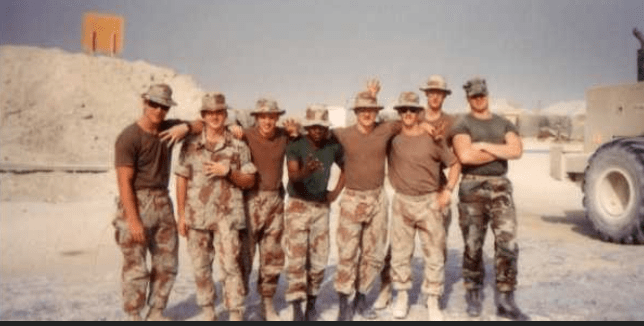
Limited goals in Desert Storm, and in conflicts such as Kosovo and Libya, allowed America to exit without bogging down or suffering significant casualties. However, in Somalia, the second Gulf War and the Afghanistan War, America while winning militarily, ultimately did not achieve poorly defined political goals, leaving a bad taste for these conflicts. People still ask: why were we there?
As we engage in another war, Americans should take stock of the lessons of past wars:
- military goals should be stated up-front and not expanded. They should be achievable and we should remain focused on them until completed.
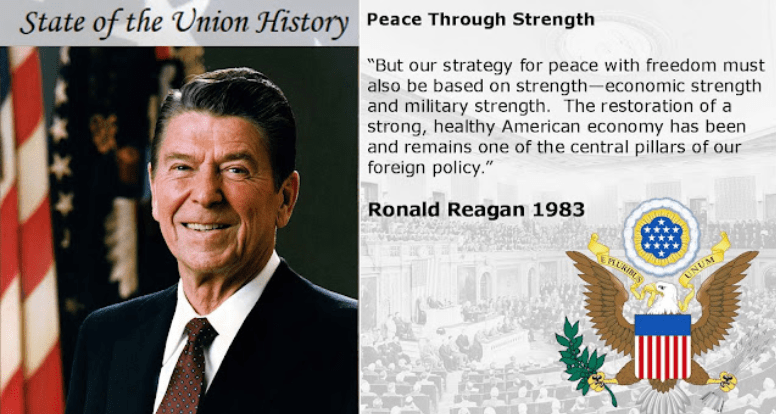
- the military should remain well trained and well funded, preferably with volunteers, to maintain “peace through strength”.
- the military, not politicians, should fight the war
- temptation to nation build or occupy large swaths of territory for extended periods should be resisted. This strategy worked after WWII, but not since.
- the public should understand today’s wars are fought in the media. Do not allow media hysteria to influence the proper conduct of the war.
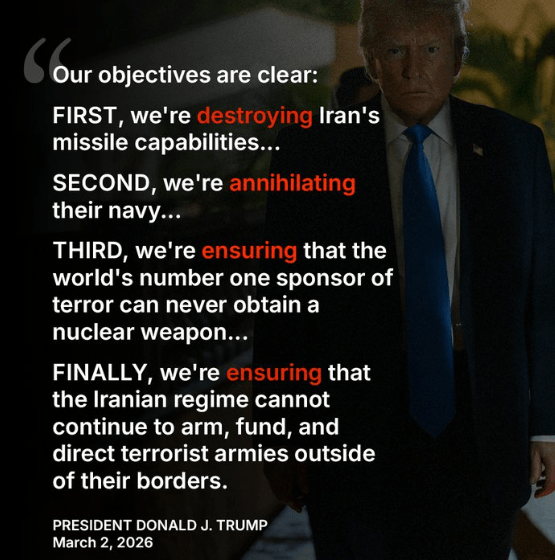
President Trump said at the outset, the war should last four to five weeks. I will worry about our effort if it extends significantly longer. Until then, I am ignoring knucklehead politicians and others who bemoan another forever war.
The president defined clear military objectives. He did not establish the political objective of regime change, although that is clearly desired. If the regime somehow remains, but their ability to threaten other countries and support terrorism throughout the world is eliminated, we will have to settle for that.
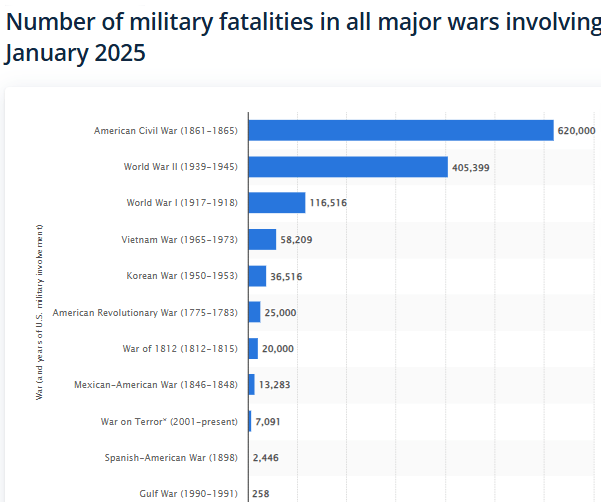
President Trump also warned there would be loss of life. So far, thirteen Americans have lost their lives, making this war the least deadly in American history. The US lost 258 lives in the remarkably successful Operation Desert Storm.
If American lives lost remain low, the war does not drag on for months, the evil despotic Iranian regime falls or is totally defanged, and the flow of oil is constricted only temporarily, not severely enough to impact the world economy, this war will be considered a success.
Americans like successes; they like winning. If our goals are achieved and the war is in the rearview mirror soon, it popularity will increase. More will remember then that they were actually for the war all along.
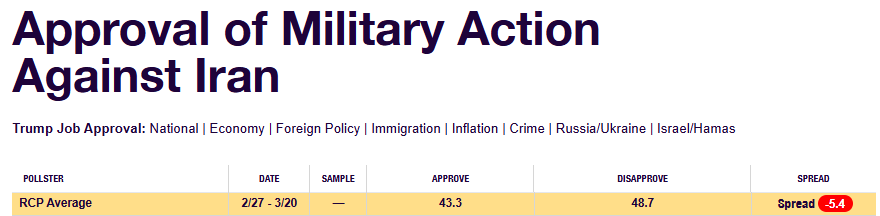
The American public opinion regarding the Iran war is currently split, with slightly more disapproving. The current numbers may not matter because they will change significantly in the next month as the outcome is judged.

Is this the Right War to Fight?
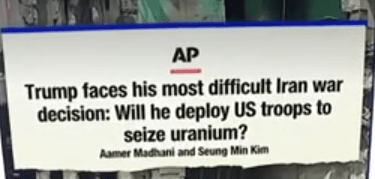
One’s opinion of the war likely depends on who you believe and trust. Do you believe the president and his team are leveling with us or have you lost faith in them?
President Trump said Iran posed an imminent threat. His lead negotiator, Steve Witkoff, followed up with this:
“In that first meeting, both the Iranian negotiators said to us, directly, with, you know, no shame, that they controlled 460 kilograms of 60%, and they’re aware that that could make 11 nuclear bombs, and that was the beginning of their negotiating stance. So they were proud of it – they were proud that they had evaded all sorts of oversight protocols to get to a place where they could deliver 11 nuclear bombs,”
Mr. Witkoff’s statement is alarming and illustrates the stakes of inaction. Still, many skeptics, including a high-ranking administration official, scoff:
“I cannot in good conscience support the ongoing war in Iran. Iran posed no imminent threat to our nation, and it is clear that we started this war due to pressure from Israel and its powerful lobby” Joe Kent, Director National Counterterrorism Center
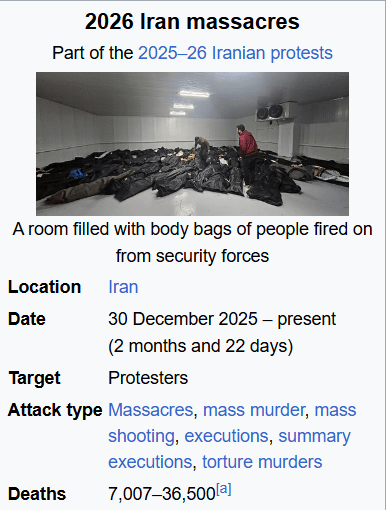
President Trump tried negotiation, but this and past experiences have shown negotiations are fruitless. Skeptics ignore certain facts: Iran has attacked the US and allies numerous times over the last fifty years: in Lebanon, in Iraq, and throughout the Middle East. They took dozens of Americans hostage for more than a year. They have provided Russia military aid throughout the Ukraine War. They have targeted US political officials for assassination. They attacked Israel (via their proxy, Hamas) in 2023, killing thousands, mostly civilians, in one day. They killed thousands of their own citizens in protests during the last year.
The war is justified; however, the more difficult question is: was now the right time? Again, I don’t know everything the president knows. To this point there is no evidence America acted rashly. If we did, the mistake will likely become apparent in the months to come. Until then, I pray for success of the war we are now committed to.
March 19, 2026 Iran once again demonstrated its inhumanity, further justifying its eventual demise: https://www.foxnews.com/sports/mojtaba-khamenei-regime-executes-champion-wrestler-iran-intensifies-brutal-crackdown-during-war
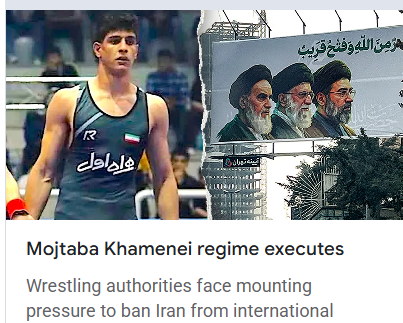
The Islamic Republic of Iran’s judiciary on Thursday ignored a U.S. State Department warning along with pleas from elite Iranian-American wrestlers to not execute 19-year-old champion wrestler Saleh Mohammadi for protesting against the Khamenei regime.
Reports say Mohammadi was killed in a public hanging seen as a barbaric move by the Iranian regime to snuff out the ongoing movement seeking to topple it, according to Iranian American human rights activists and dissidents.
More Critics
The president’s opposition, immediately highlighted the risks of war:
House Minority Leader Jeffries: “the president’s decision to abandon diplomacy and launch a massive military attack has left American troops vulnerable to Iran’s retaliatory actions.”
As noted above: three weeks in this is the least deadly war in American history.
Senate Minority Leader Schumer: “President Trump’s fitful cycles of lashing out and risking wider conflict are not a viable strategy”.
A widening war is a legitimate concern. This, along with potential loss of life, should have been considered before it started, but there is no evidence indicating these factors were ignored. At this point, America cannot allow the current Iranian regime to survive with the ability to reconstitute its military capacity and have it lash out instead.
Journalist Tucker Carlson: “Unconditional surrender means foreign troops get to rape your wife and daughter if they want. And everyone knows that.”
This practice has been true of many conquering armies, but America is a different power. America has not tolerated such practices in its past and would not tolerate them in Iran. On the other hand, many Israeli women were raped, hundreds of children and women were kidnapped, and thousands of civilians deliberately killed by Iran’s proxy, Hamas, in Gaza on October 7. Anyone, including Mr. Carlson, who does not understand the difference between our cultures and accepted practices is ignorant and foolish.
Other politicians claimed the war is illegitimate and potentially catastrophic.
Democratic Representative Alexandria Ocasio-Cortez: “This war is unlawful. It is unnecessary. And it will be catastrophic.”
New York City Mayor Zohran Mamdani: “Today’s military strikes on Iran — carried out by the United States and Israel — mark a catastrophic escalation in an illegal war of aggression. Bombing cities. Killing civilians. Opening a new theatre of war. Americans do not want this. They do not want another war in pursuit of regime change. They want relief from the affordability crisis. They want peace.”
Democratic Representative Ro Khanna: “Trump has launched an illegal regime change war in Iran with American lives at risk. Congress must convene on Monday to vote on Representative Thomas Massie and my WPR [War Powers Resolution] to stop this. Every member of Congress should go on record this weekend on how they will vote.”
The war has not been catastrophic to this point. This statement seems designed to distract Americans from what so far has been an overwhelming military success. Are they too focused on the political benefits reaped by political opponents?
High risk also comes with high reward. This could be a watershed moment if the regime is deposed and 130 million Iranians are liberated. Let us wait a bit longer before judging the outcome.
Is the war illegal or unlawful? First, this claim should not be made selectively. President Obama bombed Libya and President Clinton bombed Kosovo, both for many months. President Biden bombed Syria. Many questioned the judgment of these actions, but not their legitimacy.
In any case, the president’s action are authorized per his Constitutional role, although the 1973 War Powers Act, limits him:
https://www.congress.gov/bill/93rd-congress/house-bill/454
“the President must terminate such use of U.S. Armed Forces after 60 days unless Congress (1) has declared war or specifically authorized the action, (2) has extended the 60-day period by law, or (3) is physically unable to meet as a result of an armed attack on the United States.”
The sixty day limit has not been reached. Furthermore, Congress can refuse to exert its authority as it did during the bombing of Libya, a campaign lasting more than sixty days.
Democratic Senator Bernie Sanders: “This Trump–Netanyahu war is unconstitutional and violates international law. It endangers the lives of U.S. troops and people across the region. We’ve lived through the lies of Vietnam and Iraq. No more endless wars. Congress must pass a War Powers Resolution immediately.”
Sorry, but three weeks is not forever; the war is well within its preset timetable. Is the war going poorly? Must we recalculate the timetable? Metrics indicate Iran has been relatively impotent in retaliating militarily. The overwhelming majority of Iranian missiles and drones have been intercepted, and the number fired has declined daily. We have assassinated the bulk of their leadership, significantly setback their nuclear program, destroyed vast numbers of missiles and drones and their capacity to rebuild, along with their navy and air force. Iran has flailed about trying to impose a significant response, but they have not damaged the military capacity of any nation, only causing civilian loss of life. Their response is unlikely to escalate as their ability to project power is almost gone. How does this extend into a forever war?
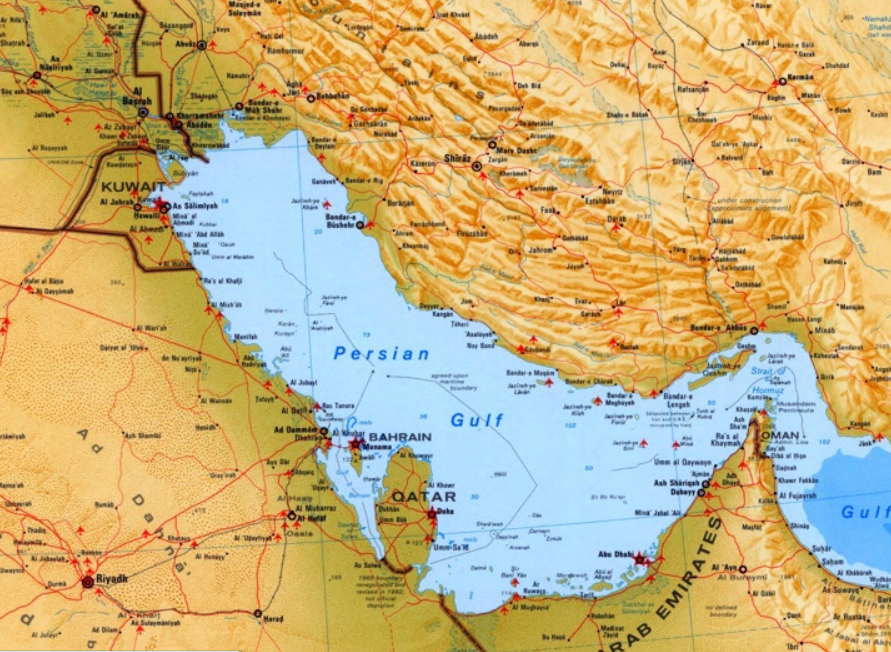
The one lever Iran has successfully pulled is restricting oil flow out of the Persian Gulf. Oil tankers traveling from Kuwait, Qatar, Oman, UAE, and Saudi Arabia must pass a few miles within Iran. The threat from Iran is preventing many from even attempting this passage.
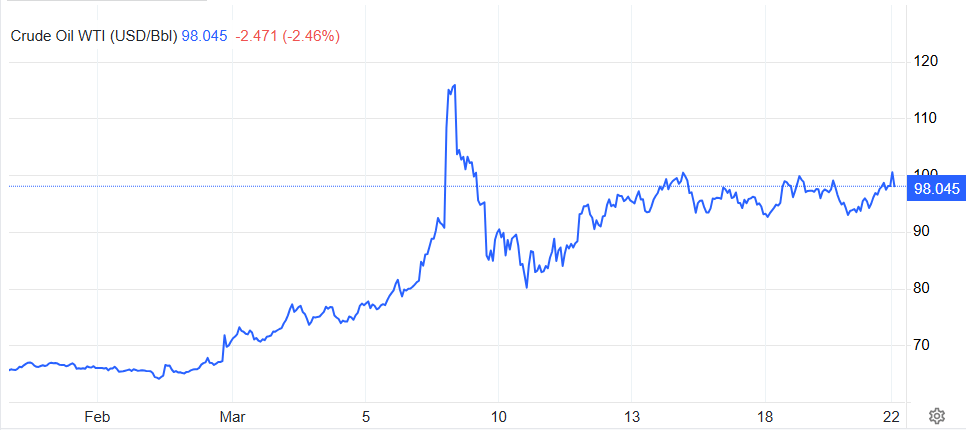
Still, the price of oil did not rise to $200 per barrel as some had projected. The price, in fact, stabilized the last two weeks, around $100 per barrel. This has caused price spikes world-wide, and shortages in some countries, but the sky is not yet falling and an economic recession is not looming. Given America’s ability to project force and Iran’s dwindling capacity to resist, this seems a temporary problem.
America must remain steady. The Iranian regime may not fall immediately, but they are desperately clinging on. The Iranian people staged massive protests months ago against a much stronger regime. Today, the opportunity to topple a debilitated regime and replace it with something better is more likely than it has ever been.
Update 3/27/26:
We ending the fourth week now. President Trump’s original deadline is almost upon us.
This remains a propaganda war. President Trump said Iran is negotiating while Iran denies there are negotiations. That’s an interesting contradiction. I doubt negotiations will be fruitful, in any case. Iran seems to think the US can be pressured by rising oil prices and the specter of more loss of life from an escalation of the fighting; they are unlikely to accede to US demands. Surrender is rarely a consideration for zealots of any era. Perhaps, the president too may buying for time for the next military gambit.
A negotiated peace would be preferable, with Iran ceding to demands and a peaceful transition of power. Given their inability to respond militarily at this point that is the logical, although unlikely, response. Iran probably remains hopeful the propaganda war will succeed and the regime will survive. I doubt this strategy.
President Trump has established a short timeline after which escalation seems likely.
Despite declining popularity, I believe President Trump is unlikely to exit without a real success, even if staying the course damages his political future. A bold politician does the right thing despite its unpopularity.
The US has made significant progress on its four initial goals, but we cannot yet declare success:
- Iran retains some missile capability, and are likely harboring a stockpile in case the regime survives.
- Their nuclear ambitions have been significantly setback. However, the president, I am sure, would like to recover the remaining uranium.
- Iran’s navy is clearly no more.
- Iran’s ability to project terror via their proxies is clearly no more as well.
The president says the war is already won while others say it is lost, another interesting contradiction. Let’s allow more time to decide the result. Iran has few military options, while the US has many available. We should continue to force the issue until all objectives are fully achieved. I doubt the war ends until:
- Iran’s current missile capability is completely dismantled
- all nuclear materials are accounted for
- the flow of oil is resumed.
The president I think will hold firm on these demands. The US can accomplish these goals. We must eventually be given access to the country to ensure these threats are disabled. Short term, I think this means two things to finish the job:
- seizing territory to resume the flow of oil via whatever military operation is needed to restore stability. The US cannot exit the war without long-term stability re-established.
- disallowing Iran from exporting oil. Iran’s currency is worth nothing, but their oil is worth something. Take away the oil and the regime have no power, whether it falls or not.
The US could destroy oil fields, power plants, water facilities, etc., but we do not wish to impoverish the entire nation. We surely have the means to end this war against a debilitated foe, but do we have the political will? Do not let them survive to threaten the world again in a few years.
Dave https://seek-the-truth.com/about/
https://seek-the-truth.com/category/war-stories/
https://seek-the-truth.com/category/world/
seek-the-truth.com
 Seek the Truth