We are in this world for possibly a century, not enough time for many to contemplate what, if any, meaning is attached to their own existence. Other concerns distract or occupy their time. I have certainly contemplated life’s meaning myself, but haven’t fully explored the matter–nor will I ever. We should never stop asking questions and seeking our purpose. Life is like a cave with countless unexplored passages; we should never arrive at a dead end and never grow weary of seeking the next passageway.

Many postpone such musings, but eventually ponder the matter to some degree. Aristotle, Socrates, Plato Kant, Nietzsche, Marx, Descartes, Locke, Freud, Chesterton, Hawking, and more tried to sort it out for us. Jesus, Buddha, Confucius, Mohammed, Martin Luther, Joseph Smith, and other religious founders explained life as well, sometimes philosophically, but not always. There are many prescriptions to choose from, and many more we may discover on our own, so how can we find our true purpose in this confusing, fast-paced world?

I first talked of this search by examining standards: search-for-meaning-1989-vs-2024. Our contemporary American culture is sadly being drawn to a Marxist–anti-God, anti-family, anti-individual, anti-free speech–standard. I compared our current lost culture, increasingly resistant to any real standard, to 1989, a year we were far more sensible and more aligned with reason, a year before we dispensed with so many standards. Today, western culture appears content with abandoning God’s standard, even without realizing or considering the consequences. Paul said to fight the good fight, run the race, and keep the faith (2 Timothy 4:7), but many seek security before anything else; we avoid pain, difficulty, and discomfort at all costs. The notion of “working out our salvation with fear and trembling” (Philippian’s 2:12) is anachronistic to our culture. However, any standard other than God’s, one that comes with difficulties by the way, will eventually lead us astray.
I discovered my liberal debating partner follows his own standard, as does our current icon of science: dr-fauci-and-his-wavering-internal-compass. Both of them represent a growing number today who scoff at religious traditions. Religious traditions are seen as too restrictive, too limited, and intolerant of dissenters. My friend put it this way:
Humanity has evolved and become more intelligent in the last one to two centuries in its academia, research, and sound critical-thinking—i.e. many/most have discovered/determined that myths, superstitions or religious dogma/beliefs are rabbit-trails and holes. There exist VERY good explanations as to why there are currently a minimum of EIGHT different religions of the world, all essentially claiming superiority or the supreme title of Right, Correct, or Most Righteous. Sorry, no disrespect, but I find that laughable in the sense of ‘supreme authority.’ 😄 It borders on self-delusion and self-absorption.
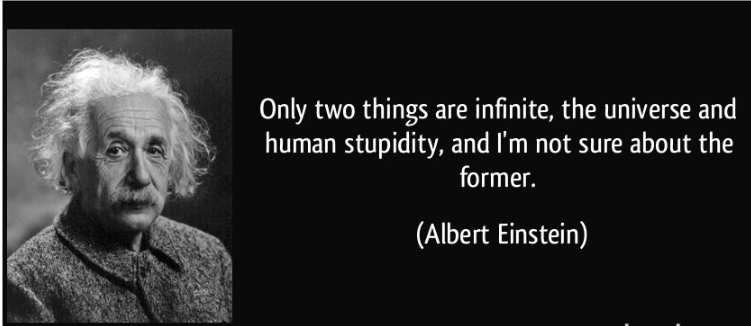
His fatal logic flaw is saying humanity has “become more intelligent in the last one to two centuries”. Human nature is not being perfected over time. Mankind is still weak and gullible to bad choices as we have always been. Wisdom, logic, and reason are as accessible (or inaccessible) as they have always been. I would argue today’s culture does not recognize the value of wisdom, logic, and reason, not a hallmark of a superior culture.
My friend and so many others think our situation can be so much better because we, who are so more intelligent, are in the world today. We will somehow succeed where all our predecessors failed. Humanity certainly has access to more knowledge, but we are not inherently smarter than Aristotle, Archimedes, Aquinas, Einstein, Shakespeare, Newton or their contemporaries. Why make such a claim?
Tradition means giving votes to the most obscure of all classes, our ancestors. It is the democracy of the dead. Tradition refuses to submit to the small and arrogant oligarchy of those who merely happen to be walking about. G.K. Chesterton, Orthodoxy
Humanity needs an unalterable, proven standard to keep us on the narrow path. If God truly exists, why would we choose any other way? God’s standard is readily accessible to all, believers and non-believers, in any case. The standard has been discussed and contemplated for millennia.
Adam and Eve used my friend’s logic when they defied God in the Garden: “Your eyes will be opened as soon as you eat it, and you will be like God, knowing both good and evil.” (Genesis 3:5). Yes, let us depose God and put ourselves on pedestals. How exhilarating. We determine for ourselves what has value rather than deriving personal values and civil law from God’s natural law. How freeing. Catholic theologian Bishop Robert Barron called this humanity’s “fundamental flaw”, one illustrated throughout the bible (hear more in this long but outstanding interview with Jordan Peterson: https://www.youtube.com/watch?v=sd6iCSQep8E). Bishop Barron adds this notion is not freeing at all; true freedom comes from receiving God’s grace and allowing Him to work through you to accomplish so much more.
LORD, you establish peace for us; all that we have accomplished you have done for us. Isiah 26:12
Perhaps then it is not God’s path, but the path of denying (and then deposing) God that is the one of self-delusion and self-absorption?
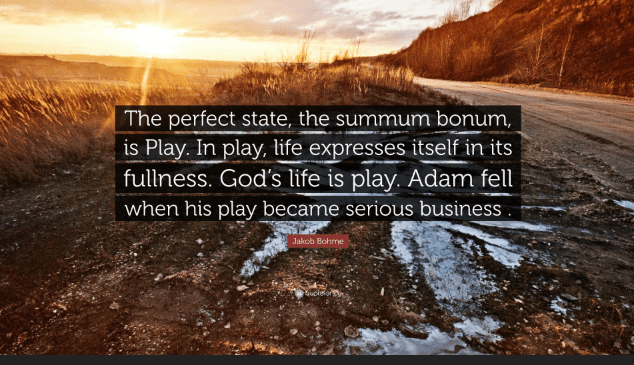
Our problem today is the few truly good choices are crowded out by ever-increasing numbers of bad ones. With a vast array of choices available to us, it is inevitable many will follow wrong paths. In the past, the few good choices were more clearly distinguishable. This is the only worthwhile prescription: follow God’s standard or fall into chaos with a worldly standard. Surrender yourself to the summun bonum, the supreme power, the supreme good, a term Bishop Barron often uses.
The Beginning of Our Eternity
In this post, I expand the search for life’s meaning by asking one simple question: If we are on this earth for a short time as compared to our eternity, why not take more time to prepare for our inevitable after-life?
Radio, TV, and now the internet made the world increasingly small, but did that make us better and smarter than those who came before us? More facts are readily at our fingertips than anyone could ever have imagined. We know the earth is not flat and travels around the sun, but that knowledge alone doesn’t make us smarter than those who once believed otherwise. I can quickly find out how far away the sun is and how hot it is at its core, but so what? We can recite so many facts, but often cannot explain or understand the situations we find ourselves in or how those facts tie together. Still, there is no proof we are better at interpreting or understanding all this information. In fact, we are often lost in a sea of information we often cannot manage or comprehend. We still need a purpose, something other than knowing enough to be on Jeopardy. We need God. We need His wisdom.
My father came of age in Massachusetts in the 1940s. In 1950, the army sent him to post-war Germany and then Jim Crowe Georgia. He knew nothing of German culture and could not have imagined the incredible devastation he encountered (even five years after the war ended). He knew nothing of the American South either; he was shocked again by what he witnessed there. He had no concept whatsoever of these cultures before being immersed in them. He figured out what was going on after experiencing them for himself. He learned, adapted, and passed on his wisdom. Do we do the same any more?

Seventy years later, on a whim we can immerse ourselves in virtually any culture or idea we imagine. We can form bonds with like-minded individuals anywhere in the world. We form opinions on virtually all issues, regarding places we have never visited and concepts we have knowledge of, but often little understanding of. We harshly judge people who lived before us using the knowledge we have been given on a silver platter. We think we would do better if we had lived in their time, but that’s doubtful. We are certain of our beliefs, but they are often completely inaccurate, often just opinion taken from someone else who may not understand much of anything either. Yes, we are more informed and less ignorant, but not any smarter.
We need wisdom not simply facts. Job, along with his wife, and his so-called friends also debated the purpose of life. Job’s wife told him to “curse God and die” (Job 2:9). But Job was wise enough to ignore his wife and friends and realize life was still worth living; it still had purpose, despite his troubles. In this book, God schooled Job (and us) on the value of wisdom, a pearl of great value then as well as today.
“But where can wisdom be found?
And where is the place of understanding?
“Man does not know its value,
Nor is it found in the land of the living.
“The deep says, ‘It is not in me’;
And the sea says, ‘It is not with me.’
“Pure gold cannot be given in exchange for it,
Nor can silver be weighed as its price.
“It cannot be valued in the gold of Ophir,
In precious onyx, or sapphire.
“Gold or glass cannot equal it,
Nor can it be exchanged for articles of fine gold.
“Coral and crystal are not to be mentioned;
And the acquisition of wisdom is above that of pearls.
“The topaz of Ethiopia cannot equal it,
Nor can it be valued in pure gold.
“Where then does wisdom come from?
And where is the place of understanding?
“Thus it is hidden from the eyes of all living
And concealed from the birds of the sky.
“Abaddon and Death say,
‘With our ears we have heard a report of it.’
“God understands its way,
And He knows its place.
“For He looks to the ends of the earth
And sees everything under the heavens.
When he established the force of the wind
and measured out the waters,
when he made a decree for the rain
and a path for the thunderstorm,
then he looked at wisdom and appraised it;
he confirmed it and tested it.
And he said to the human race,
“The fear of the Lord—that is wisdom,
and to shun evil is understanding” Job 28;12-28
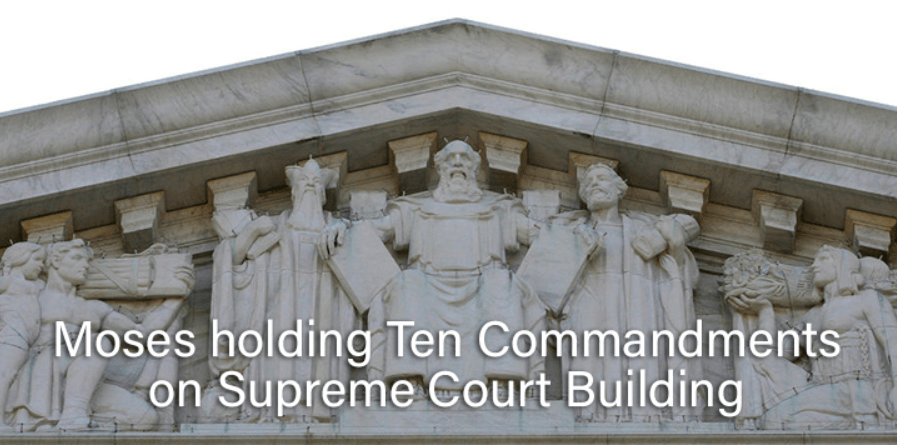
God also asked Job where was he when God laid the earth’s foundation (Job 38)? Indeed, how long have we been around compared to God? How do our works compare to His? Humanity is not wise enough to independently develop standards to carry us all the way through life. Our human standards eventually fail; we will make misjudgments or we will compromise our values to accommodate our own failings. Our standards of right and wrong must be underpinned by God’s. Job trusted God’s standard even when life became unbearable, even his own wife told him life was not worth living. Job persisted and God eventually rewarded him. Are we willing to follow that narrow way, to persist and struggle now for the sake of our eternity?
My friend sets himself on an equal footing with God by developing his own standard, one he places above the summum bonum. He also considers me foolish for following unproven notions of God. In his view, the Christian god is just one among many potential choices. It is a common view today, supported by media and academia, and their confirmation keeps us from seeking and knocking.
As far as I am concerned, the case was closed. There was enough proof for me to rest easy with the conclusion of the divinity of Jesus was nothing more than the fanciful invention of superstitious people. Or so I thought. Case for Christ, Lee Strobel
My friend wonders how he can possibly distinguish from all the paths, especially religious paths which all claim to be the ultimate path. He says:
For example, my own Sasquatchianity is JUST AS TRUTHFUL and VALID as Christianity. I can’t prove to anyone that there is adequate evidence for my God(s) Sasquatch, but there is PLENTY of rumor, hearsay, myth, legend, to make Sasquatchianity a totally valid religion or Faith! But Dave/S-t-T, I am not going to cram it down your throat. That is NOT good for the Greater Good!

Sasquatch can indeed be worshipped, but what has Sasquatch given humanity? If he even exists, he avoids us, wants nothing to do with us. Truly, how can Sasquatch be compared to a God who created a universe so mind-numbingly vast? How can Sasquatch be compared to a God who has given us wisdom, a purpose for life, and a law to guide us? I suppose it is because the summum bonum has become just one path among a vast many choices. However, we need to elevate that path above all the rest.
My friend takes from various traditions, from his experience, and his learning, choosing the best of each and developing a philosophy suiting his own individual needs. He may even draw upon Christian biblical wisdom (go the extra mile; love your enemies; turn the other cheek; do unto others as you would have them do unto you, etc.). He takes the parts he likes and ignores the rest. He has concocted a perfect standard, one that suits him, but perhaps nobody else. Best of all, from his perspective, it is one that is not crammed down by anyone else (God forbid I or anyone else do such a thing!).
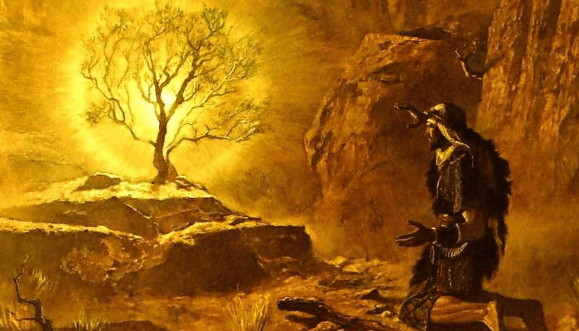
It is a rational conclusion, but still an incorrect one. First of all, we are social creatures, designed to help each other find truth and purpose in life. If you are following the wrong path and I present another way, it may indeed be painful to let go of your old beliefs, but that pain also cleanses and renews. That pain is necessary if you are to be transformed into someone better. As Moses discovered with the burning bush, God’s fire does not consume (Exodus 3:2). If we avoid such pain, we will never become the persons we could be.
Secondly, if my friend is wrong about God, the consequences last an eternity. If I am wrong, the consequences last only a few years. My friend claims we are engaged in a stalemate over the question of whether or not God exists; however, Aquinas offered five separate proofs of God.

Moses wanted to know God’s name when he encountered Him in the burning bush, but God told him not to bother (Exodus 3:14). In other words, do not reduce God to something finite, just one of many equally good choices.
Still, the answer Moses received doesn’t satisfy us. How should we understand God? The incomprehensible vastness of our universe helps me better understand. As Aquinas said, nothing springs from nothing, so something set our vast universe in motion (science tells us it has a beginning). Furthermore, the creator is always greater than the thing which is created. What does that say of the creator who set such an incomprehensibly massive, virtually infinite, universe in motion?
So how big is the Universe? One light-year is the equivalent to 6 trillion miles, and our Universe is 93 billion light-years in diameter. That’s how big our Universe is, and that’s not even the end of it. The 93 billion years is just the observable Universe, the Universe, which we can currently see. The whole Universe might very well be 250 times larger than the observable Universe, or at least 7 trillion light-years in diameter.
The universe is unimaginably immense. Only an infinite God transcendent to space and time, and without any limits, could be greater than our universe. Therefore, God must be perfect and his law must be as well.
Who else is seeking God? It turns out, even most non-religious and atheists tend to believe in an after-life (per our science experts).
An obvious explanation is that people internalize religious teachings. “One function of religion is to alleviate death anxiety because it usually comes with afterlife beliefs,” says Halberstadt. But that doesn’t explain why belief in the afterlife has held up even as religiosity has declined, nor why these beliefs are rarely religious. Rather than articulating concepts such as heaven and hell, they talk in vague terms about there being “something”. This lack of theological correctness has led psychologists to see afterlife beliefs as largely intuitive rather than learned.
Who do the non-religious see as the caretaker of that after-life? Are they still seeking God without realizing it?
Surely, they do not believe we arrive in the after-life and fend for ourselves in some other malevolent world. Surely, they understand we suffer now and then live the after-life in a better place. Where is this place and how do we get there? Don’t they want to know more so they can better prepare for it?
Perhaps the drive to seek such a place is already instilled in us, the drive seek summum bonum, the greatest power, the greatest good, who gives us purpose in life. Why develop our own paths when others have worked this out already? Why re-invent the wheel yet again?

I advise you to not simply follow the path you are on without understanding why you are on that path. Don’t do things because you’ve always done them that way. Someone will eventually challenge your current beliefs and you should have the wherewithal to defend those beliefs–or you will abandon them when others make following them difficult. Are you on the right path? Can life could be different? Could it better, or more importantly, more fulfilling?
Take time to consider the path you follow here on earth when the rest of your eternity hangs in the balance.
Question of Serving
Consider one more notion: something will eventually will provide meaning for our lives, if nothing has already.
For the poorest among us, those in indigent parts of the world or under tyranny, the meaning of life may simply be about survival; they may seek food, shelter, freedom, or something to ease their suffering or the suffering of those around them. Even if living under better conditions, life can be very hard. We all suffer at various points in our lives no matter how privileged we may be.
Throughout our lives we all set goals: to win a race, to graduate from school, to raise a family, to become famous, to change the world, to be the boss, to watch the Super Bowl live, etc.. We may never achieve these goals, but still they give us purpose for a time. We may find a cause: to feed the poor, to stop climate change, to change the zoning laws, to elect a candidate, to start a church, to end abortion, etc. We may have a career, a family, a girl friend, a sport, studies, etc. which consume our time. We may be totally hedonistic and live only for ourselves. Whatever our goal, we commit ourselves to something for a time, and when we that commitment ends or we drift away from it, something else quickly fills the gap. We cannot help but follow this pattern. Rinse and repeat. Therefore, serving some interest or cause or someone else is a choice we continually make, whether conscious or unconscious. Another philosopher of sorts, Bob Dylan, put it this way:
You may be an ambassador to England or France.
You may like to gamble, you might like to dance
You may be the heavyweight champion of the world
You may be a socialite with a long string of pearls.
But you’re going to have to serve somebody, yes indeed
You’re going to have to serve somebody
Well, it may be the devil or it may be the Lord
But you’re going to have to serve somebody
Bob Dylan, Gotta Serve Somebody, 1979
You can claim to be independent. You can claim like Dr. Fauci or my debating friend to follow your own internal compass, but God made us to serve Him. If we don’t serve Him, we will serve something else, something lesser, as a natural consequence. Shouldn’t you follow the purpose you were made for and not some other lesser purpose?
Dave https://seek-the-truth.com/about/
https://seek-the-truth.com
https://seek-the-truth.com/category/faith
 Seek the Truth
2 thoughts on “The Search for Meaning: The Beginning of Our Eternity”