Last month, the Supreme Court heard a case regarding censorship of regular Americans: Vivek Murthy (U.S. Surgeon General) vs. Missouri. Two lower courts ruled the government violated the First Amendment by pressuring social media to remove posts regarding COVID policy and the 2020 presidential election.
https://www.cbsnews.com/news/supreme-court-government-pressure-social-media-free-speech
A U.S. district court judge said White House officials, as well as some federal agencies and their employees, violated the First Amendment’s right to free speech by “coercing” or “significantly encouraging” social media sites’ content-moderation decisions. The judge issued an injunction restricting the Biden administration’s contacts with platforms on a variety of issues, though that order has been on hold.
So, the court must decide: did the government “encourage” or “raise objections” in an appropriate fashion or did the government “coerce” and use its power to unduly influence social media? Government officials regularly speak to print and social media. Should those conversations be restricted? It is commonplace for politicians to criticize media outlets they dislike and we tolerate such objections. Ultimately, the definitive question is: when does discourse between government and social media officials cross a line, and how exactly is that line defined? If defined too broadly, government cannot do legitimate activities. If defined too narrowly, government may be emboldened to take liberties with the First Amendment.
If you believe, as I do, government is abusing power via censorship, then how do we limit their excesses? Furthermore, can limitations be structured so that they can actually be enforced? This was a persistent topic throughout the hearing. Government lawyers claimed government officials never even violated the First Amendment; they were just doing their jobs as best they could and had no bad intent. That seems dubious. The plaintiff’s lawyers agreed normal discourse should not be restricted, but they claimed the government had repeatedly and egregiously violated the law; government needs to be reminded of the limitations inherent in the First Amendment.
I analyze the court transcript Murthy-vs-Missouri to determine how each side defended their positions.
The Government Case
The basis of the government’s argument is presented during the opening statement from their advocate, Mr. Fletcher:
MR. FLETCHER: The government may not use coercive threats to suppress speech, but it is entitled to speak for itself by informing, persuading, or criticizing private speakers.
We think these cases usually are and ought to be viewed through [a] framework, where there’s a problem if the government is engaged in coercion, but if it stays on the persuasion side of the line and all we’re talking about is government speech, then there’s no state action and there’s also no First Amendment [violation]
Justice Thomas notes the Constitution does not guarantee government the same right to free speech as it does ordinary folks like us. Furthermore, the government has the biggest gun in all the land, so why does it even need such protection?
JUSTICE THOMAS: You continue to refer back to — refer to government speech. Just for my
edification, what’s the constitutional basis for — for government speech
MR. FLETCHER: the crux of what they claim was coercion here was what happened in July of 2021 when the Surgeon General, the White House Press Secretary, and the President himself made statements criticizing the platforms’ practices on misinformation and false statements about COVID vaccines and calling on them to do better. I think it’s really troubling, the idea that those sorts of classic bully pulpit exhortations, public statements urging actors to behave in different ways, might be deemed to violate the First Amendment.
Mr. Fletcher argues government should be allowed to inform social media of external threats from suspect figures like Osama Bin Laden or Russian propagandists who mean harm to the nation as a whole. Certainly, we all want government to address such threats, but can’t government also misuse that same authority to threaten legitimate protected speech? In fact, I believe they have already widely misused this authority.
MR. FLETCHER: We’re not disputing that when the private platforms moderated the
plaintiffs’ pages or their posts, that’s an injury in some sense. We haven’t disputed that
they suffered that injury. We’ve disputed the traceability question . . . we don’t think it’s possible for the government, through speech alone, to transform private speakers into state actors.
Mr. Fletcher views government as a disinterested party, attempting to do what is best for the people not itself. Certainly, the government is a disparate collection of individuals and organizations and not a monolithic entity controlling all resources at its disposal. But Mr. Fletcher’s view is naïve—or perhaps uniformed. When the mafia boss asks you about the weather, does he truly care about the weather or does he want you to understand he is the most powerful guy around? He is making he is aware of your presence and your actions. He speaks softly, but carries a big stick. The concentration of power within the central government is the same concern here. The power of the government is wielded unethically by those who have the gun at the moment. If the president asks the FBI to pressure you (or to pressure you to pressure others). Subordinates simply follow orders probably without realizing what it is all about.
MR. FLETCHER: for example, when the FBI would send communications to the platforms saying, for your information, it has come to our attention that the following URLs or email addresses or other selectors are being used by malign foreign actors like Russian intelligence operatives to spread disinformation on your platforms, do with it what you will. That, the — the — the Fifth Circuit held, is coercive because the FBI is a powerful law enforcement agency. And I think, if the injunction were put in place, the FBI would have to think very hard about whether it could continue to do that.
Yes, they should think hard about such action. The FBI shouldn’t do that sort of thing at all.
Anything you choose can be labeled misinformation or disinformation. Yes, it could be a malign foreign actor or it might simply be a malign domestic political hack seeking to punish critics. We can’t tell the difference any more. The Constitution is designed to limit government power, to make change a very deliberate process. Government gridlock, a term used pejoratively today, is the outcome anticipated by our founding fathers. Gridlock can be good. Ensure the FBI thinks very hard before involving itself in political matters or policy debates.
MR. FLETCHER: think both the Fifth Circuit and my friends have really said that the crux of what they claim was coercion here was what happened in July of 2021 when the Surgeon General, the White House Press Secretary, and the President himself made statements criticizing the platforms’ practices on misinformation and false statements about COVID vaccines and calling on them to do better.
Sure, criticize freely in public; however, backdoor meetings between the FBI and the social media companies are problematic. What surreptitious threats or lucrative inducements are made to force media to act in a way favorable to the administration currently in power (and not favorable to the one out of power, nor the American people as a whole)? Government has too much opportunity for ill. Take away the easy opportunity and the problem disappears.
Mr. Fletcher also says government needs to combat hatred. He lists anti-Semitic and Islamophobic content, letters on Tik-Tok, and the like. These can be problematic indeed, but why should government have a role in policing such things? I am not certain government can even correctly identify what is hateful and what is not. These definitions are so distorted today. Stay in your government lane, please.
JUSTICE ALITO: So, in the first part of that, imminent threat of future injury, her Facebook personal account was restricted at the time when the complaint was filed. So why isn’t that sufficient to show a threat of — an imminent threat of future injury?
MR. FLETCHER: We haven’t disputed that they suffered that injury. We’ve disputed the traceability question –
Mr. Fletcher admits harm was done, but says government, despite being hip-deep in the mud, was not found with a weapon. It is uncommon to have an eyewitness record a murder. The eyewitness who might have testified is often dead; therefore, circumstantial evidence convicts many murderers. Circumstantial evidence should convict the government here as well. We do not need the complete chain of events which led to the crime.
JUSTICE GORSUCH: But do you agree with that standard, though, that — that to some extent, if — if they could show that — that their injury would be remedied to some extent by an injunction, that that would be enough?
MR. FLETCHER: Correct. So, if they’re likely to face moderation on 10 posts and an injunction against the government would make it eight, that’s enough.
Yet, Mr. Fletcher insists nothing links government officials to censorship of posts. Justice Alito strikes at the heart of the problem, exposing the weakness of Mr. Fletcher’s argument:
JUSTICE ALITO: Mr. Fletcher, when I read all of the emails exchanged between the White House and other federal officials on Facebook in particular but also some of the other platforms, and I see that the White House and federal officials are repeatedly saying that Facebook and the federal government should be partners, we’re on the same team, officials are demanding answers, I want an answer, I want it right away, when they’re unhappy, they — they curse them out. There are regular meetings. There is constant pestering of — of Facebook and some of the other platforms and they want to have regular meetings, and they suggest why don’t you — they suggest rules that should be applied and why don’t you tell us everything that you’re going to do so we can help you and we can look it over.
And I thought: Wow, I cannot imagine federal officials taking that approach to the –the — the print media, our representatives over there. If you — if you did that to — to them, what do you think the reaction would be? And so I thought: You know, the only reason why this is taking place is because the federal government has got Section 230 and antitrust in its pocket and it’s — to mix my metaphors, and it’s got these big clubs available — available to it, and so it’s treating Facebook and these other platforms like they’re subordinates.
The song keeps getting better as Justice Alito continues.
JUSTICE ALITO: We’re partners, we’re on the same team. Do you think that the print media regards themselves as being on the same team as the federal government, partners with the federal government?
MR. FLETCHER: So potentially in the context of an effort to get Americans vaccinated during a once-in-a-lifetime pandemic. I really think that piece of context, it doesn’t change the First Amendment principles, but it’s relevant to how they apply here.
The government should not have coerced people into vaccinations. This is not a role for a government with limited powers. People will (and did) act rationally on their own. It turns out the government was often wrong regarding COVID, yet officials not only stepped outside their lane, but acted as if they were certain and dissenting opinions were problematic. Government should stay out of it because its opinions are more often wrong than right. Many medical authorities were shut down for simply saying government got COVID wrong. Even a non-medical professional like me, saw no sense in vaccinating children. Children were not affected by COVID, so why vaccinate? Something is rotten in Denmark. The Supreme Court can uphold this ruling so we can being to address this massive problem.
Government’s actions benefited some and hurt others, further calling their action into suspicion. Government appears motivated by the gain of certain cronies as much as it motivated by the common good. Quit the mantra: the government had to do something to save people. The overwhelming majority of Americans knew enough to save themselves. Instead, government destroyed its own credibility during COVID. What’s the point of government speech in that instance?
MR. FLETCHER: we think we have a responsibility to give people accurate information and not bad information, and we’re doing everything we can to meet that goal. That’s where this language of partnership comes from.
Sorry. I do not believe this anymore. Partnerships with government are often problematic. Just this week, an ESPN host revealed an entire interview with President Biden was scripted Former ESPN host says her Biden interview was entirely ‘scripted’ by network execs: ‘Every single question’ | Fox News. Social media is now being pressured to be a “partner” as well. Wake up to how government works in 2024, Mr. Fletcher. It’s power needs to be curbed.
JUSTICE GORSUCH: Could that in some circumstances, an accusation by a government official that unless you change your policies, you’re responsible for killing people, could that be coercion?
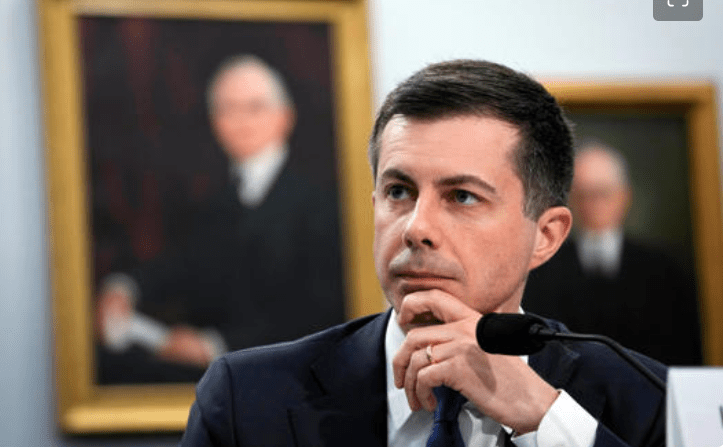
Yes, of course it could. Secretary Pete Buttigieg called bridges racist (i.e. we are designing bridges, so they will kill minority kids–but nobody else apparently) and media treats this ridiculous assertion as a reasonable comment. So many are afraid of being labeled. https://www.youtube.com/watch?v=AS5QogDFlDw
MR. FLETCHER: I’m saying that when the government persuades a private party not to distribute or promote someone else’s speech, that’s not censorship;
Several of the justices were not buying this argument either.
JUSTICE THOMAS: Well, you just work together, said: Look, we’re right; they’re wrong. Let’s work together. You know, we’re on the same team. Let’s work together to make sure that this misinformation doesn’t gain sort of any following.
MR. FLETCHER: All of those are contexts where the government can persuade a private party to do something that the private party’s lawfully entitled to do, and we think that’s what the government is doing when it’s saying to these platforms, your platforms and your algorithms and the way that you’re presenting information is causing harm and we think you should stop,
JUSTICE THOMAS: So you — you really don’t see any difference between the government coordinating with the platforms to exclude other speech and persuading the platforms to do this, to not engage or permit other speech?
If the government can blur the lines–if they claim to behave innocuously while actually censoring speech–if they fool people who would like to trust authority–then we indeed have a massive problem.
FLETCHER: I guess what I’d say is the Court has been pretty emphatic that when your injury is attributable to independent choices by private actors, that’s not traceable. And our submission is that that’s what happened here.
Please, sir. The government handed social media a murder weapon and twisted their arm to use it, but you say that was simply social media’s own choice.
Justice Kagan seems open to a limited ruling, one that restricts government in one aspect, but not in all, one that splits the baby, that slows government for a moment as they find new ways to skirt the restrictions. Mr. Fletcher welcomes Justice Kagan’s support:
MR. FLETCHER: And I think, in some ways, the fact that these are very large, very powerful corporations cuts against a finding of coercion because they are very sophisticated,
Sorry, I disagree. Government will survive no matter the court’s decision, but these companies can be put out-of-business by the government itself.
Justice Kavanaugh makes a good summary position the government’s position:
JUSTICE KAVANAUGH: Just so I understand, your key legal argument is, I think, but correct me if I’m wrong, that coercion does not encompass significant encouragement or entanglement and that it would be a mistake to so conclude because traditional, everyday communications would suddenly be deemed problematic?
MR. FLETCHER: Exactly right,
The Plaintiff’s Case
The plaintiff’s lawyer, Mr. Aguiñaga, makes a simple but compelling point in his opening statement.
MR. AGUIÑAGA: Government censorship has no place in our democracy. That is why this 20,000-page record is stunning.
Wow! Still, 20,000 pages is probably not enough to convince these liberal justices.
MR. AGUIÑAGA As the Fifth Circuit put it, the record reveals unrelenting pressure by the government to coerce social media platforms to suppress the speech of millions of Americans. The district court, which analyzed this record for a year, described it as arguably the most massive attack against free speech in American history, including the censorship of renowned scientists opining in their areas of expertise …. Under this onslaught, the platforms routinely cave.
Mr. Fletcher can find no evidence of government hanky-panky. Government is just looking out for the folks. Mr. Aguiñaga, on the other hand, makes clear you should not defy government unless you are certain you can prevail.
MR. AGUIÑAGA: Now, last month, in the NetChoice cases, the platforms told you that it’s incredibly important that they create their own content moderation policies. But this record shows that they continually depart from those policies because of unrelenting government pressure.
Now my friend says all this is constitutional because the government has the right to persuade using the bully pulpit. But the government has no right to persuade platforms to violate Americans’ constitutional rights, and pressuring platforms in back rooms shielded from public view is not using the bully pulpit at all. That’s just being a bully.
The government cannot induce, encourage, and promote private actors to do directly what the government can’t itself do directly.
That’s what you see happening in a case like this because time and again there were times where the social media platforms had policies that didn’t go far enough in censoring the speech that the — that the government wanted them to censor.
The justices and the two advocates agree government can indeed restrict speech to protect national security or thwart a terrorist organization or criminal activity; however government apologists have so broadly defined such threats and ignored government’s excesses at all other times that the categorization is meaningless.
MR. AGUIÑAGA: I guess the top-line question I would ask is, has the government set out to abridge the freedom of speech? And in this case, you see that time and time again because, if you control F —
JUSTICE JACKSON: But that’s not the test for First Amendment violations.
Abridging free speech is not the test for First Amendment violations?
MR. AGUIÑAGA: Your Honor, this flows from the plain text of the First Amendment, right?
A good discussion follows Justice Jackson’s silly observation:
JUSTICE KAGAN: So, like Justice Kavanaugh, I’ve had some experience encouraging press to suppress their own speech.
You just wrote a bad editorial. Here are the five reasons you shouldn’t write another one. You just wrote a story that’s filled with factual errors. Here are the 10 reasons why you shouldn’t do that again.
I mean, this happens literally thousands of times a day in the federal government.
Yes, ok, but you are not put the weight of the government behind your conversation. You are not threatening action. You are seeking to persuade, not coerce.
MR. AGUIÑAGA: Yeah, and I would say, in the mine-run case that you’re describing to me, it’s the government going after the speaker itself and trying to get them to change their speech.
What’s so pernicious here is that you don’t see any of these facts in this record unless we get discovery, which is when — when Rob Flaherty, who’s Deputy Assistant to the President, sends an email to Facebook or to Twitter and complains that they’re not doing enough to censor what they view as vaccine hesitancy speech. America never sees that.
EXACTLY. The debate is held in the back-room. America never sees it. President Biden and his press secretary may speak openly to the public, but the dirty work is delegated to the FBI in the back-room. They act in anonymity and out-of-sight.
I work for the government myself and I know the regulations for speaking with the press. Few individuals are authorized. Interactions are done behind scenes–at least not until discovery initiated by Mr. Aguiñaga.
The liberal justices persistently excuse the government excesses. They apparently refuse to see any problem. Supreme Court Justice Potter Stewart described his test for obscenity in 1964: “I know it when I see it.” Similarly, we should know censorship when we see it.
MR. AGUIÑAGA: if the government thinks there’s false speech out there, the remedy for that is true speech. Nothing prohibits the government from going to that platform and saying we’ve seen a lot of false information about election activity and COVID and vaccines and the like. Nothing prohibits the government from saying here’s a list of everything we say is true, that is true in our view, and you should amplify our speech, and anytime that false speech arises, you should put our posts right there next to it saying this is the government’s view on this issue.
The problem here — and this is — you know, I think you see this in the summer of 2021 after the White House goes nuclear on the platforms — is that the platforms themselves reverse course on their own policies.
Yes, sir. That is the problem here. Here is a SMOKING GUN:
MR. AGUIÑAGA: you’ve got this email from Nick Clegg, who is, you know, former Deputy Prime Minister of the UK, and after all of this pressure for months and months and months, he sends this email to Vivek Murthy, the Surgeon General, and he says: Dear Vivek, thanks for taking the time to meet. I wanted to make sure you saw the steps we took past — this past week to adjust policies on what we’re removing to take steps to further address the Disinfo Dozen. We’ve removed 39 profiles, pages, groups, Instagram accounts. We’re continuing to make other accounts harder to find.
I mean, this is an example of platforms moving beyond what their own policies required because they felt pressure to take more action and to censor more speech. And, Your Honor, if that’s — I mean, if that’s not the clearest example of the government doing –
Here is more of the smoking gun:
MR. AGUIÑAGA: And what she says is: This Facebook post that I posted was taken down by Facebook. She got a warning for it as a violation of the community standards.
What was that post? It was a screenshot of Robert F. Kennedy, Junior, who is a member of the so-called Disinformation Dozen. What was the RFK tweet talking about? It was talking about Tucker Carlson, whom the administration was obsessed with. Look at JA 701 to 708.
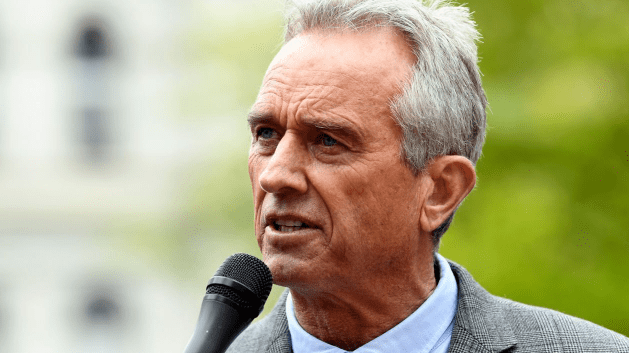
Why does the government target RFK Jr and Tucker Carlson, a political rival and an unfriendly journalist? Why do so many, including several of the justices, pretend there is no problem here?
MR. AGUIÑAGA: What I would add to the second part of your question is I think Jill Hines is the best standing for case — for our case in multiple ways. This is an email to Facebook where the government, the White House, specifically asks Facebook to not distribute so-called vaccine hesitancy content and also to target health groups that do that….. And I think this is one of the scariest examples in the record of what is at stake here, which is those groups were political action groups. Louisiana had a legislative session in progress. And what Jill Hines was trying to do is mobilize people to support certain bills and other legislative materials that were then pending in the state legislature.
But, because the government moved its pressure, put a thumb on the scales, you know, a couple of months before and then, lo and behold, once Jill Hines tries to use the exact kinds of groups that the government targeted, she can’t. They’re pulled down. Her political organization is stymied.
But when you look at what’s happening in this case, for example, with respect to the FBI, what they’re doing is not –there’s no emergency, nothing of the sort. They’re just identifying hundreds of accounts — …. but if what the FBI is doing is trying to persuade an intermediary — a speech intermediary to take down a private third party’s speech, I mean, that is the — that is covered by the plain text of Norwood, and that’s, I mean, an abridgement of speech.
Repeatedly, the liberal justices raise borderline hypothetical situations, while not addressing the underlying problem. They imply Mr. Aguiñaga would limit any government official from speaking with social media on any topic. Not at all. Government officials can do their jobs as needed. Instead, officials went well beyond the line in several instances. Mr. Aguiñaga persists:
MR. AGUIÑAGA: So, Your Honor, I guess this goes to the bully pulpit as well as I understand that the bully pulpit has never been used to target the object of suppressing a third party’s speech.
You can use it to coerce behavior. You can use it to coerce companies to take certain actions. But, when the government is identifying a specific viewpoint and specific content that it wishes to wholly eliminate from public discourse, that’s, I think, when the First Amendment problem arises.
Justice Jackson seemingly wants the government to have unlimited power, power it will undoubtedly (and has already) abused:
JUSTICE JACKSON: No. My hypothetical is there is an emergency. My hypothetical is that there is an emergency, and I guess I’m asking you, in that circumstance, can the government call the platforms and say: This information that you are putting up on your platform is creating a serious public health emergency, we are encouraging you to take it down?

Is the government so virtuous that we want it to have power to declare anything an emergency? The state of Indiana this week declared a two-week emergency ahead of the solar eclipse. Everything is an emergency, you see. https://www.msn.com/en-us/news/us/indiana-state-of-emergency-declared-for-eclipse-hundreds-of-thousands-expected-to-visit-on-april-8/ar-BB1l1Mdf
MR. AGUIÑAGA: Your Honor, I was just going to say even — remember that the third party here is completely absent from the conversation. The third party whose speech is being targeted and ultimately censored is absent from this discussion.
It seems obviously obscene to me.
MR. AGUIÑAGA: but the moment that the government identifies an entire category of content that it wishes to not be in the modern public sphere, that is a First Amendment problem. …. And there’s an entire volume — I mean, we’ve got 20,000 pages in this record of the government persistently going back to platforms again and again, pushing them to adjust their policies, change their policies, do more censoring. And I think that’s what makes this case so unique, is that you not only have this vast repetition of communications, but it’s
If there is no remedy in this case, if the government’s role is just too important to be curtailed, then the First Amendment will be a dead letter–it may already be.
MR. AGUIÑAGA: So, Your Honor, look at Jill Hines, and I’ll give you one more example. Look at page 20 of the red brief. This is the Jim Hoft example, because we know that his name and the Gateway Pundit specifically appear in the tracking spreadsheet that CISA uses, that the FBI uses as well. And we also know that the EIP, the Election Integrity Partnership, that works with CISA, and the government — the district court found this a million times. It said that it looks like they have a coordinated effort out to get Jim Hoft. . .. What they were taking is broader strokes like vaccines are safe for — for children, calling that claim true, and then having the platforms go out and censor contrary claims.
Government doesn’t like competitors. It insists to have protected us all during the most significant crisis of our lifetime. The truth is government did a poor job–a claim that can certainly be disputed, but it should at least be allowed to see the light of day and debated openly.
Near the end of discussion, is an interesting colloquy with a few of the justices. The following are excerpts:
JUSTICE KAVANAUGH: And one thing that I think I want to square up with you is if someone calls and — or contacts the social media company and says what you have there, this post, has factually erroneous information, so not a viewpoint that we disagree with, factually
erroneous information, and the social media company says, we’ll take a look at that and —
and — you still think that’s significant encouragement that qualifies as coercion, if they take it down in response to concluding that it, in fact, is factually erroneous?
MR. AGUIÑAGA: Your Honor, that just asking very, very politely or just saying very, very politely we think you should take it down, that that shouldn’t be a First Amendment problem, but the reality is that when somebody like the FBI or somebody like a deputy assistant to the president makes a statement like that, that statement carries force.
That’s just the reality. My dear mother is a saint and if she makes a state –same statement to Twitter, they’re — they don’t know her from Adam, they don’t care, but they do care if it’s the government.
What’s this all about in the end?
MR. AGUIÑAGA: the north star for the government in that situation is more speech. Publish the true speech that they think should counter what they view as false speech. The government is not helpless here. It has tools at its disposal, and censorship has never been the default remedy for a perceived First Amendment violation.
I mean, imagine being on the receiving ends of Rob Flaherty for six months on end and these –receiving these kinds of emails. In some ways, it’s the adverse consequences that were threatened and/or actually carried out.
JUSTICE BARRETT: So we should focus less on authority or authority can kind of drop out. The point is, if it comes from the government, and so there might be some conceivable way in which the government could follow through in some sort of punitive way, that — that’s the relevant inquiry.
MR. AGUIÑAGA: Your Honor, I think that is certainly one way you can look at the analysis, absolutely.
JUSTICE JACKSON: So my biggest concern is that your view has the First Amendment hamstringing the government in significant ways in the most important time periods.
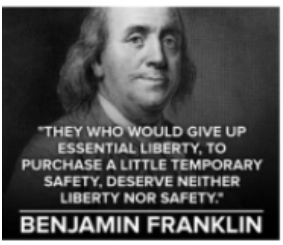
You decide: Government is good and providing us necessary protections while chipping away at our liberties? Or does government need to be restricted and reminded to respect our freedom once again?
Dave https://seek-the-truth.com/about/
https://seek-the-truth.com
https://seek-the-truth.com/category/culture
 Seek the Truth
One thought on “Free Speech Advocates Fight Back (Finally!)”