We enter the third month of a conflict not yet ended satisfactorily. How do we objectively evaluate success or failure to this point?
First, without a doubt, six weeks of bombing with minimal resistance from Iran had a significant impact on their military capability; although, the exact extent of that degradation is not yet clear. How many drones, missiles, and launchers remain? How easily can Iran’s allies re-stock them? What is the state of the army currently? How effective is the blockade and how long can the regime survive it? What is the economic impact on Iran and how long will Iran be able to survive targeting of their economy?
I have no inside knowledge and cannot definitively answer these questions, but I can still draw reasonable conclusions from careful analysis of the situation.
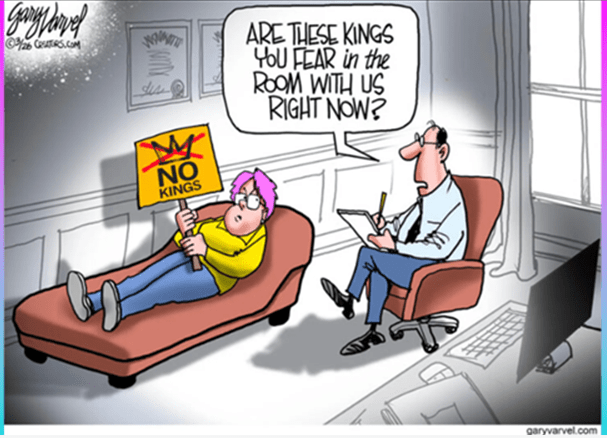
Most of the president’s political opponents refuse to acknowledge any success in the war. They insist the situation was bleak from day one and is only getting worse. There is no strategy, no plan, no measurable success whatsoever, and no hope per their analysis. It’s a complete zero. I wonder are they driven by worry of how dreadful it would be were the war deemed a success by a majority of Americans?

The president says war was necessary to avoid a nuclear disaster while his political opponents say this is only a repeat of the 2003 Iraq nuclear scare: don’t be fooled again. Who do we believe? Folks believe sources they trust and discount those they do not, but none of us definitively know the whole story.
There were legitimate objections/questions about entering the war. Perhaps President Trump should have remained focused on domestic problems. There were known risks of becoming bogged down in the war. Was the case even made for action in this particular moment?
Still, no matter our original position, all should admit a significant portion of the president’s original goals have been met while also admitting significant sticking points remain. Oil is barely flowing through the Persian Gulf, something not even a concern prior to the war. Furthermore, Iran steadfastly refuses to negotiate regarding its nuclear program, leaving the president stymied with regard to his central goal. Finally, regime change, not one of the president’s original goals, increasingly seems to be another measure of success. How can we call the job finished with this version of tyrants still in control and emboldened by surviving? The president needs to resort Plan B to finish the job here.
So, how does the war end and when? How do we determine the victor, militarily and politically as we are likely to hear conflicting analysis of the results no matter what happens?
Support for the War
Support for the war was underwater initially. Certainly, President Trump took a huge political risk with this action and there is not yet a definitive result to convince enough Americans. Can this be finished without further bogging us down for an extended period.
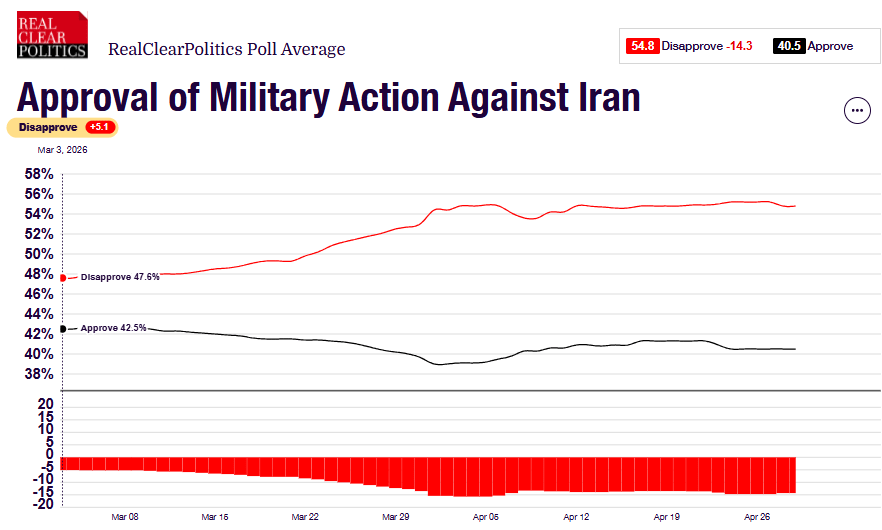
Approval for the war began around 42%, dropped a few percentage points in March, but stabilized to around 40% by the end of April. President Trump doesn’t have a blank check, but the flat curve indicates around 40% of supporters will wait for the new strategy to take effect.
The duration matters though. The Iranians hope to outlast us. The regime wants to say it absorbed America’s best punch and continued the fight. The propaganda win of surviving matters more than the military setback and their bleak economic outlook. They simply seek to hunker down and delay. They believe American patience will wear thin, that domestic problems and the November election will dissuade the president from finishing the job.

So, how long will it take to win this war–and can America’s patience last? Will some nation or some unforeseen event come to Iran’s rescue? Will President Trump persist as long as necessary and ignore the political pressure if the war drags on?
There are no definitive answers, but there are reasons for optimism. America has the clear advantage thus far. So far, American casualties have been minimal (they are incredibly low, in fact). Problems back home are not overwhelming. Gas prices have been elevated, but this is nothing like the pain of the oil embargo of the 1970s. This situation is also a boon to oil producers in the US; US production is at a maximum (this was not the goal, however!). The world too is adjusting to restrictions in the Persian Gulf: buyers are seeking oil from other sources and producers are seeking alternative distribution methods (via pipeline, rail, etc.). It is not a disaster by any means.
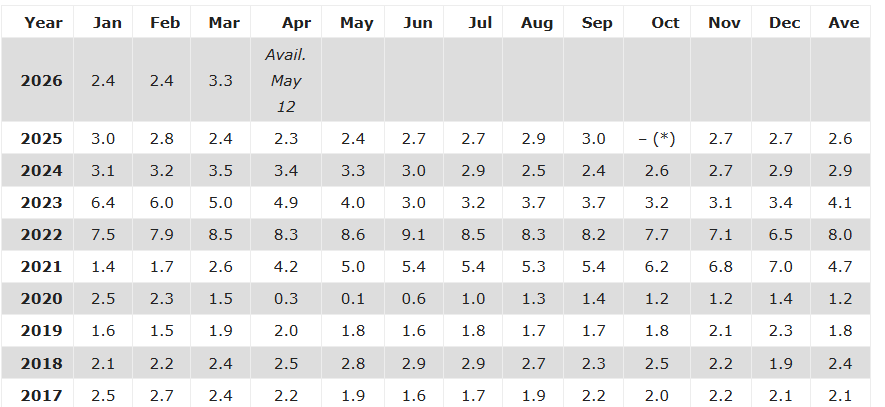
Inflation rose slightly in March, but nowhere near the levels of 2021 through 2023. As we are all aware, gas prices too stabilized throughout April, although they could move up again. Oil markets have flirted with $100 per barrel. That’s a long-term problem, but it’s nothing like $200 per barrel many forecasted. The president’s base can stick this out a while longer.
Iran’s economy, on the other hand, has massive structural problems. They have very high inflation; estimates range from 50 to 100%. Their currency is worthless: one US dollar is equivalent to 1.5 million Iranian Rials. Iran had economic problems before the war, and they have certainly worsened after six weeks of bombing and the subsequent blockade:
How the War Saved the Iranian Regime | Foreign Affairs
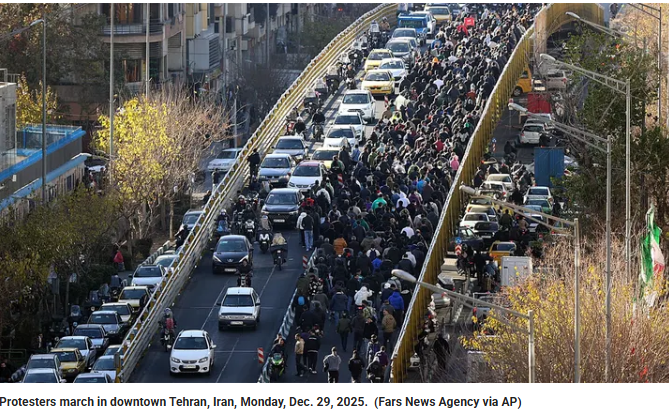
Starting in December 2025, hundreds of thousands of Iranians took to the streets in response to unbearable economic misery.
Iranian oil has value, but the naval blockade means they cannot sell it. Furthermore, oil storage is near capacity, so they may need to cap their wells soon (per Secretary Bessent on April 23: “In a matter of days, Kharg Island storage will be full and the fragile Iranian oil wells will be shut in.”)

In addition, Iran’s economy is not multi-faceted. Oil is their only consistent revenue source, and without oil revenue, how does the government continue basic functions, especially functions like paying the army? America’s economy has issues, but nothing like the immense pressures Iran is currently experiencing.
https://irandiscovery.com/blog/economy-of-iran/
Iran Economy is mixed, dominated by the public sector. It relies primarily on oil and gas production and export. Important sectors include petrochemicals, automotive manufacturing, and agriculture.
So, which nation is experiencing the most difficulty at the moment and which will be able to withstand the pressure?
What’s Next?
President Trump initially said the war would last four to six weeks, and indeed the shooting portion lasted six weeks plus one day. The conflict has been extended due to our inability to stop Iran from impeding oil tankers–something we were not fully prepared for. However, the current strategy–blockading Iran’s ports–is far less problematic for the U.S. Iran is exacting pain by blocking the strait, but the U.S. is exacting far more pain by denying them oil revenue.
The political pressure on the president was to end the shooting, but following the ceasefire the pressure to withdraw forces and the likelihood Congress invokes the War Powers Act is greatly reduced. Furthermore, there has been no additional loss of American lives, no more downed planes, and no more American bases attacked since early April.
Senator Schumer pinned his objections to the war to gas prices:
The American people have had enough. They’ve been calling for peace for weeks. Americans literally cannot afford for this war to drag on – not when gas costs $4.30 a gallon, $4.30 a gallon and when inflation just hit a record over three years for 3.5%. That’s higher inflation than we’ve had in a long time, and that means people pay more for just about everything. Senator Schumer on the Senate Floor, April 30, 2026.
This is a terrible argument. Unilaterally ending the war and maintaining the current status quo would not resolve gas prices in any case. The Iranians need to open the strait without any strings and withdrawing and surrendering all our cards worsens that problem. I can’t see Democrats’ efforts to end the operation completely gaining traction; they have no rationale, no strategy, and no direction.
There is a legitimate debate as to whether or not entering the war was appropriate, but now that it is started, an abrupt end would be disastrous; it would hand Iran the propaganda victory they are seeking, and would leave them in control of the strait, able to blackmail any ship passing through.
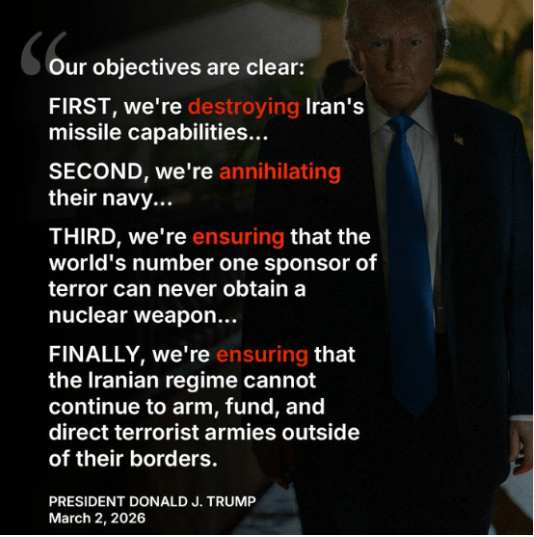
Despite numerous (and incorrect) protestations that there were no clear war goals, the end game at this point should be clear to a novice:
- force Iran to surrender its nuclear materials completely
- end restrictions in the Persian Gulf–no tolls and no further threats to shipping.
No other agreement is politically palatable given the effort we have extended already. The president’s other stated goals have already been met–at least for now. Secure these two final objectives and the president can legitimately say this war ended successfully.
Leaving the regime in power with such a deal is acceptable, but not fully satisfactory. Iran would surely seek to reconstitute their military, resume their bellicose rhetoric, and possibly regain their disruptive position in the region. To what extent they are capable of any this is debatable. Perhaps the balance of power in the Middle East has already permanently shifted or perhaps the change is only temporary?
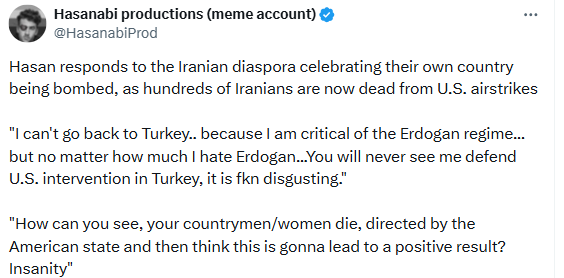
The president has been attempting to declare victory for several weeks, but it is not a legitimate declaration just yet. If the Iranian regime is finally toppled, and that seems the ultimate goal of the blockade, claims of success are far more substantial. Nearly everyone minus Hassan Piker and a few rogue members of Congress, has already acknowledged the evils of the Iranian regime, so how could toppling it not be considered an overwhelming success?
How did We Arrive Here and How do We End the Stalemate?
A Foreign Affairs article, unfavorable to the president, claims the war has, in fact, already, brought about a regime change not to our benefit:
How the War Saved the Iranian Regime | Foreign Affairs
Khamenei, at 86, was ailing. Had a succession process followed his natural death, a gradual internal transformation would likely have unfolded in Tehran. Without the war, the ascent of Khamenei’s son Mojtaba—who was not his father’s preferred successor but was backed by the Islamic Revolutionary Guard Corps (IRGC)—would have been far less certain. The Assembly of Experts, tasked with choosing Khamenei’s successor, would have been able to convene in an orderly and deliberate manner and consider which candidate could best secure the regime’s future in the face of immense challenges. Figures such as Hassan Khomeini, the grandson of the Islamic Republic’s first supreme leader and a relative moderate who might have led Iran toward greater political openness, would have been seriously considered. But the U.S. and Israeli decision to attack foreclosed these alternate pathways and strengthened the position of hard-line actors.
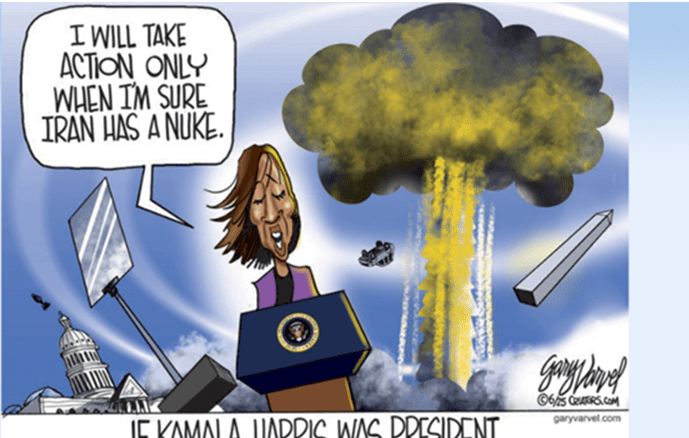
As a counter, I quote the famous rock band’s axiom: “Meet the new boss. Same as the old boss.” Replacing hardline religious leaders with hardline military leaders is obviously not the change we are seeking and should not be the final outcome.
Foreign Affairs also says America lost our best chance for real change (via diplomacy) by initiating military action. We should have persisted in negotiations, they say. In other words, after forty years in power, Khamenei was finally moderating (perhaps after he had thousands of protestors executed earlier this year?) and, better yet, Khamenei’s successor would have been the long sought Iranian moderate who would yield to protestors and finally lead Iran to meaningful rapport with the West. I hate to lick the red from their candy cane, but distinguishing one hardliner from another by calling the lesser a moderate seems Pollyannaish in the extreme.
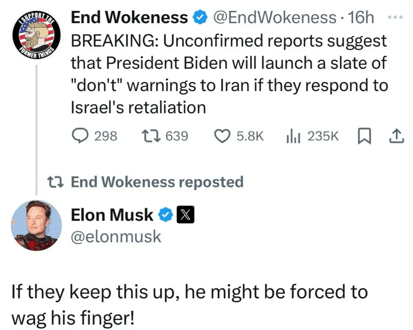
This is the game we have played since President Obama’s 2016 (JCPOA) deal. How long do we have to wait for Iran to moderate? Will they ever truly moderate without external pressure?
Hope springs eternal, but examine recent facts. President Trump negotiated with Iran this past February and said he was displeased with the negotiations. Given that negotiations have been equally unproductive following six weeks of bombing, it seems unlikely negotiations would have ever borne fruit had they not been interrupted by the war. Yes, if wishes were horses, we would all ride.
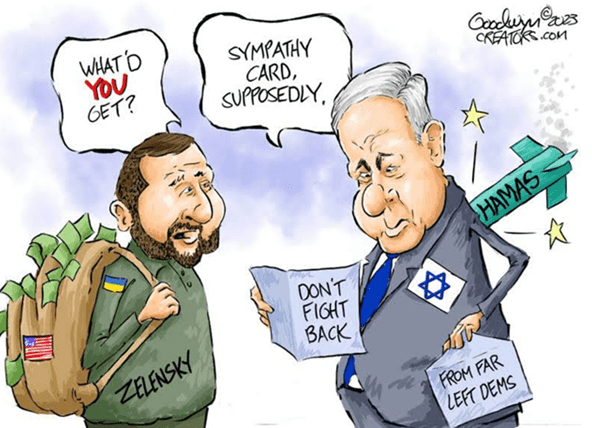
If President Trump had not acted, would we have another opportunity before it was too late? Would we have a future president willing to take the political risk? Both questions keep me up at night.
The attack on Iran will be debated in history books, but critics rarely weigh the cost of inaction. As the Foreign Affairs article demonstrates, pundits compare the action actually taken with the best possible version of “what might have been”. These comparisons work only in theory. The game is not played on paper.
Instead, President Trump is enacting a “peace through strength” strategy. He has clearly been hesitant to resume the fighting, providing Iran a golden opportunity to prove their commitment to a ground-breaking watershed deal. At the same time, Iran is painfully aware of a credible threat of more shooting along with a sustained blockade and economic sanctions if negotiations falter. This is the best opportunity for a deal, but given recent history, I am dubious a deal will be forthcoming. If Iran doesn’t relent after this enormous pressure, will they ever?
Iran’s tyrants can survive by surrendering their nuclear materials and opening the strait. Until then, the blockade and sanctions should continue until Iran relents or the regime falls. We continually remind them of our big stick, but still Iran has no idea when, where, or how military operations might resume, so we retain the element of surprise if necessary.
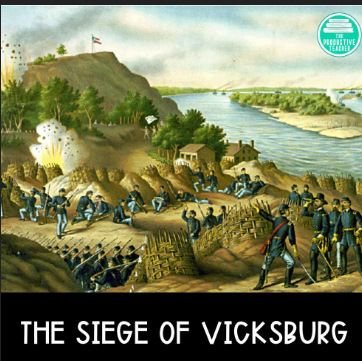
Blockades and sieges have succeeded throughout history, including numerous ones imposed during the US Civil War. Given time, this one can be equally effective.
For now, the current blockade seems a workable strategy; although; the president’s critics will continue the drumbeat of failure and corruption, reminding us as often as they can: “they told us so”:
https://paulkrugman.substack.com/p/donald-trump-petropresident
Why did Donald Trump attack Iran? Did he believe that a quick victory would boost his poll ratings? Was he looking for a way to change the subject from the Epstein files and affordability? Was he seduced into war by the Israeli government?
The answer, surely, is all of the above. Bad decisions don’t have to have a single explanation. In fact, debacles on the scale of what we’re now experiencing usually have multiple causes.
I can’t abide such incredible cynicism from someone who I doubt has any proof of his accusations. I don’t know the president’s calculations either, but I have a modicum of trust the president did not enter into this war on such shaky premises.
The Fundamental Problem Still
Still, one fundamental problem remains: what happens next if the Iranian regime falls? Who will replace the current unacceptable version of the hardliners?
First, I trust the administration has some plans for this and will answer this difficultly at the right time But also, we should be hopeful because the Iranian populace is fed up with the current regime and an overwhelming majority professes desire for democracy.
https://www.iranintl.com/en/202302036145
An opinion survey involving 158,000 people in Iran showed that more than 80 percent of respondents reject the Islamic Republic and prefer a democratic government.
If their regime is toppled, 80% of the populace seeking change is quite significant. Relying on them is far more than blind trust in serendipity. These numbers indicate there is a substantial chance of establishing a better system for Iran.
War Powers Act
Will Congress act now that the 60-day limit is reached and they can exercise power under the War Powers Act? History can help answer this question. President Obama in 2011 attacked Libya far longer than 60 days, yet Congress did not check his decisions then: https://factually.co/fact-checks/politics/obama-military-force-libya-war-powers-act-1973-compliance-2c1675
President Obama’s 2011 Libya campaign sat in a legal gray zone: the administration maintained U.S. actions were limited, multilateral, and authorized by the U.N., and therefore did not trigger the War Powers Resolution’s 60‑day statutory ceiling;
I doubt Congress pushes President Trump either, especially given that the shooting has ended for now. Furthermore, Congress doesn’t have any options which can alter the current status quo in Iran. It has no power to direct our forces or to negotiate with Iran. Simply declaring the war ended is not going to make any positive difference.
https://punchbowl.news/article/defense/wh-war-terminated/.
The 1973 War Powers Resolution states that congressional approval is needed for military operations to continue beyond 60 days. Friday marks 60 days since President Donald Trump notified Congress the war with Iran began.
But the administration official said that an April 7 ceasefire has been extended and there’s been no exchange of fire between the United States and Iran since then. U.S. Navy ships are currently blockading Iranian ports.
Patience and Persistence:
Again, information is available to us all, and even if not an expert, one can glean many facts and conclude a good deal of what may come:
- We have the advantage, so expect the pressure on Iran to continue. The president seems determined to follow through.
- Expect gas prices to remain high for now, perhaps even to the detriment of the Republicans’ mid-term prospects (if no resolution comes by summer).
- Hope for a negotiated settlement, but don’t expect it.
- Most importantly, be patient and persistent (something I learned from being a parent). Support the current path until circumstances fundamentally change.
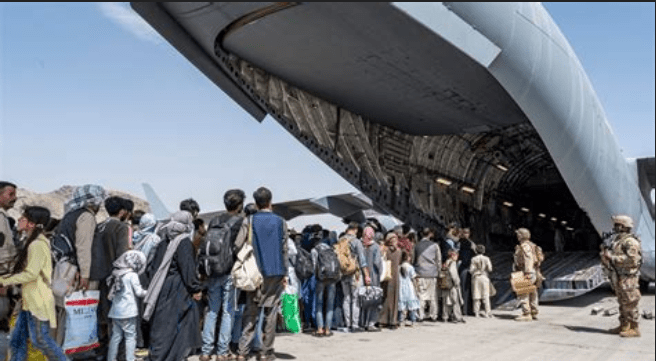
If America does not lose resolve, this conflict ends either with a negotiated settlement or the regime toppled. I remember the hurried exit from Afghanistan, so I don’t want to even consider what happens if we grow impatient or if Congress tries to interfere and direct a course change.
Dave https://seek-the-truth.com/about/
https://seek-the-truth.com/category/war-stories/
https://seek-the-truth.com/category/world/
seek-the-truth.com
 Seek the Truth